Best Power Vent Water Heaters for 75 Gallon Applications
Choosing a power vent water heater involves evaluating venting needs, efficiency, recovery rate, and space. The following selections are among the best options that align with modern power-venting setups and larger-capacity demands. Each unit emphasizes reliable venting, efficient operation, and steady performance for households with higher hot water use. Below, you’ll find concise product highlights, image references, and practical buying considerations to help you compare options side by side.
| Product | Brand | Type | Capacity | Key Benefit |
|---|---|---|---|---|
| APUS Tankless Water Heater Propane Gas | APUS | Tankless | 4.42 GPM | High BTU, precise temperature control |
| APUS Tankless Water Heater Natural Gas | APUS | Tankless | 4.42 GPM | Consistent performance with gas inputs |
| KINGRVER RV Hybrid Water Heater | KINGRVER | Hybrid (Gas/Electric) | 6 Gallon | Dual fuel, quick recovery |
| Rinnai REHP50 Electric Heat Pump | Rinnai | Electric Heat Pump | 50 Gallon | Energy-efficient, high first-hour delivery |
| GE Appliances 18 Gallon Versatile Plug & Play | GE | Electric | 18 Gallon | Easy installation, compact design |
APUS Tankless Water Heater Propane Gas
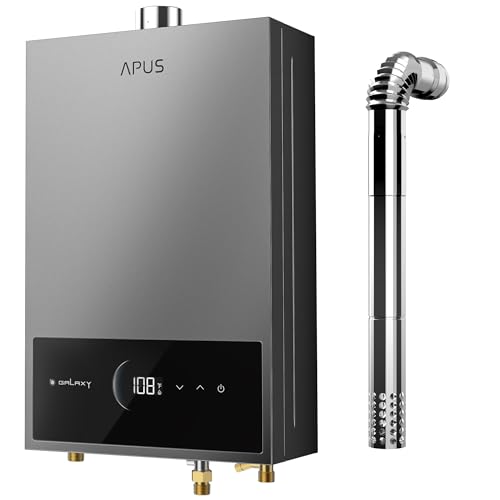
The APUS Propane Tankless Water Heater delivers 95,000 BTU heating capacity and a 4.42 GPM flow rate. It uses 0.66 GPM low-flow start technology to maintain hot water across two showers and a sink simultaneously, making it suitable for moderate multi-point demands. The unit emphasizes precise temperature control with sensors and smart CPU technology, keeping water within ±1°F of the set point (95°F–140°F). Its durability stems from oxygen-free copper heat exchangers and segmented combustion, contributing to high thermal efficiency and potential energy savings over traditional storage models.
Operational stability is a hallmark, as steady temperatures reduce thermal shocks when several fixtures run together. This model is designed for indoor installation and emphasizes reliable on-demand hot water, convenient digital display, and robust performance at higher flow rates without sacrificing temperature stability.
APUS Tankless Water Heater Natural Gas
This natural gas model mirrors the propane version in capacity and features: 95,000 BTU heating capability with a 4.42 GPM flow rate and 0.66 GPM low-flow start technology. It is equipped with high-precision sensors and smart CPU control to keep output water within ±1°F of the user setting (95°F–140°F). The design prioritizes efficiency with oxygen-free copper heat exchangers and segmented combustion for improved thermal performance. This tankless approach minimizes standby energy use and adapts to peak demand scenarios where multiple outlets require hot water.
For homes needing consistent temperatures and quick recovery, this gas-powered unit provides reliable, on-demand hot water without a storage tank. The compact form factor also suits interiors where venting considerations are part of the installation planning, aligning with typical power-vent requirements for gas appliances.
KINGRVER RV Hybrid Water Heater
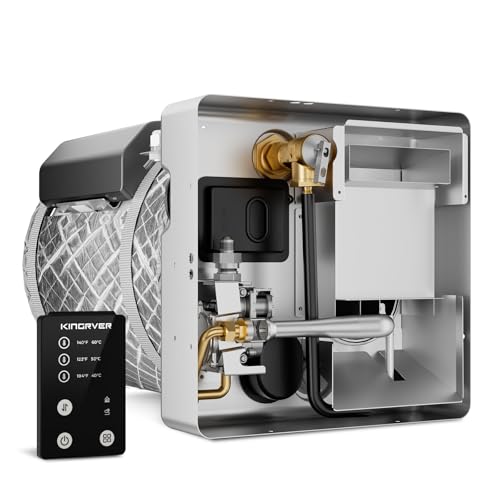
This 6-gallon hybrid tank provides flexibility with dual fuel options: propane, electricity, or both. The porcelain-lined steel tank helps resist corrosion and extends service life, while one-touch presets at 104°F, 122°F, and 140°F simplify temperature matching for varying needs. The unit supports three heating modes—gas only, electric only, or a gas/electric hybrid—to optimize efficiency and recovery. The design is focused on durable construction and user-friendly operation in RVs, cabins, or homes where space or power sources vary.
With hybrid capability, consumers gain resilience during off-grid periods or limited utility access, plus faster hot water recovery when both heat sources are available. This model emphasizes ease of use and steady performance across different heating methods while maintaining a compact footprint for tight installations.
Rinnai REHP50 Electric Heat Pump Water Heater

The Rinnai REHP50 combines energy efficiency with high first-hour delivery, delivering up to 73 gallons of hot water in the first hour for households of 3–4 people. As an electric heat pump model, it extracts heat from the ambient air to minimize energy use while providing consistent hot water. It is designed with Demand-Response capabilities to reduce energy usage during peak hours, aligning with utility programs that encourage efficiency. This unit targets homes seeking lower operating costs without sacrificing on-demand performance.
Key considerations include climate impact on heat pump efficiency, installation space for optimal airflow, and electrical service requirements (240V and appropriate circuit sizing). The REHP50 is well-suited for retrofits where space and energy savings are primary goals, especially in homes prioritizing sustainability and utility bill management.
GE Appliances 10 Gallon Plug & Play Electric Water Heater
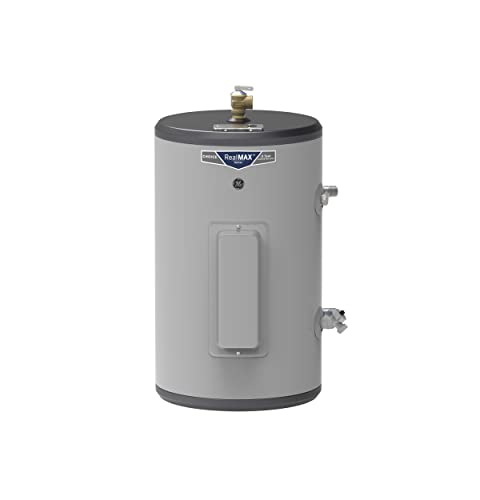
The GE 10 Gallon Plug & Play electric water heater provides an easy, quick installation option for supplementary hot water needs. It is designed for 120-volt operation and features standard 3/4-inch NPT connections, making it suitable for spaces like kitchens, bathrooms, garages, or RV areas where a compact, low-profile heater is advantageous. While not a large-capacity solution, it supports quick hot water delivery for small households or as a booster unit in larger setups, emphasizing simplicity, reliability, and broad compatibility with existing plumbing.
2.5 Gallon Mini Tank Electric Water Heater

This compact 2.5-gallon mini-tank provides hot water under sinks with rapid heating (5–10 minutes). It features a 1500W 110–120V element and a digital display for easy temperature adjustment. Built with a thickened, corrosion-resistant interior and a 99% efficient stainless steel element, it targets point-of-use applications such as kitchens, RVs, cabins, or small spaces requiring a reliable on-demand boost. The unit includes safety features like anti-leakage, overheat protection, and dry-burn prevention for safe operation.
2.5 Gallon Under Sink Water Heater 304 Stainless Steel

This 2.5-gallon under-sink model features a 304 stainless steel tank for corrosion resistance and a large LED temperature display with a precision control knob. The unit is designed for compact spaces and offers a reliable temperature setting, making it a practical option for under-sink hot water needs, small apartments, or cabins where space is at a premium. The system emphasizes safety with an auto reset overheat protection and robust construction for longer service life.
GE Appliances 18 Gallon Plug & Play Electric Water Heater

The GE 18 Gallon Plug & Play model offers whole-home flexibility, providing hot water to a single outlet or for a small residence. It installs quickly with standard 3/4-inch connections and 120-Volt power, balancing capacity with a compact footprint ideal for kitchens, bathrooms, or utility rooms. This unit is designed for easy maintenance and reliable daily use, with a practical size for limited spaces while delivering a reasonable daily hot water supply.
Buying Guide
- Ventilation and venting compatibility: Power-vent units rely on proper venting to exhaust combustion air. Confirm your space permits a dedicated vent run, appropriate vent type, and clearances from combustibles.
- Fuel source and efficiency: Decide between propane, natural gas, or electric options based on fuel availability, operating costs, and climate. Tankless on-demand models typically offer high efficiency, while heat-pump electric units excel in energy savings in moderate climates.
- Recovery rate and flow needs: For households with multiple simultaneous hot-water uses, prioritize higher GPM (for tankless) or larger tank capacity (for storage models). Match the unit’s output to peak demand times.
- Temperature control and stability: Look for precise thermostatic control and sensors to minimize temperature fluctuations. Units with ±1°F stability provide consistent comfort during showers and tasks.
- Space and installation considerations: Evaluate dimensions, installation clearances, and whether the system fits existing plumbing and electrical provisions. Compact plug-and-play models are convenient for retrofits but may have limited capacity.
- Durability and warranty: Favor models with corrosion-resistant materials (like stainless steel) and robust heat exchangers. Check warranty terms for tank, parts, and labor coverage.
- Operating costs and energy efficiency: Compare energy factors (EF) or Uniform Energy Factor (UEF) ratings, and consider Demand-Response features that help utilities optimize usage during peak periods.
- Maintenance and service accessibility: Consider filter access, anode protection (for storage tanks), and ease of serviceability for routine maintenance and potential repairs.
- Installation versatility: If you expect off-grid or mixed fuel usage, hybrid or dual-fuel options (gas/electric) can provide flexibility and resilience in varying scenarios.
- Target use case: Distinguish between point-of-use, whole-home, and booster configurations. For a 75-gallon planning target, prefer options with ample capacity, reliable recovery, and suitable venting.