Best Roll on RV Roof Sealant for Long-Lasting Waterproofing and Solar Reflection
Choosing the right roll-on RV roof sealant can protect your trailer from leaks, heat, and weathering. The following selections prioritize durability, UV resistance, compatibility with common roof types (EPDM, TPO, fiberglass, aluminum), and ease of application. This guide highlights five top options, compares their strengths, and offers practical buying tips for American campers and travelers.
| Product | Capacity | Key Benefit | Roof Types |
|---|---|---|---|
| Liquid Rubber RV Roof Sealant (1 Gallon) | 1 Gallon | Flexible membrane with solar reflectivity | EPDM, TPO, Fiberglass, Aluminum |
| Liquid Rubber RV Roof Sealant (5 Gallons) | 5 Gallons | Extended coverage; same flexible, reflective coating | EPDM, TPO, Fiberglass, Aluminum |
| BEEST RV Roof Coating (1 Gallon) | 1 Gallon | High coverage; UV resistant; versatile use | EPDM, TPO, metal, flat surfaces |
| SENVEN RV Roof Sealant (1 Gallon) | 1 Gallon | Heat-reflective, durable waterproof membrane | EPDM, TPO, Fiberglass, Aluminum |
| Kohree RV Roof Coating (1 Gallon) | 1 Gallon | 100% silicone, no primer needed; breathable | EPDM, TPO, Metal, Wood, Fiberglass |
Below is a closer look at each option, including how it works, when to choose it, and when another product might be a better fit for your RV roof.
Liquid Rubber RV Roof Sealant – 1 Gallon

This professional-grade coating forms a flexible waterproof membrane that remains durable across extreme temperatures. It’s designed for EPDM, TPO, fiberglass, and aluminum roofs, making it suitable for most travel trailers, campers, and RVs. The product’s heat-reflective properties help reduce interior temperatures and extend the roof’s lifespan, potentially lowering cooling costs over time. It pairs well with Liquid Rubber EPDM Primer for enhanced adhesion on EPDM surfaces.
Liquid Rubber RV Roof Sealant – 5 Gallons

The same flexible waterproof membrane in a larger volume, ideal for bigger RVs or multiple roof areas. Its solar-reflective coating reduces heat absorption, contributing to interior comfort and roof longevity. Like the 1-gallon variant, it’s designed to work on EPDM, TPO, fiberglass, and aluminum roofs and can be used as part of a complete roof sealing system.
BEEST RV Roof Coating – 1 Gallon

BEEST delivers a flexible, solar-reflective coating with strong UV resistance and waterproof properties. It provides broad substrate compatibility, including EPDM roofs, and offers a practical solution for campers and trailers needing reliable protection against sun and rain. The product emphasizes high coverage, with guidance to apply two to three coats for best results. It’s a strong option when you need a versatile sealer beyond traditional rubber-based coatings.
SENVEN RV Roof Sealant – 1 Gallon

SENVEN’s roll-on sealant is designed as a waterproof membrane with heat-reflective properties. It aims to reduce interior heat, extend roof life, and provide a durable seal for EPDM, TPO, fiberglass, and aluminum roofs. This option is well-suited for RV owners seeking a reliable, single-gallon solution that performs well under temperature variations and weather exposure.
Kohree RV Roof Coating – 1 Gallon
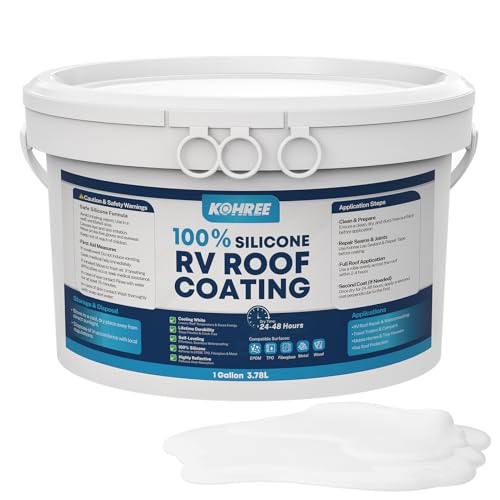
This 100% silicone coating provides a breathable, flexible seal that resists cracking with temperature changes. It claims no primer is needed, simplifying application on EPDM, TPO, metal, wood, and fiberglass roofs. Coverage estimates suggest a gallon covers around 50 square feet per coat, with two to three coats typically required. It’s a solid choice where long-term silicone performance is prioritized.
Buying Guide: How to Choose the Right RV Roof Sealant
- Roof material compatibility: Ensure the sealant works with EPDM, TPO, fiberglass, or aluminum roofs present on your RV. Some products specify one or two substrates best matched to their formula.
- UV resistance and heat reflection: If you park in sunny climates, opt for a solar-reflective coating that lowers interior temperatures and reduces heat stress on roofing materials.
- Flexibility and adhesion: A flexible membrane that maintains elasticity in cold and hot weather reduces the risk of cracking and leaks. Adhesion to your roof material, sometimes enhanced by a primer, is critical for a lasting seal.
- Coverage and application: Consider the product’s coverage per gallon and whether it requires multiple coats. Self-leveling formulas can simplify application on uneven surfaces but may need careful surface prep.
- Primer requirements: Some products require a dedicated primer for optimal adhesion, especially on EPDM or TPO surfaces. Plan for the extra step and cost if needed.
- Versatility beyond roofs: Some sealants are suitable for skylights, vent covers, and other components. If you own accessories like vents or awnings, a multi-surface option may save time and materials.
- Maintenance and longevity: Look for products with proven durability against leaks and weathering. Reading user reviews and manufacturer specs helps gauge long-term performance.
Purchase Considerations From Multiple Perspectives
For first-time RV owners, choosing a user-friendly product with clear application instructions, reliable adhesion, and straightforward cleanup is essential. If you own a larger RV or multiple sections, a higher-volume option like the 5-gallon variant can reduce repeat purchases and labor. For owners in hot climates, solar-reflective formulas may offer tangible comfort and energy savings. On the other hand, those seeking a silicone-based, no-primer solution might prioritize breathability and a shorter prep time, even if coverage per gallon is slightly lower. Compatibility with existing roof coatings should also guide the decision to avoid chemical incompatibilities.
Additional Tips
- Prepare the roof by cleaning thoroughly and repairing any major damage before applying sealant.
- Follow the manufacturer’s instructions for temperature and curing times to achieve best results.
- Test a small area first to confirm adhesion and finish before full-scale application.