Best 2-on-1 Headrail Blinds Options and Replacement Parts
Dedicated 2-on-1 headrail blinds combine two window coverings on one shared headrail, but none of the products listed here is identified as a complete dual-blind system. The closest matches are headrail mounting and support brackets, which may help with repairs if their dimensions and headrail style match your existing blinds. TailorView’s customizable wood blinds are a complete single-blind option, while MYshade offers a cordless cellular shade.
| Product | Best For | Type |
|---|---|---|
| Cutelec Low-Profile Box Brackets | Matching low-profile headrails | Mounting parts |
| lofrcin Metal Brackets | Matching 2-inch high-profile blinds | Mounting parts |
| Cutelec Center Support Brackets | Center support on compatible rails | Support parts |
| Jetec Mini Blind Brackets | Matching 1-inch headrails | Mounting parts |
| TailorView Wood Blinds | A customizable single-blind alternative | Complete blinds |
Cutelec Low-Profile Box Mounting Brackets
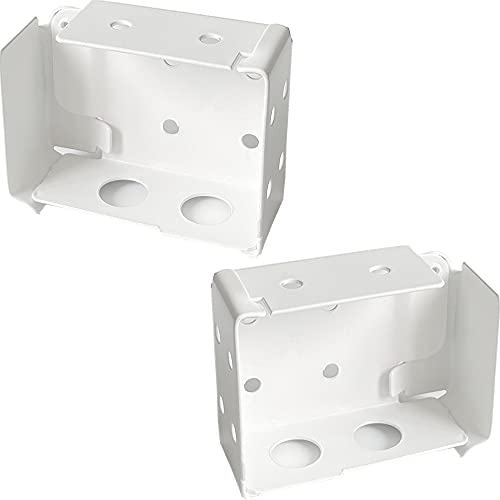
These white brackets are a replacement mounting option for a specific low-profile horizontal blind headrail. The package includes one left bracket and one right bracket. The listing describes a compatible headrail as approximately 1½ inches wide by 2¼ inches long; confirm the shape and measurements against your rail before ordering.
Best for: Someone repairing compatible low-profile blinds who needs a left-and-right mounting pair. These were selected because they directly address headrail attachment, a relevant part of maintaining a 2-on-1 blind installation. Limitation: Screws are not included, and the brackets are not presented as universal or as a complete dual-blind system.
lofrcin Metal Brackets For 2-Inch Blinds
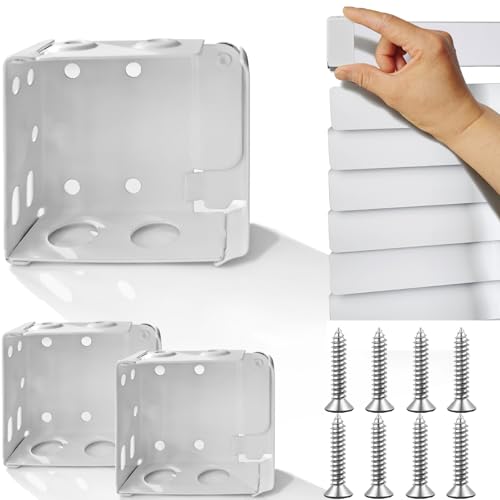
This set contains two white steel brackets, one left and one right, plus eight screws. The listing describes them for 2-inch high-profile blinds and says they can attach at the top, side, or back of a window casing. A hinged front flap allows the blind to be removed.
Best for: Buyers whose existing blind uses the stated high-profile configuration and who want a metal bracket set with screws included. The multiple mounting positions may suit different installation layouts. Limitation: “2-inch” alone does not establish a fit; compare your headrail profile and dimensions with the product details before purchase.
Cutelec Center Support Brackets

This two-piece set is intended as center support for low-profile window blinds. Cutelec specifies compatibility with a headrail measuring 2¼ by 1½ inches and describes the brackets as white steel with hinged safety hardware.
Best for: A buyer who has confirmed that the existing low-profile rail matches those dimensions and needs center supports. Center support hardware is distinct from end mounting brackets, so it may be relevant when maintaining a wider shared headrail. Limitation: The product is not a complete mounting kit or a 2-on-1 blind set; verify the rail profile and determine whether end brackets are also needed.
Jetec 1-Inch Mini Blind Brackets

Jetec supplies two plastic brackets, one for each side of a blind. The listed headrail measurement is approximately 0.95 inch, and the brackets are described for either inside or outside installation. Mounting screws are not included.
Best for: Repairing a mini blind with a headrail that matches the stated measurement and bracket shape. It is included as a size-specific replacement option, not as a dual-shade product. Limitation: Do not assume compatibility with a 2-inch or low-profile headrail; the listed approximate size makes careful measurement important.
TailorView Customizable Wood Blinds

These are customizable 2-inch horizontal wood blinds made from kiln-dried engineered hardwood. The listed options include inside or outside mounting, wood wand tilt rods in multiple lengths, and cordless lift-and-lower choices. The manufacturer describes them as intended for non-humid rooms.
Best for: Buyers seeking a complete, made-to-order single blind rather than replacement brackets. This option offers mounting and lift choices, but it is not described as a 2-on-1 headrail configuration. Limitation: The product information cautions against humid-room use; confirm the ordered size and configuration fit the intended window.
Buying Guide: How To Choose 2-On-1 Headrail Blinds
What does 2-on-1 headrail mean?
A 2-on-1 configuration generally refers to two blind sections operated from one shared headrail, often used to cover a wide window while allowing separate sections. The listings here do not confirm that any product is a complete 2-on-1 system. If you need that setup, verify that the manufacturer explicitly offers a shared headrail and specifies whether the sections operate independently.
How do I match replacement brackets?
Measure the headrail’s width, height, and profile, then compare those details with the bracket listing. Check whether the part is an end bracket or center support. A bracket described for a 1-inch mini blind should not be treated as interchangeable with one for a 2-inch high-profile rail.
Should I choose a complete blind or hardware?
Choose mounting or support brackets when repairing an existing blind and its headrail dimensions match. Choose a complete shade or blind when replacing the window covering. Confirm whether screws are included, whether the product is sold as a pair, and whether the listing describes the mounting style you need.
Frequently Asked Questions
Are any of these products complete 2-on-1 headrail blinds?
No. The listed products include replacement hardware and complete single-blind or shade options, but none is identified as a 2-on-1 shared-headrail system.
Can I use any 2-inch bracket on a 2-on-1 blind?
No. Match the bracket to the headrail’s actual dimensions and profile. The nominal size does not guarantee compatibility.
Do replacement bracket sets include screws?
It depends on the product. The Cutelec low-profile and Jetec listings say screws are not included; the lofrcin metal set includes eight screws.
What should I measure before ordering?
Measure the headrail’s width and height, note its cross-sectional shape, and identify whether you need end brackets or center supports. Also confirm the intended inside- or outside-mount position.