Best Air Purifiers for Clean, Pure Indoor Air in Your Home
Finding the right air purifier involves balancing room size, filtration technology, noise, and energy use. The following selections represent top-performing models designed to remove dust, pollen, smoke, odors, and viruses from spaces ranging from small bedrooms to larger living areas. Each option features a proven filtration approach, user-friendly operation, and credible performance claims to help you choose with confidence.
| Product | Brand | Approx. Coverage | Key Benefit |
|---|---|---|---|
| Blue Pure 311i Max | BLUEAIR | Up to 1,858 sqft (60 min) | High clean-air delivery with HEPASilent tech |
| Blue Pure 211i Max | BLUEAIR | Up to 3,048 sqft (60 min) | Excellent for large spaces with quiet operation |
| PuroAir 240 | PuroAir | Up to 1,000 sqft | 3-layer filtration with high pollutant capture |
| PureZone Elite | Pure Enrichment | Up to 990 sqft (60 min) | 4-stage filtration with UV-C for deep clean |
| Blue Pure 511i Max | BLUEAIR | Up to 465 sqft (30 min) | Quiet, compact performance for bedrooms |
Blue Pure 311i Max Review

Due to its moderate footprint and powerful filtration, the Blue Pure 311i Max is designed for medium rooms and flexible spaces like bedrooms and kitchens. It uses BLUEAIR’s HEPASilent filtration, which aims to deliver more clean air while reducing noise and energy use. Performance claims include coverage up to 1,858 square feet in an hour and quiet operation certified by Quiet Mark. The dual filtration approach leverages both mechanical filtration and ionization to remove dust, pollen, smoke, and common indoor pollutants. Ideal for households seeking a balance of speed and serenity in daily use.
Blue Pure 211i Max For Large Rooms
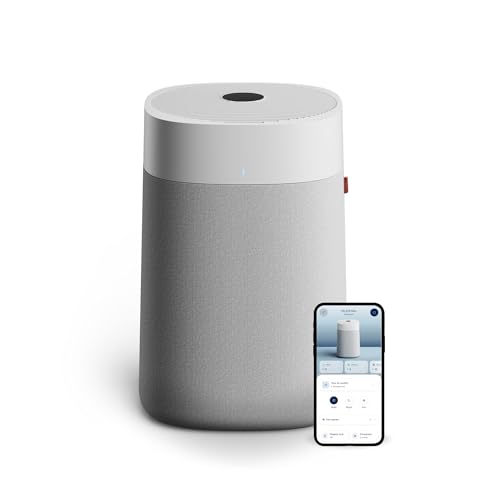
The Blue Pure 211i Max is designed for larger spaces, with claimed coverage up to 3,048 square feet in an hour. Like the 311i, it employs HEPASilent dual filtration to improve air cleaning speed while reducing noise. It’s suitable for open-plan living areas and spaces where multiple occupants or pets generate pollutants. Noise levels remain a priority, with Quiet Mark certification and multiple fan speeds to match user needs during day or night use.
PuroAir 240 HEPA Air Purifier

The PuroAir 240 is positioned for large rooms up to 1,000 square feet and emphasizes a robust 3-layer filtration system—pre-filter, HEPA, and activated carbon. Independent testing supports the claim of capturing up to 99.9% of pollutants, including smoke, dust, pollen, and VOCs. The device is marketed with CARB, ETL, ISO, and UL certifications, highlighting a focus on validated performance and safety. It suits homes seeking strong filtration across multiple pollutant categories in medium-to-large living spaces.
Pure Enrichment PureZone Elite With UV-C
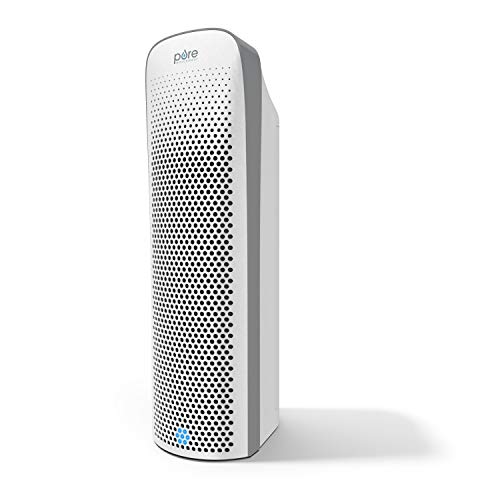
The PureZone Elite combines a four-stage filtration system with UV-C sterilization for deeper cleaning of air in large rooms, up to about 990 square feet. Its filtration sequence includes an activated carbon pre-filter, HEPA filter, UV-C light, and optional ionizer. Independent testing notes high removal rates for dust, pollen, and bacteria, with an emphasis on reducing viruses and germs. CADR performance supports use in main living spaces, bedrooms, and home offices where thorough air refreshment is desired.
Blue Pure 511i Max: Compact, Quiet Comfort
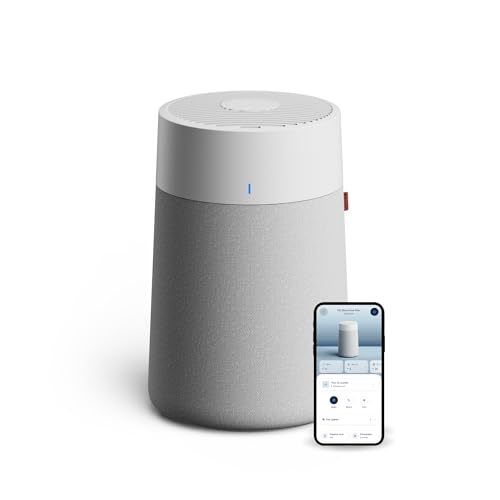
The 511i Max is built for smaller rooms like bedrooms or nurseries. It uses HEPASilent technology to deliver clean air efficiently within compact dimensions. Noise levels are kept low, with 19 dB at the lowest setting and up to 48 dB at higher speeds, making it a favorable option for light sleepers. It effectively captures 99.97% of airborne particles down to 0.1 microns and handles viruses, dust, smoke, and pollen in small to mid-sized spaces.
Blue Pure 511: Bedroom-Ready Filtration

Another compact Blueair option is designed for small rooms and nurseries, emphasizing quiet operation and efficient filtration. The 511 series uses HEPASilent dual filtration to capture a broad spectrum of pollutants, including viruses and bacteria, while maintaining a compact footprint suitable for bedside tables, desks, or small living areas. This model is suitable for users prioritizing low noise and space savings without sacrificing filtration quality.
Buying Guide: What To Consider When Choosing An Air Purifier
- Room size and CADR: Match the purifier’s CADR (clean air delivery rate) to your space. Larger rooms require higher CADR values and potentially multiple units for optimal air turnover.
- Filtration technology: HEPA remains a standard for particle removal. Look for dual-filtration systems (HEPA plus activated carbon) if you need odor and VOC reduction in addition to particulates.
- Noise levels: Consider night-mode or low-noise settings if the purifier will operate in bedrooms or nurseries. Quiet Mark certifications indicate quiet performance.
- Energy efficiency: Energy use varies with fan speed. Choose models with energy-saver modes or automatic speed adjustments to minimize running costs.
- Maintenance: Factor in filter replacement costs and intervals. Some units have easy-access filters and clearly indicated replacement schedules.
- Certifications and safety: Look for CARB, ETL, and UL certifications for safety and performance. UV-C lights add disinfection capability but require proper safety considerations.
- Design and placement: Compact purifiers fit small rooms, while larger units can influence airflow in open-plan spaces. Position away from walls and household obstacles to maximize performance.
- Multi-room setups: For larger homes, consider a combination of a high-capacity purifier for main living spaces and quieter models for bedrooms or offices.
In selecting an air purifier, users should consider their primary concerns—rapid pollutant reduction in larger areas or quiet operation for bedrooms. Filtration depth, room coverage, and ongoing costs will guide the best fit for American homes seeking cleaner, purer indoor air.