Best Air Purifiers for Eliminating Smoke Smell in Your Home
Smoke odors can linger long after the flames are gone. The right air purifier with a strong filtration system can capture smoke particles, neutralize odors, and refresh indoor air. This guide examines top options designed to reduce smoke smells in bedrooms, living rooms, and common areas—featuring models with HEPA filtration, activated carbon, and odor-control technology. Each pick prioritizes effective smoke removal, quiet operation, and user-friendly features for American homes.
Summary Table Of Chosen Products
| Product | Brand | Key Odor/Smoke Features | Room Coverage |
|---|---|---|---|
| GermGuardian AC4825E | GermGuardian | True HEPA, UV-C light, odor reduction | Up to 743 sq ft (hourly) |
| AROEVE MK01 | AROEVE | 3-layer filtration for smoke and odors, quiet Sleep Mode | Up to 287 sq ft |
| PuroAir 240 | PuroAir | 3-layer filter with activated carbon, 99.9% pollutant capture | Up to 1,000 sq ft |
| AromaRoom AP103 | AromaRoom | H13 HEPA, 3-in-1 filtration, sleep mode | 123 sq ft area (CADR 32.4) |
| KNKA APH4000 | KNKA | AHAM Verified, high CADR for smoke/dust, dual filters | Up to 3,500 sq ft |
Note: Each product below is evaluated for smoke odor control, filtration quality, and suitability for typical American homes such as bedrooms, living rooms, and home offices.
GermGuardian 4-In-1 HEPA Air Purifier

The GermGuardian AC4825E combines a TRUE HEPA filtration system with UV-C light to target smoke particles, smoke-related odors, and common allergens. The 3-stage filtration captures 99.97% of particles as small as 0.1 microns, including smoke, dust, and pollen. Optional UV-C light helps reduce airborne germs and mold spores, supporting a fresher indoor environment. It covers large rooms with quick air turnover, making it suitable for bedrooms or living rooms where smoke odors persist. The purifier’s design emphasizes quiet operation and simple controls, contributing to a comfortable, smoke-aware home routine.
Key smoke-related benefits include enhanced odor reduction via a robust filtration path and the option to engage UV-C for additional disinfection. It’s EPA-registered and Zero Ozone certified, offering peace of mind for households with sensitivities. The unit balances performance with maintenance simplicity, a practical fit for users seeking straightforward smoke odor control without complex setup.
AROEVE Air Purifiers MK01

The AROEVE MK01 uses a three-layer filtration approach designed to tackle smoke, pollen, and odors. Its 360-degree air intake and dual-channel design enable a rapid refresh rate in rooms up to about 287 ft², helping to clear smoke particles and smoky odors throughout the space. Sleep Mode reduces fan noise to whisper-quiet levels, around 22 dB, so it won’t disrupt rest or work. The purifier is positioned as energy-efficient with multiple speed settings, giving users a balance between performance and power consumption. It is suitable for bedrooms, offices, or kitchens where smoke odors are a concern.
In practice, this unit supports odor control by directing air through a filtration system that removes smoke molecules and associated smells. While not the highest coverage option, its quiet operation and straightforward controls make it a sensible pick for smaller living spaces where smoke odors are present but not overpowering.
PuroAir 240 HEPA Air Purifier

The PuroAir 240 is designed for larger spaces, offering a three-layer filtration system that includes pre-filter, HEPA, and activated carbon. This combination targets smoke, VOCs, odors, and allergens, delivering a robust defense against lingering smoke smells. With the ability to purify areas up to 1,000 sq ft per hour, it’s well-suited to living rooms and open-plan spaces where smoke odors may travel. The product is CARB, ETL, ISO, UL, and Energy Star certified, underscoring its reliability and compliance with high air-quality standards. For smoke control, the activated carbon layer is particularly effective at neutralizing odors beyond simple particle removal.
Performance notes emphasize rapid odor reduction and strong filtration capacity. While larger, the unit’s energy efficiency and certifications help justify its use in busy or multi-room homes. The PuroAir 240 is a strong choice for households dealing with persistent smoke odors from cooking, pets, or nearby smokers.
AromaRoom Air Purifier AP103

The AromaRoom AP103 focuses on a balanced filtration approach that includes an H13 HEPA element capable of trapping 99.97% of very fine particles, including smoke and smoke-related aerosols. Its 3-in-1 filtration with sleep mode is designed for bedrooms and nursery spaces where quiet operation matters. A CADR of 32.4 in a smaller room (about 123 ft²) indicates strong per-room performance, while the compact footprint supports easy placement in living rooms or home offices. The sleep-friendly design ensures minimal intrusion during night hours.
Odor control stems from the carbon portion of the filtration system, which helps neutralize lingering smells in addition to removing particulate matter. This model is suitable for users seeking a compact, quiet purifier that effectively handles smoke smells in smaller spaces without compromising air cleanliness.
KNKA Air Purifier APH4000
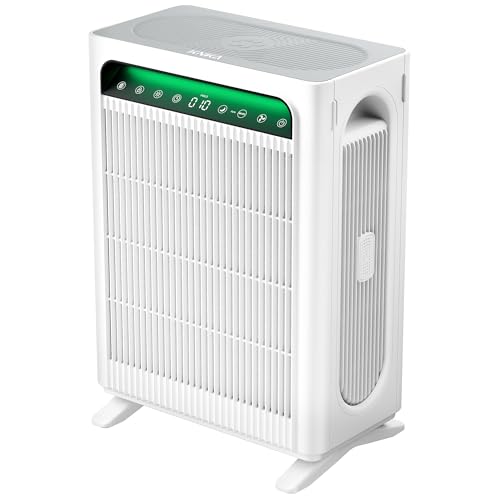
The KNKA APH4000 is designed for large spaces, with AHAM Verifide certification and a high CADR suitable for smoke, dust, and pollen. Its dual-filter setup and three-stage filtration maximize air exchange efficiency in rooms up to 3,500 ft². The device’s large-scale coverage makes it a standout option for open living spaces, basements, or multi-room configurations where smoke odor control is a top priority. The device integrates an advanced filtration path with a washable pre-filter, True HEPA, and activated carbon to capture and neutralize smoke odors effectively.
In practice, this purifier targets smoke odors through a high-efficiency filtration system designed for substantial air turnover. It’s a strong choice for homeowners needing powerful odor reduction across large floor plans, though it may be more than what a single small room requires. Range, speed, and filter life are key considerations for users planning extended use in bigger homes or open-concept layouts.
Buying Guide: Key Purchase Considerations For Smoke Odor Control
- Filtration Type: For smoke, prioritize true HEPA filtration combined with activated carbon or a specialized odor filter. The carbon layer neutralizes odors and VOCs, while HEPA traps smoke particulates.
- Room Coverage And CADR: Match the purifier’s coverage to your room size. Higher CADR values indicate faster air cleaning, important in rooms affected by smoke smells.
- Odor Reduction Features: Look for units with odor-specific filters, odor-reducing technology, or UV-C as an optional enhancement; note UV-C does not replace HEPA but adds disinfection benefits in some models.
- Noise Levels: Sleep or Quiet modes are valuable for bedrooms and home offices. Check decibel levels at low and high speeds to ensure comfort during use.
- Energy Efficiency: Energy Star or similar certifications help reduce running costs in smoke-prone households.
- Maintenance And Costs: Consider filter replacement frequency and cost. A purifier with washable pre-filters can lower ongoing expenses.
- Safety And Certifications: Seek units with CARB certification, ozone-free operation, and independent testing to ensure safe use in family environments.
- Placement: Place purifiers where airflow can circulate freely but away from walls or furniture. For smoke odors, multiple units in larger spaces may provide the best overall coverage.
- Smart Or Manual Controls: Smart features like auto mode, timers, and remote operation can simplify long-term use, while manual controls offer straightforward operation for quick adjustments.
- Overall Value: Weigh initial cost against room coverage, filtration efficiency, noise, and maintenance to determine long-term value for smoke control.
The selections above emphasize models with strong odor control, reliable filtration, and practical designs for typical American homes. When choosing, consider room size, smoking activity level, and whether you need quiet operation around sleep areas or higher power for open living spaces.