Best Blue Water Filtration Systems for Home Use
The best blue water filtration system depends on whether you need drinking-water treatment at one tap or filtration for the whole house. Bluevua is best for countertop reverse osmosis with no plumbing; Ninja is a drinking-water option focused on contaminant reduction; iSpring is an under-sink RO system; and MyWaterClub and HQUA are whole-house choices. Compare installation style, stated filtration features, and the scope of treatment before choosing.
| System | Best suited for | Installation style |
|---|---|---|
| Bluevua RO100ROPOT | Portable countertop RO | Plug-in; no plumbing |
| Ninja HydraSense WF1001 | Filtered drinking water | Check product details |
| MyWaterClub 2-Stage | Small or medium homes | Whole-house plumbing |
| iSpring RCC7AK-BN | Under-sink RO with remineralization | Under-sink installation |
| HQUA WF3-03 | Whole-house filtration with UV | Freestanding or wall-mounted |
Bluevua RO100ROPOT Countertop System
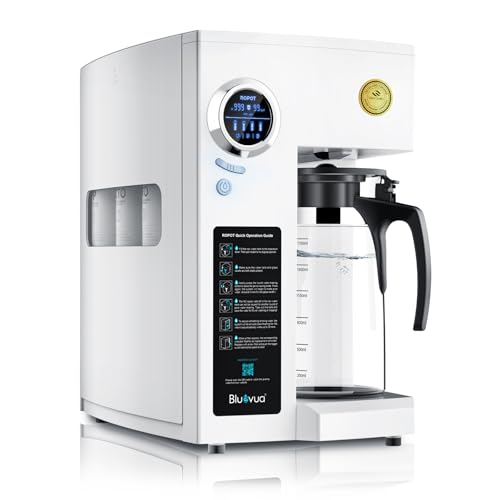
Best for: Renters, apartment dwellers, or households that want reverse osmosis without connecting a unit to plumbing. This countertop model plugs into a power source and includes a glass carafe, so it can be moved more easily than an under-sink system.
The listed six-stage process includes a 0.0001-micron RO membrane, UV light, and a remineralization filter. The product information says it reduces TDS and a range of listed contaminants, including chlorine, fluoride, lead, arsenic, PFOA, and PFOS. It is also described as WQA-certified against NSF/ANSI/CAN 372 for lead-free materials and tested by SGS.
A stated 2:1 pure-to-drain ratio and automatic standby mode are useful features for buyers considering water and energy use. Limitation: It treats water at the countertop rather than supplying filtered water to every household tap.
Ninja HydraSense WF1001 Filtration System

Best for: Buyers prioritizing drinking-water filtration and a system that tracks filter usage. The listing says its filtration targets more than 80 contaminants, including microplastics, pharmaceuticals, and “forever chemicals,” and removes more than 40 contaminants that affect taste.
Unlike an RO system with remineralization, the Ninja listing emphasizes retaining natural minerals and electrolytes while reducing contaminants. That makes it a comparison option for households seeking filtered water with natural mineral content. The manufacturer’s listing also makes comparative contaminant-removal claims; check the product documentation to understand the testing basis and which specific substances matter for your water.
Limitation: The provided product details do not specify installation style or the exact filter replacement interval, so confirm those details before purchase.
MyWaterClub 2-Stage Whole-House System

Best for: Small or medium homes looking for filtration at multiple water outlets. The system is described as a two-stage whole-house unit with 3/4-inch inlet and outlet ports. Its intended uses include water for bathing, cooking, and cleaning.
The listing says the system can help protect plumbing and appliances such as water heaters, washing machines, dishwashers, and coffee makers from hard water and contaminants. It also includes an extra set of replacement cartridges, which may be useful for buyers planning ahead for maintenance.
Choose this over a countertop system if your goal is treatment at the home’s water entry point rather than just drinking water. Limitation: The supplied information does not name the cartridge media or identify specific contaminants and reduction levels, so verify that its cartridges match your water concerns.
iSpring RCC7AK-BN Alkaline RO System

Best for: Households that want an under-sink reverse osmosis system with a mineral-remineralization stage. The listed features include a natural mineral AK stage intended to add minerals and balance pH after RO filtration. Its transparent first-stage housing lets users visually inspect the filter for buildup.
The product is described as a 75-gallon-per-day, six-stage system and includes a top-mounted fastener designed to simplify countertop installation of the faucet from above the sink. It is a better fit than a portable countertop unit for buyers who want a more permanent kitchen setup.
Limitation: This system requires under-sink space and installation, unlike a plug-in countertop filter. Review the installation requirements and included components for your sink configuration before buying.
HQUA WF3-03 Whole-House UV System
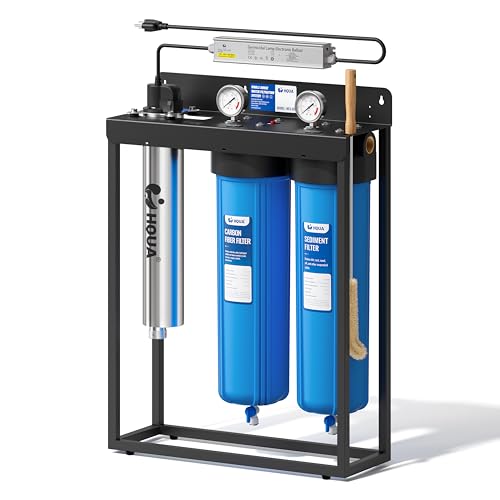
Best for: Homeowners seeking whole-house treatment with multiple filtration stages and UV. The listing describes a three-stage system that targets sediment, chlorine, odor, VOCs, PFAS, and selected heavy metals. It can be installed as a freestanding unit or mounted on a wall.
The included UV component is listed as a 12-GPM, 55-watt unit, with the product information stating that it can reduce up to 99.99% of microorganisms. This system is a broader whole-home option than point-of-use RO models, particularly for buyers who want treatment beyond a single drinking-water tap.
Limitation: The product information does not provide detailed cartridge replacement schedules or explain the testing basis for each reduction claim. Check maintenance instructions and confirm suitability for your water source.
Buying Guide: How To Choose A Water Filtration System
Do you need filtered water at one tap or throughout the home?
Countertop and under-sink systems treat water at the point of use. They are commonly considered for drinking and cooking water. Whole-house systems connect to the home’s plumbing and are designed to supply treated water to multiple outlets. Choose based on where treatment is needed, not just the number of filtration stages.
Should you choose reverse osmosis, carbon filtration, or UV?
Reverse osmosis is the defining feature of the Bluevua and iSpring systems. Their listings also describe remineralization stages. Carbon filtration may target chlorine, taste, and odor, but the exact performance depends on the filter media and product specifications. UV is included with Bluevua and HQUA; check the stated purpose and maintenance requirements rather than treating UV as a substitute for every other filtration stage.
What should you check before installation?
Confirm the available space, plumbing connections, power needs, and whether the product is designed for countertop, under-sink, or whole-house use. Whole-house models require matching port sizes and a suitable installation location. For RO units, review the setup requirements and how filtered water is collected.
How do you compare contaminant claims?
Start with a water test or local water-quality report, then compare the substances listed by the system with the substances you need to reduce. Look for product documentation that names specific contaminants and explains supporting testing or certification. Broad claims alone do not establish that a system is suitable for every water source.
Frequently Asked Questions
What is the best blue water filtration system for an apartment?
The Bluevua is a practical option for an apartment because its listing says it requires no plumbing installation and operates on a countertop. Confirm that its size and electrical requirements fit your space.
Which system filters water throughout a home?
MyWaterClub and HQUA are described as whole-house systems. MyWaterClub is a two-stage option, while HQUA adds a three-stage setup and UV component.
Does reverse osmosis remove minerals?
Reverse osmosis can reduce dissolved substances, and the Bluevua and iSpring listings include remineralization features. Review each system’s specifications to understand what its post-treatment stage is intended to add.
Can a whole-house filter replace an under-sink drinking-water system?
Not necessarily. Their stated treatment stages and contaminant targets differ. Compare the whole-house system’s documented performance with your drinking-water needs before deciding.
How often do filters need replacement?
Replacement timing depends on the system, cartridge, water quality, and usage. Follow the manufacturer’s maintenance guidance; the supplied details do not provide a complete schedule for every system here.