Best Chairs to Help With Posture for Home and Office
The best chair to help with posture depends on how you work: a kneeling chair can encourage a more upright position, while a sit-stand perch supports changing positions at an adjustable desk. The Easyego is best for height-adjustable kneeling support, the DRAGONN for a cushioned kneeling design with a stated weight limit, the Newtral for varied sit-stand positions, and the NYPOT for rocking and height adjustment. A backrest kneeling chair is another option for shoppers who want additional support.
| Chair | Best suited for | Standout feature |
|---|---|---|
| Easyego Kneeling Chair | Personalized kneeling setup | Adjustable angle |
| DRAGONN Ergonomic Kneeling Chair | Cushioned kneeling support | 3-inch cushion; 250-pound capacity |
| Newtral Standing-Mate Chair | Sit-stand desk users | Multiple sitting, leaning, and kneeling positions |
| NYPOT Adjustable Kneeling Chair | Users who want movement | Height adjustment and gentle rocking |
| Kneeling Chair With Backrest | Users seeking backrest support | Adjustable height, seat angle, and leg rest |
Easyego Adjustable Kneeling Chair

The Easyego uses an angled seat intended to encourage a more open, upright posture. Its angle adjustment is designed to let users tailor the fit, which may be useful when a fixed-height kneeling chair does not suit their body or desk setup. The design shifts some weight toward the legs and engages different muscles than a conventional chair.
Best for: People who want to adjust a kneeling chair’s angle for a more personalized sitting position. It was selected for its adjustable design and clear focus on posture-conscious seating.
Consider: The product description emphasizes a different muscle demand than a standard chair. Start with shorter sessions and change positions if the kneeling posture feels uncomfortable.
DRAGONN Cushioned Kneeling Chair
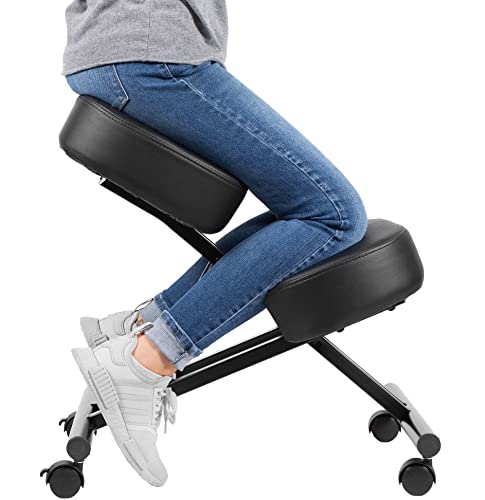
This kneeling chair has a 3-inch vinyl cushion, an angled seat, and a metal base. The listed weight capacity is 250 pounds. Its design distributes weight through the buttocks and legs while encouraging an upright sitting position. Brake casters are included, according to the product name.
Best for: Home or office users who want a cushioned kneeling chair with a stated capacity and a sturdy metal base. It is a straightforward alternative to a conventional office chair for people willing to adapt to a different sitting position.
Consider: The manufacturer notes that kneeling uses different muscles and recommends changing positions during the day. Avoid treating it as a guaranteed replacement for all-day movement breaks.
Newtral Sit-Stand Perch Chair
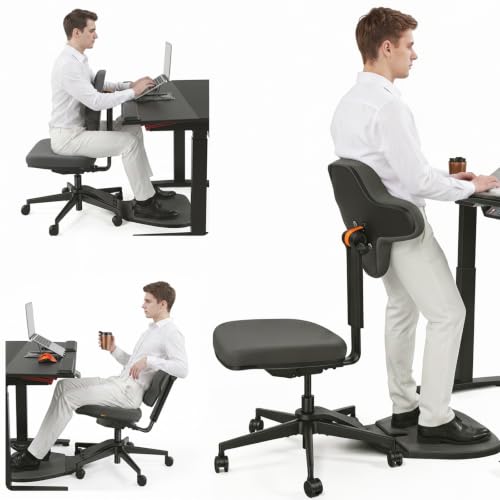
The Newtral Standing-Mate is designed for sit-stand workstations. Its listed positions include upright, reverse, and reclined sitting, as well as standing back, hip, or chest support, side leaning, and kneeling. The package description also includes a foldable anti-fatigue mat with adjustable positioning and a nonslip surface.
Best for: People with an adjustable-height desk who want to alternate among sitting, perching, leaning, and kneeling. It stands out from basic kneeling stools by offering several described positions and a standing mat.
Consider: Its multi-position design may be more than someone needs for a fixed-height desk or a simple seated setup. Check that the workstation supports the postures you plan to use.
NYPOT Height-Adjustable Rocking Kneeling Chair

The NYPOT chair combines an adjustable cushioned seat with a gentle rocking motion. The listed desk-fit range is 29 to 35 inches, and the product information gives a 250-pound support limit. Its kneeling design distributes weight between the hips and legs, while rocking lets users shift position instead of remaining completely still.
Best for: Desk users who want height adjustment and a small amount of movement in a kneeling chair. It was selected because its desk range and rocking feature help distinguish it from fixed-position models.
Consider: The rocking motion may not suit users who prefer a stationary seat. Check desk height and personal comfort before choosing a kneeling format.
Kneeling Chair With Adjustable Backrest

This model adds a backrest to a kneeling-chair layout and lists pneumatic height adjustment from 31.4 to 35.4 inches. It also has four seat-angle settings and a leg rest with four adjustable heights and angles. The product description specifies a 250-pound maximum capacity and recommends gradual acclimation to the different muscle demands.
Best for: Users who want a kneeling design with a backrest and several adjustment points. Its listed height range and adjustable leg rest offer more configuration options than a basic kneeling stool.
Consider: The stated recommended user-height ranges differ within the product details. Verify the chair’s dimensions and fit information before selecting it.
Buying Guide: How To Choose A Posture-Friendly Chair
Should you choose a kneeling chair or a sit-stand perch?
A kneeling chair angles the body and shifts some support from the seat toward the legs. It may suit someone seeking an alternative to a conventional upright chair. A sit-stand perch is better suited to an adjustable desk and users who want to move between sitting, leaning, and standing positions. Neither format removes the need to change positions during the day.
Which adjustments matter most?
Check seat height and angle first, then compare leg-rest adjustment, rocking, and back support. A height-adjustable chair can help align the seat with the desk, while an adjustable leg rest can affect how the knees and shins are supported. Confirm the product’s stated dimensions and limits against your workspace and body measurements.
How long should you use a kneeling chair?
There is no single session length that suits everyone. Several product descriptions advise acclimating gradually because kneeling chairs engage different muscles. Begin with shorter periods, alternate with another posture, and stop using the chair if it causes discomfort. A posture chair should support comfortable variation, not force one position all day.
What should you check before buying?
- Desk fit: Compare the desk height with the chair’s adjustment range.
- Capacity: Use the listed maximum weight limit as a practical selection check.
- Cushions: Review the seat and leg-rest padding details if those areas need extra support.
- Movement: Decide whether you want a stationary chair, rocking motion, or sit-stand options.
- Support style: Choose a backrest model if you want one; many kneeling chairs do not list one.
Frequently Asked Questions
Can a kneeling chair help with posture?
A kneeling chair is designed to encourage a more upright sitting position by angling the seat and sharing support between the hips and legs. Comfort and fit vary, so it is not a guaranteed solution for posture problems.
Is a kneeling chair suitable for all-day use?
Not necessarily. Kneeling chairs use muscles differently from standard chairs, and product guidance recommends adjusting gradually or switching positions during the day.
What is the difference between a kneeling chair and a saddle chair?
A kneeling chair includes a forward-angled seat and a separate leg or knee support. A saddle chair uses a shaped seat; the products listed here do not provide enough detail to compare saddle-seat specifications.
Do posture chairs need to match desk height?
Yes. The chair should let you work at your desk without forcing an uncomfortable arm or leg position. Compare the chair’s adjustment range with your desk before buying.
Should I choose a chair with a backrest?
Choose a backrest model if you specifically want that feature. A backrest kneeling chair combines knee support with back support, while many basic kneeling designs focus on the angled seat and leg rests.