Best Cherry End Grain Cutting Boards for Serious Home Chefs
When choosing a cherry end grain cutting board, durability, knife-friendliness, and sustainability matter. This guide highlights five cherry-end-grain boards that balance structural strength with elegant timber. Each option emphasizes craftsmanship, food safety, and practical features like juice grooves or feet for stability. Use the buying guide to compare sizes, thickness, and care needs to pick the best board for your kitchen workflow.
| Product | Size / Weight | End Grain | |
|---|---|---|---|
| WoodForChef Heritage Cherry End Grain Board | 18x16x2 in | Yes | Floating look with feet; premium finish |
| Raised Butcher Block Cutting Board | 2″ thick, 13.5×17.5 in | Yes | High stability with raised block and skid-proof feet |
| SHUMARU Mahogany End-Grain Board | 20x13x1.6 in | Yes | Handmade in Bali; silky-smooth surface |
| GrainWoods Personalized End Grain (16x10x2) | 16x10x2 in | Yes | Double-sided, custom engraving option |
| GrainWoods Personalized End Grain (14x9x2) | 14x9x2 in | Yes | Compact, personalized engraving option |
WoodForChef Heritage Cherry End Grain Board

Product features highlight a spacious 18×16 surface with beveled edges and raised feet for stability. The board’s finish emphasizes a smooth touch, while its cherry wood option aligns with classic kitchen aesthetics. The product is FSC certified and available in multiple wood options to suit different kitchen decors. This board aims to combine elegance with practical performance for chopping, slicing, and carving tasks, reflecting premium craftsmanship.
Raised Butcher Block Cutting Board

This end-grain board features a robust 2″ thickness and a generous 13.5″ x 17.5″ surface. It uses local Cherry, Beech, Poplar, Walnut, and Maple hardwoods and sits on bun feet to elevate cutting height. The raised design facilitates easy transfer of food, keeps moisture at bay, and provides skid resistance to hold the board steady during prep tasks.
SHUMARU Mahogany End-Grain Board
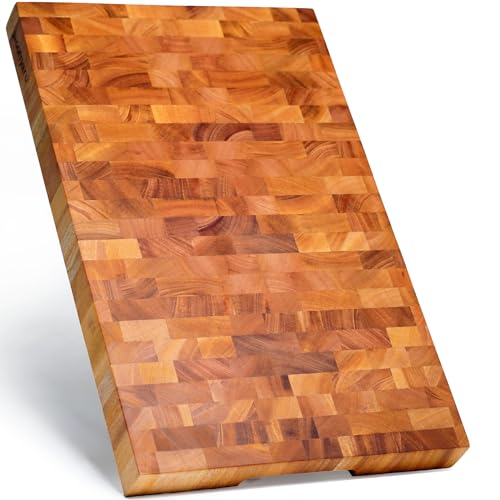
Handmade in Bali from sustainably sourced mahogany, this board offers a unique one-of-a-kind appeal. Its end-grain surface is hand-triple-sanded and finished with food-safe oil, delivering a silky feel that is gentle on knives. A large work area and easy-grip handles support chopping, carving, plating, and serving, with a design that prioritizes durability and knife-friendliness.
GrainWoods Personalized End Grain (16x10x2)

This double-sided cutting block emphasizes personalization with engraved options and a natural grain pattern. End-grain construction provides durability and knife-friendliness, aimed at regular use in home kitchens or professional spaces. The board balances a spacious surface with a compact footprint, aiding versatility in prep and presentation tasks.
GrainWoods Personalized End Grain (14x9x2)
A smaller, customizable end-grain board designed for charcuterie, garnish prep, or everyday chopping. The engraved personalization adds a decorative touch while preserving the knife-friendly surface and end-grain resilience. This size is well-suited for compact kitchens or specialty prep tasks.
Buying Guide: End Grain Cherry Boards
- End grain vs. edge grain: End-grain boards are typically more durable and self-healing, as knife cuts are absorbed between the grain blocks. They’re generally preferred by chefs for long-term use, though often heavier and more expensive than edge-grain boards.
- Wood species and sustainability: Cherry is prized for its warm tone and smooth surface. Look for boards with FSC certification or responsible-sourcing claims to ensure environmental standards and long-term forest stewardship.
- Thickness and weight: Thicker boards (2 inches or more) offer robust durability and stable cutting surfaces but are heavier to handle. Thinner boards are lighter and easier to maneuver but may wear more quickly under heavy use.
- Maintenance and finish: Food-safe oils and sealants protect the wood from moisture and stains. Regular oiling helps maintain the board’s appearance and performance, especially for cherry wood, which can darken with age.
- Features to consider: Built-in juice grooves help manage liquids, feet or risers improve air circulation and stability, and reversible designs double the board’s lifespan by enabling side rotation for even wear.
- Care considerations: Avoid soaking in water; hand wash with mild soap, dry promptly, and re-oil when the surface looks dry. Avoid harsh cleaners or dishwasher exposure that can crack or warp end-grain blocks.
- Size alignment with kitchen workflow: For serious prep, a larger board (around 18×12 inches or bigger) provides ample space for multi-item tasks, while a smaller board (around 14×9 inches) is ideal for charcuterie and daily quick cuts.
- Cost vs. value: End-grain cherry boards usually cost more than edge-grain options, but they offer extended lifespan and knife-friendly performance—an important consideration for frequent prep.