Best Child Safety Stove Guards for Safer Family Kitchens
The best child safety stove guard depends on your stove width, preferred material, and how much of the cooktop edge you want to cover. The SDSNTE is best for an adjustable 17-to-34-inch fit, while the Prince Lionheart covers wider 24-to-36-inch surfaces. For stainless steel, consider BEOSUO’s two-pack or wider three-pack; Qdos is designed to protect the front and sides and suit modern kitchens. A stove guard is a barrier, not a substitute for adult supervision or other kitchen safety measures.
| Product | Best for | Fit or key feature |
|---|---|---|
| SDSNTE Adjustable Guard | Flexible sizing | 17–34 inches |
| Prince Lionheart Guard | Wider stoves | 24–36 inches; polycarbonate |
| BEOSUO Stainless Steel, 2 Pack | Stainless steel barrier | 17–34 inches |
| Qdos Aluminum Guard | Front-and-side coverage | 22.5–38.5 inches |
| BEOSUO Stainless Steel, 3 Pack | Wider coverage | 17–51 inches |
SDSNTE Adjustable Stove Guard

Best for: Families who need an adjustable guard within a 17-to-34-inch range. Its stated universal-fit design is intended to accommodate a range of stove sizes, and the product description says it can be removed for cleaning.
The guard is described as heavy-duty and heat-resistant, with a barrier intended to keep children from directly touching the stove surface. It is a practical option when the stove width falls inside its adjustment range and a removable design is useful for kitchen cleanup.
Consideration: It will not fit a stove wider than 34 inches according to the listed range. Measure the installation area before choosing it.
Prince Lionheart Premium Stove Guard

Best for: Buyers looking for a polycarbonate guard that adjusts from 24 to 36 inches. The product description says it fits stoves and surfaces, making it a potential match for a wider range of installations than guards starting at 17 inches.
Prince Lionheart identifies polycarbonate as the material and states that it will self-extinguish if exposed to an open flame. That material detail may matter to caregivers comparing plastic guard designs.
Consideration: The stated adjustment range begins at 24 inches, so it may not suit narrower cooktops. Check the dimensions of the surface where the guard will be installed.
BEOSUO Stainless Steel, 2 Pack
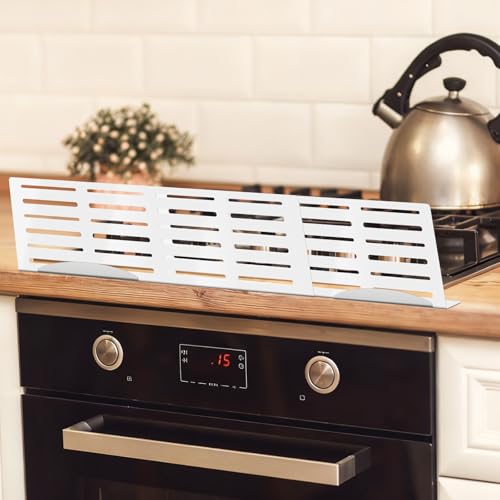
Best for: Households that prefer a stainless steel barrier and need a 17-to-34-inch adjustable fit. Its two-panel design is described as flexible, with coverage intended for standard gas or electric stoves.
The manufacturer describes the steel as heavy-duty and heat-resistant, designed to remain rigid under cooking heat. The two-pack may be useful when more than one guard is needed or when a household wants additional pieces available.
Consideration: The listed width stops at 34 inches. Confirm that the panel arrangement and dimensions suit your cooktop before relying on it for a specific installation.
Qdos Aluminum Front-And-Side Guard
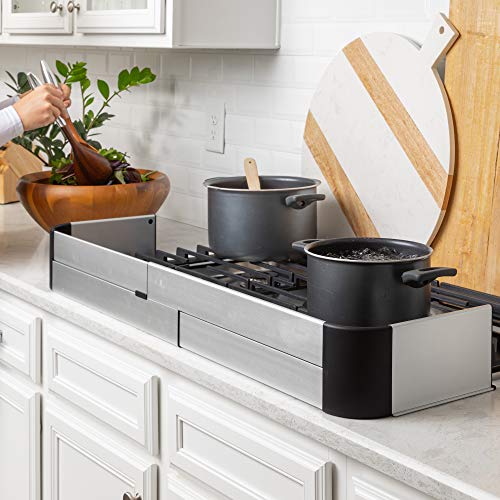
Best for: Buyers who want a guard described as protecting both the front and sides of the stove. Qdos adjusts from 22.5 to 38.5 inches and is designed for cooktops and most freestanding stoves.
The aluminum design is presented as a way to complement modern kitchen styles. Installation uses a heat-resistant adhesive, and the product description says it can be removed quickly for cleaning. Choose this model if its width range matches your stove and side coverage is a priority.
Consideration: Installation depends on adhesive. Check that the intended surface and installation area are suitable before attaching the guard.
BEOSUO Stainless Steel, 3 Pack

Best for: Families needing a wider adjustable range or multiple pieces. This three-pack is listed as expanding from 17 to 51 inches, making it the broadest stated width range among the guards here.
Like the two-pack option, it uses a flexible two-panel design and is described as heavy-duty, heat-resistant stainless steel. It may be a better choice when a 34-inch maximum would be too narrow or when multiple guards are useful for the household’s setup.
Consideration: A wider adjustment range does not establish that it fits every stove. Measure the full intended coverage area and confirm the panels can be arranged as needed.
Buying Guide: How To Choose A Child Safety Stove Guard
How wide should the guard be?
Measure the span you want covered, then compare it with the listed adjustment range. The options here range from 17–34 inches to 17–51 inches. A guard that is too narrow may leave parts of the front edge uncovered; do not assume “universal” means it fits every stove.
Which material and installation style should you choose?
Compare the stated material and attachment method. The listed products include stainless steel, polycarbonate, and aluminum. Qdos specifically uses heat-resistant adhesive, while SDSNTE describes its guard as removable for cleaning. Follow the product’s installation instructions and check the surface requirements before fitting a guard.
What does a stove guard protect against?
These products are designed as barriers to reduce a child’s direct access to hot stove areas. They do not prevent every kitchen hazard and should not replace supervision. Keep pot handles turned away from the edge and use other appropriate child-safety practices.
Frequently Asked Questions
Will a child safety stove guard fit every stove?
No. Each product has a stated adjustment range, and stove shapes and installation surfaces can differ. Measure the intended area and compare it with the product dimensions.
Can a stove guard prevent all burns?
No. A guard is intended to create a barrier, but it cannot eliminate every burn or scald risk. Supervise children around cooking areas.
Are stove guards and stove knob covers the same thing?
No. A stove guard creates a barrier near the stove surface. Knob covers are separate products designed to make it harder for children to turn stove controls.
Should I remove a stove guard for cleaning?
It depends on the model. SDSNTE describes its design as removable for cleaning, and Qdos says it offers quick removal. Check the specific product instructions before removing or reinstalling a guard.