Best Commercial Beer Tap Systems for Pubs and Bars
Discover reliable commercial beer tap solutions designed for busy bars, pubs, and venues. This article highlights five top options from VEVOR and other trusted brands, focusing on durability, compatibility, and ease of operation. Each entry includes real-world features such as CO2 management, temperature control, and versatile keg compatibility to help you select the best system for your setting.
| Product | Brand | Key Feature | Keg Type Compatibility |
|---|---|---|---|
| VEVOR Beer Kegerator, Triple Tap D System | VEVOR | 3 kegs, built-in CO2, precise temp control | Sixth, Slim, Ball Lock |
| VEVOR Beer Kegerator, Triple Tap Ball Lock | VEVOR | Compact triple-tap with CO2, clean layout | Sixth, Slim, Ball Lock |
| VEVOR Single Tap D System | VEVOR | Single-dispense setup, wide temperature range | Sixth, Ball Lock |
| GarveeHome Single Tap Kegerator | GarveeHome | Full-size unit with shelves, adjustable temp | US-standard Full-Size, Sixth |
| MRbrew All 304 Stainless Keg Coupler | MRbrew | Heavy-duty Sankey coupler, leak-resistant | Ball Lock compatible lines |
VEVOR Triple Tap D System Kegerator

The VEVOR Triple Tap D System kegerator is designed for busy commercial settings that require reliable multi-draw capabilities from a single unit. It accommodates three sixth-kegs and includes a 5 lb CO2 tank, allowing a compact installation that still delivers efficient airflow and cooling. Its temperature range from 30℉ to 75℉ (-2℃ to 24℃) supports a wide variety of beer styles, while digital controls support precise adjustments. The internal layout emphasizes easy keg access and organized routing to minimize foam and waste. Features like auto defrost, fan-forced circulation, and foam optimization help maintain draft quality during peak service times and even during brief power interruptions. With a stainless-steel build and thoughtful design, this model is suited for small to mid-sized pubs and bars that value reliability and straightforward operation.
Key considerations:
– Pros: Three-keg capacity, integrated CO2, broad temperature range, user-friendly digital controls.
– Cons: May require additional external components for certain layouts; energy usage depends on ambient conditions.
– Ideal for: Small bars, tasting rooms, and venues needing quick, three-tap service without complex installations.
VEVOR Triple Tap Ball Lock Kegerator
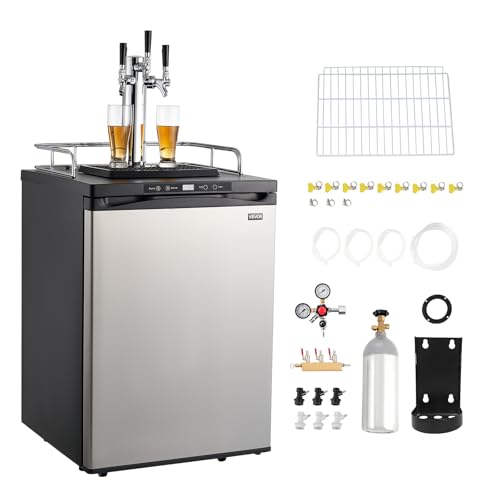
This variant mirrors the triple-tap format but is configured for ball-lock keg connections, supporting similar capacity and CO2 integration as the D system version. The interior layout emphasizes flexible keg placement and a compact footprint suitable for bars or kitchens with limited space. Temperature control remains a priority, delivering consistent cooling from 30℉ to 75℉. Operational simplicity is underlined by the digital display and push-button interface, enabling fast service and straightforward maintenance. Foam management and line cleanliness are aided by appropriate line routing and a foam optimization feature designed to maintain draft quality.
Key considerations:
– Pros: Ball-lock compatibility, efficient three-tap setup, integrated CO2 system.
– Cons: May require different keg fittings than D-system setups; spare parts availability should be confirmed.
– Ideal for: Venues using ball-lock kegs or requiring a three-tap solution with flexible keg types.
VEVOR Single Tap D System Kegerator

This single-tap model prioritizes compact efficiency while retaining robust temperature control and draft quality. It includes a 5 lb CO2 tank and a temperature range suitable for maintaining beer integrity from lightly chilled to cooler serving temperatures. The external CO2 bracket optimizes interior space, making it easier to integrate with other bar equipment. The digital controls simplify daily operations, and the auto-defrost feature helps minimize maintenance in high-use environments. The unit’s versatility makes it a strong candidate for venues that primarily serve one beer style but still want the option to diversify with a secondary system in the future.
Key considerations:
– Pros: Space-saving design, reliable single-dispense performance, easy temperature control.
– Cons: Limited to one beer line; scaling up requires another unit or a different configuration.
– Ideal for: Small bars, cafes, or venues testing a single-draft program with potential growth.
GarveeHome Single Tap Beer Kegerator

The GarveeHome unit blends a roomy interior with straightforward temperature control, enabling the storage of multiple kegs while maintaining consistent pour quality. It features a spacious 4.5 cu ft interior and shelves that offer flexible usage, including enabling the appliance to function as a conventional refrigerator when not in use for beverages. Temperature adjustment covers a practical range for most beer styles, and the external CO2 bracket helps preserve internal space. This model is a sensible option for venues that want a durable, versatile unit capable of handling diverse draft offerings without occupying excessive floor space.
Key considerations:
– Pros: Ample interior space, dual-use refrigeration, straightforward temperature control.
– Cons: Larger footprint than compact kegerators; setup may require careful layout planning.
– Ideal for: Bars and restaurants needing a versatile, multi-use refrigerated unit with draft capability.
MRbrew All 304 Stainless Steel Keg Coupler

The MRbrew all-stainless Sankey keg coupler is designed for heavy commercial use, providing a durable pressurized connection with 304 stainless steel components for longevity and flavor integrity. It features a 55-PSI safety relief valve to prevent over-pressurization and a robust gas line connection with compatible fittings for ball-lock systems. The seal design reduces foaming and leaks, ensuring cleaner pours. This coupler is a practical upgrade for bar operators who want reliable, sanitary equipment that endures high-volume service while preserving beer quality. It also includes essential hardware to facilitate a straightforward hookup to standard ball-lock lines.
Key considerations:
– Pros: Heavy-duty stainless construction, safety valve, reliable seals.
– Cons: Requires matching keg lines and fittings; primarily a component rather than a complete dispenser.
– Ideal for: Establishments upgrading or maintaining keg tapping infrastructure with a focus on hygiene and durability.
Buying Guide: Key Purchase Considerations For Commercial Beer Tap Systems
Choosing the right beer tap system depends on your venue’s size, service style, and keg preferences. Here are several factors to weigh when evaluating options:
-
<li Keg Compatibility: D system vs. ball-lock fittings influence keg selection and connection hardware. Ensure your kegs and line fittings align with the coupler and regulator you choose.
<li Tap Configuration: Single, dual, or triple taps affect throughput. Multi-tap units boost service speed for busy bars but require more space and robust draft lines.
<li Temperature Control: Steady temperature is essential for beer quality. Look for models with wide range control, digital displays, and automatic defrost to minimize maintenance.
<li CO2 Management: Assess included CO2 tanks and mounting options. External brackets save interior space, while integrated tanks simplify setup in smaller venues.
<li Space and Footprint: Measure available floor area and ensure the unit fits without obstructing customer traffic. Mobility features are beneficial for venues that reconfigure layouts.
<li Durability and Maintenance: Stainless steel builds withstand high-volume service. Check for easy-to-clean components, leak resistance, and readily available replacement parts.
<li Service Style: For tasting rooms or multi-beer events, consider a multi-tap system to serve diverse styles efficiently. For single-brand pours, a reliable single-tap setup may be more cost-effective.
<li Budget and Scale: Balance initial investment against expected volume and beer programs. Consider future expansion plans when selecting a system.
Comparison tips:
– For high throughput, prioritize triple-tap configurations with reliable CO2 handling and robust regulators.
– For flexibility, choose systems compatible with both sixth and full-size kegs, plus both D system and ball-lock options.
– For quality consistency, focus on temperature stability, foam management, and cleanability as top priorities.