Best Crawl Space Water Pumps for Fast, Practical Water Removal
The best crawl space water pump depends on how much water you need to remove, how low the pump can draw it down, and whether you want automatic operation. The Green Expert is specifically described for crawl spaces and emergency water removal; AQUASTRONG and FOTING 1HP models prioritize high flow; Acquaer adds automatic on/off operation; and the Wayne WaterBUG is suited to shallow water and tight spaces. Compare their stated flow, lift, and suction details before choosing.
| Product | Best For | Notable Detail |
|---|---|---|
| Green Expert 1/4HP | Crawl space flooding | Specifically listed for crawl spaces |
| AQUASTRONG 1HP | High-volume drainage | Up to 4,500 GPH at 5 feet |
| Acquaer 1/3HP | Automatic pumping | Electronic on/off sensor |
| FOTING 1/2HP | Shallow puddles | Removes water to 0.04 inch |
| Wayne WaterBUG | Tight or flat areas | Top- and side-discharge options |
Green Expert 1/4HP Submersible Pump
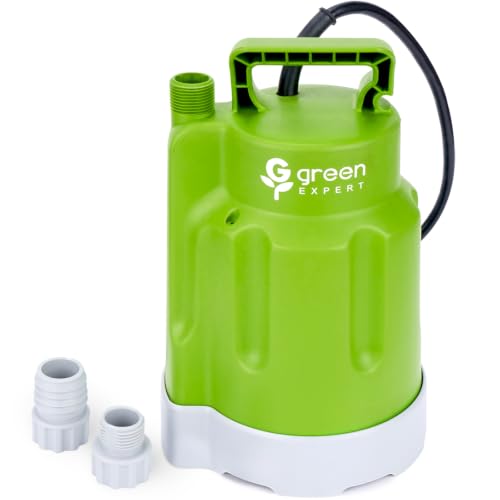
Best for: Homeowners seeking a pump specifically described for crawl space flooding and emergency water removal. It is selected for the direct relevance of its stated uses, which also include basement flooding, garages, pool draining, and general household drainage.
The 1/4HP motor is rated for a flow of up to 1,800 gallons per hour, with a maximum head of 28 feet. Those figures provide useful comparison points when estimating how quickly water may be moved and how high it must be lifted. The product is described as a portable utility pump for both emergency and routine drainage.
Limitation: The supplied features do not state a minimum water depth or automatic switching function. Check whether its operating setup suits your crawl space and the amount of water remaining after pumping.
AQUASTRONG 1HP High-Flow Sump Pump

Best for: Removing larger amounts of standing water quickly. Its 1HP motor is rated to move up to 4,500 gallons per hour at a 5-foot lift, and the pump can lift water up to 30 feet. It is selected for buyers who prioritize stated flow capacity and vertical lift.
The bottom-suction design is specified to remove water down to 1/5 inch from the surface and handle solids up to 1/5 inch. The package includes a 1-1/4-inch NPT discharge, a 1-1/2-inch elbow adapter, snap coupling adapters, and a 10-foot power cord. The pump starts when plugged in and stops when unplugged.
Limitation: It is not described as an automatic pump; operation requires plugging in and unplugging. Its stated minimum drawdown is 1/5 inch, so it may leave a thin layer of water.
Acquaer 1/3HP Automatic Submersible Pump

Best for: Buyers who want a pump that switches on and off based on water level. Its electronic sensor turns the pump on when it detects 1-1/2 inches of water and off when the level falls below 1/4 inch. That operation can reduce the need to manually start and stop each pumping cycle.
The 1/3HP pump moves up to 2,160 gallons per hour. Its bottom-suction design is specified to draw water down to 1/4 inch, and its strainer base filters debris. The listed temperature-control feature is designed to protect the motor when water runs low; the base can be cleaned without tools or screws.
Limitation: The automatic sensor requires water to reach its 1-1/2-inch activation level. It is not intended to start at a shallower depth according to the supplied specifications.
FOTING 1/2HP Shallow-Water Pump

Best for: Shallow puddles and buyers focused on reducing the water left behind. The listed minimum suction level is 0.04 inch, lower than the stated drawdown depth of the other pumps in this comparison. It is selected for that specific shallow-water capability.
The 1/2HP motor is rated for up to 2,450 gallons per hour and a maximum lift of 25 feet. Its removable stainless steel filter handles solids up to 1/5 inch. The product weighs 8.5 pounds and includes three adapters. Listed uses include basements, boats, pools, garden ponds, and hot tubs.
Limitation: Its maximum head is 25 feet, so compare that figure with the vertical lift required at your property. The listed flow is lower than the 1HP options.
Wayne WaterBUG Multi-Position Pump

Best for: Small or awkward areas where choosing the discharge direction matters. The WaterBUG offers top discharge for tight spaces, including window wells, and side discharge for flat surfaces. It pumps up to 1,350 gallons per hour and is specified to remove water down to 1/16 inch.
Its multi-ring suction strainer filters debris to help prevent intake blockages. The discharge outlets are designed to fit a standard garden hose, and tethered caps seal the outlets. These details make it a useful comparison for buyers who value placement options and shallow-water removal over maximum flow.
Limitation: Its stated flow is lower than the 1,800-to-4,500-GPH options in this guide. Choose another model if high-volume removal is the primary requirement.
Buying Guide: How To Choose A Crawl Space Water Pump
How much water must the pump move?
Use the gallons-per-hour rating as a starting point when comparing pumps for substantial standing water. The AQUASTRONG is rated at 4,500 GPH at a 5-foot lift, while the Green Expert is rated at 1,800 GPH. Actual conditions, including lift height and discharge setup, matter; do not treat a maximum flow figure as a guarantee for every installation.
How low should it draw water?
Compare the stated minimum suction depth if the goal is to leave less water behind. FOTING lists 0.04 inch, Wayne lists 1/16 inch, and AQUASTRONG lists 1/5 inch. These measurements are not identical to a guarantee of a completely dry floor. Check whether the pump’s base can sit securely on the crawl-space surface.
Do you need automatic operation?
Acquaer lists automatic electronic sensing with specific on and off water levels. The AQUASTRONG, by contrast, is described as starting when plugged in and stopping when unplugged. If unattended operation matters, verify the product’s complete instructions and ensure the installation can be used safely.
Will the lift and debris capacity fit the site?
Measure the vertical distance from the pump to the discharge point and compare it with the stated maximum head. Also consider whether the water contains debris: AQUASTRONG and FOTING specify handling solids up to 1/5 inch, while Wayne lists a debris-filtering strainer without a particle-size figure. Follow each pump’s operating instructions and keep electrical connections appropriate for a wet area.
Frequently Asked Questions
What is the best pump for a crawl space?
The Green Expert is specifically listed for crawl space flooding. For a particular space, compare required flow, vertical lift, drawdown depth, and whether automatic operation is needed.
Can a submersible pump remove all the water?
Not necessarily. Each model has a stated minimum suction or drawdown depth, and the remaining water may need separate removal. Check the specification before buying.
Is a higher GPH rating always better?
No. Higher flow can help with larger volumes, but lift height, water depth, debris, and discharge arrangements also affect suitability.
Which option is automatic?
The Acquaer listing specifies automatic on/off operation based on water level. The other selected product details do not specify automatic sensor operation.
Can these pumps handle debris?
Some list debris-handling features. AQUASTRONG and FOTING specify solids up to 1/5 inch, while Wayne describes a debris-filtering strainer. Check product instructions before pumping water containing solids.