Best Drain Waste Vent Fittings for Common Plumbing Projects
The best drain waste vent fittings depend on the pipe size, branch layout, and direction of flow your project requires. For common PVC DWV installations, a sanitary tee suits a branch connection, a wye or combination fitting guides drainage into a main line, and a long-sweep elbow changes direction. The products below cover those needs, plus cleanout access. Check the fitting’s dimensions and local plumbing requirements before choosing.
| Fitting | Best suited for | Key detail |
|---|---|---|
| 2-inch sanitary tee | Adding a compatible branch | Hub x hub; 35-pack |
| 3-inch wye | Angled branch connections | Hub ends; 25-pack |
| 3 x 3 x 2-inch combination wye | Reducing a main to a branch | Wye and 45-degree bend |
| 2-inch long-sweep street elbow | Changing direction | Hub x spigot; 25-pack |
| 3-inch two-way cleanout | Providing access for cleaning | DWV use; not for pressure |
SUPPLYGIANT 2-Inch PVC DWV Sanitary Tee

This 2-inch sanitary tee is best for projects that need a branch connection in compatible PVC drain, waste, and vent piping. It has hub connections on both ends for solvent-weld installation and is sold in a 35-pack, which may suit larger jobs or planned replacement work.
The product is made of corrosion-resistant white PVC and is intended for non-pressurized DWV systems. Choose it when the pipe size and connection style match your layout. Its limitation is that it is a 2-inch fitting; it is not a substitute for a differently sized tee or a directional wye.
SUPPLYGIANT 3-Inch PVC DWV Wye

Best for a 3-inch DWV layout that needs an angled branch, this PVC wye has hub ends for solvent-weld connections. Its configuration is intended for residential, commercial, and industrial DWV systems. The 25-pack is relevant for multi-fitting projects or stock replacement needs.
Corrosion-resistant white PVC is the listed construction material. Choose this fitting when a wye branch is appropriate for your system design and all connecting pipe is compatible. The product information does not specify a reducing outlet, so choose another fitting if the branch needs a smaller connection size.
SUPPLYGIANT 3 x 3 x 2-Inch Combination Wye

This combination fitting is best for connecting a 2-inch branch to a 3-inch DWV line when the system layout calls for a wye and 45-degree bend. Its combined design brings those directions into one fitting, and its reducing hub configuration connects a larger main line to a smaller branch. It is sold in a 10-pack.
Choose it if both the stated sizes and the directional configuration suit the plan. The key limitation is its fixed 3 x 3 x 2-inch arrangement; it will not fit a layout that needs different diameters or a different branch angle.
SUPPLYGIANT 2-Inch Long-Sweep Street Elbow

Best for a 2-inch DWV run that needs a 90-degree change in direction, this long-sweep street elbow has an extended-radius bend. The listed design is intended to support water flow and reduce clog risk compared with a tighter directional change. One end is a hub and the other is a spigot, and the product is sold in a 25-pack.
Its hub x spigot ends offer a different connection arrangement from a hub x hub elbow. Choose it only when that configuration matches the installation. It is made for compatible PVC DWV piping, not a universal fitting for every pipe material or diameter.
Charlotte Pipe 3-Inch DWV Two-Way Cleanout
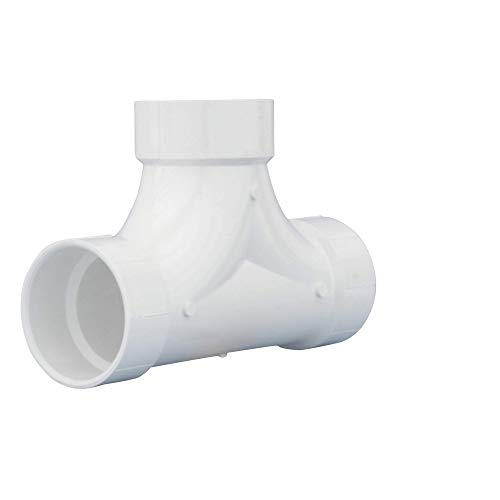
This fitting is best for a compatible 3-inch DWV installation where cleanout access is required. A cleanout provides a planned access point for clearing or servicing a drain line. The product is listed for sanitary drain, waste, and vent, sewer, and storm drainage applications.
Charlotte Pipe states that the fitting is not intended for pressure use and is for systems that will not exceed 140°F. Choose it for a non-pressure application within that temperature limit. Avoid it where the system operates under pressure or above the stated temperature.
Buying Guide: How To Choose DWV Fittings
Which fitting shape does the layout need?
Match the fitting to the job: use a tee for a compatible branch, a wye for an angled junction, a combination wye for a wye-plus-45-degree arrangement, an elbow for a direction change, and a cleanout where service access is needed. Fitting shapes are not interchangeable; follow the planned drainage direction and applicable plumbing requirements.
How do you confirm size and connection type?
Check nominal diameter at every connection before selecting a fitting. A 2-inch fitting cannot replace a 3-inch fitting, and a reducing fitting has specific inlet and branch sizes. Also compare connection ends: hub x hub and hub x spigot describe different arrangements. Confirm that the pipe material and joining method are compatible with the selected fitting.
Are PVC DWV fittings for pressurized water lines?
The listed PVC products are described for DWV use, and the Charlotte Pipe cleanout is specifically marked not intended for pressure use. Do not assume a drain fitting is suitable for a pressurized supply line. Verify product specifications and local code requirements for the application.
When does buying a multipack make sense?
Multipacks may suit larger projects or planned inventory, but the pack counts vary from 10 to 35 pieces. Estimate the required fitting count and sizes before buying. A multipack of the wrong fitting type or diameter will not solve a layout mismatch.
Frequently Asked Questions
What does DWV mean?
DWV stands for drain, waste, and vent. DWV fittings are designed for those plumbing system functions, rather than automatically being suitable for pressure applications.
What is the difference between a wye and a sanitary tee?
A wye creates an angled branch connection, while a sanitary tee provides a tee-shaped branch connection. Select the shape required by the system design and local plumbing rules.
What is a long-sweep elbow used for?
A long-sweep elbow changes pipe direction through an extended-radius bend. The listed 2-inch model provides a 90-degree turn and has hub x spigot ends.
Why include a cleanout in a DWV system?
A cleanout provides access to a drain line for maintenance or clearing. The selected 3-inch cleanout is specified for non-pressure use and systems not exceeding 140°F.