Best Filter Oil From Water: Top Filters for Clean Oil and Fuel Systems
Choosing the right filter to separate oil from water is essential for protecting engines, compressors, and fuel systems. The following selections prioritize reliability, filtration efficiency, and ease of use to help American readers identify dependable options for keeping oil and fuel paths free from moisture and particulates.
Summary Of Chosen Products
| Product | Brand | Key Feature | Use Case | Amazon Link (clickable in sections) |
|---|---|---|---|---|
| Motorcraft FL-500S Oil Filter | Motorcraft | Wears-protecting filtration with pressure-relief valve | Engine oil filtration to prevent contaminants | Listed in product section below |
| FRAM Extra Guard PH2 | Fram | Advanced cellulose and glass media for dirt trapping | Spin-on engine oil protection for everyday drivers | Listed in product section below |
| FRAM Extra Guard PH16 | Fram | Same trusted media for extended miles | Engine oil filtration for multiple vehicle models | Listed in product section below |
| Qolekog Oil Water Separator | Qolekog | Inline separator with 90/150 PSI options and transparent housing | Air line/wet-dry shop applications to prevent moisture and oil carryover | Listed in product section below |
| NANPU 1/4″ NPT Separator Kit | NANPU | Combination regulator, filter, lubricator (FRL) 3-in-1 | Compressed air systems to remove oil and water from lines | Listed in product section below |
Motorcraft FL-500S Oil Filter

The Motorcraft FL-500S oil filter is designed to protect engines by screening out abrasive particles such as carbon, sand, dust, and metal fragments before they enter the oil lubrication system. This helps minimize engine wear and extending engine life. A critical feature is the pressure-relief valve, which reduces the risk of contaminated oil circulating back into the engine in the event of oil line pressure fluctuations. For users seeking an OEM-quality option with proven filtration characteristics, this filter offers dependable filtration performance and reliable operation, especially in vehicles where superior oil cleanliness is a priority. The combination of filtration media and relief valve contributes to sustained oil integrity between changes, supporting engine longevity in everyday driving and higher-demand applications alike.
How it supports “oil from water” concerns: While primarily an oil filter, reducing contaminants at the source lowers the chance of moisture-related issues compounding wear. In engines where moisture can carry particulates into the oil, cleaner oil means better resistance to corrosive and abrasive elements. This makes the FL-500S a solid contributor to overall oil cleanliness in regular vehicle maintenance routines.
FRAM Extra Guard PH2

The FRAM Extra Guard PH2 provides robust engine oil filtration with a media blend designed to capture dirt and particulates, including oil-borne contaminants. Its 10,000-mile protection claims make it suitable for everyday drivers who perform regular maintenance. The filter media balances dirt-trapping efficiency with dirt-holding capacity, aiming to prevent debris from circulating through the oil pathway. The PH2 model is commonly selected for many car makes and models, making it a familiar choice when sticking to a familiar maintenance schedule. For “oil from water” considerations, the filter’s effective removal of contaminants supports the overall cleanliness of the oil as it circulates through an engine, reducing the potential for moisture-related residue to accumulate in the oil film.
FRAM Extra Guard PH16

The FRAM Extra Guard PH16 is a spin-on engine oil filter designed for longer intervals with up to 10,000 miles of protection. Like the PH2, PH16 uses a proprietary mix of cellulose and glass media to enhance engine protection by capturing a large share of dirt particles before they can cause wear. This model is positioned as a practical option for drivers who want an extended-change interval without compromising filtration quality. In the context of oil cleanliness, a high-efficiency filter like PH16 helps maintain a stable oil condition, which is beneficial when moisture intrusion can occur through humid climates or seasonal fluctuations—supporting overall lubrication performance and potentially reducing moisture-related issues in the oil system.
Qolekog Oil Water Separator
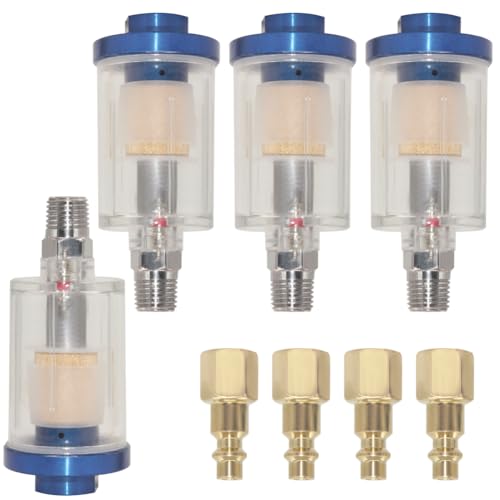
The Qolekog Oil Water Separator is designed to stop moisture, oil, and particulates from entering spray guns and pneumatic tools by using a transparent housing and clear indicators. Available in 90 psi and 150 psi configurations, this inline separator is useful for shop environments where keeping air tools free of oil carryover is essential. It provides an easy way to view accumulated impurities and includes a purge button at the bottom to help clear accumulated oil-water residues. While it primarily serves air lines rather than engine oil, controlling oil and water ingress is a parallel concern to maintaining clean lubrication channels in mechanical systems, making it a practical addition to a broader filtration strategy for fluid handling systems.
NANPU 1/4″ NPT Compressed Air Filter Regulator Lubricator Combo

The NANPU 1/4″ NPT FRL combo integrates a filter, regulator, and lubricator to improve air quality in compressed systems. With a 5-micron brass filter element and a pressure range of 0-125 psi, this unit offers robust filtration performance for air lines that power tools and spray equipment. While not a direct oil filter, this device helps ensure that downstream components receive drier, cleaner air by removing oil and water vapors, which can interfere with seals and lubrication in pneumatic systems. For buyers seeking a multi-step approach to filtration, the NANPU FRL unit complements oil and water separation efforts by minimizing moisture-related issues in the air stream and protecting connected machinery from particulate contamination.
Buying Guide: Key Purchase Considerations And Comparisons
- Filtration efficiency: Look for filters with media designed to capture a broad range of particulates and contaminants. Engine oil filters typically emphasize dirt-holding capacity and dirt-trapping efficiency, while inline water separators focus on moisture removal from air lines.
- Change intervals: Some filters advertise extended-change intervals (e.g., up to 10,000 miles for FRAM Extra Guard models). Align the interval with your maintenance schedule and vehicle or equipment usage to avoid gaps in protection.
- Compatibility: Verify fitment for your vehicle or system. Engine oil filters must match your engine model; inline separators should match line size and pressure ratings such as 90 psi or 150 psi.
- Pressure management: Oil filters rely on pressure-relief valves to prevent backflow; water separators and FRLs must accommodate operating pressure ranges while maintaining consistent filtration performance.
- Material and media quality: Filters using cellulose and glass media generally offer strong dirt-trapping and holding capacity. For air systems, robust brass elements and transparent housings help monitor clogging and facilitate maintenance.
- System scope: Consider a multi-component approach—combining engine oil filtration with inline water separators and FRLs for air lines can reduce moisture-related issues across different parts of your machinery.
- Brand reliability: Reputable brands like Motorcraft and FRAM provide OEM-like quality and established performance records, which can be important for long-term reliability.
- Maintenance practicality: Ease of replacement, availability of spare parts, and clear visibility of accumulated contaminants (as with transparent housings) contribute to smoother upkeep and less downtime.