Best Filtered Drinking Water Systems for Cleaner-Tasting Water
The best filtered drinking water system depends on your water source, installation preference, and filtration needs. For under-sink reverse osmosis, compare the iSpring RCC7 and RCC7AK; the Waterdrop 10UA and ICEPURE are direct-connect options for municipal water, while the DREO is a countertop choice that does not require installation. The Waterdrop TSA is another under-sink option for buyers who want filtration that retains minerals rather than reducing total dissolved solids (TDS).
| System | Best For | Type |
|---|---|---|
| iSpring RCC7AK | RO with mineral remineralization | Under-sink |
| Waterdrop 10UA | Simple municipal-water filtration | Under-sink |
| ICEPURE | High stated filter capacity | Under-sink |
| DREO RO | Installation-free RO filtration | Countertop |
| iSpring RCC7 | Certified five-stage RO | Under-sink |
iSpring RCC7AK-BN Reverse Osmosis System

The iSpring RCC7AK-BN is best for households that want reverse osmosis filtration with a final mineral stage. Its six-stage design includes an alkaline remineralization stage intended to add minerals and balance the water’s pH. The system is rated at 75 gallons per day, and its product details describe a patented top-mounted faucet fastener intended to simplify installation from above the sink.
A transparent first-stage housing lets users inspect visible filter buildup. Choose this model if you want an under-sink RO system with remineralization. Its limitation is that it requires under-sink installation and includes more stages to maintain than a basic direct-connect filter; check the installation requirements and replacement schedule before buying.
Waterdrop 10UA Under-Sink Filter

The Waterdrop 10UA is best for buyers seeking a compact, direct-connect filter for municipal tap water. Its twist-and-lock design and push-to-connect fittings are intended to make installation and filter changes straightforward. The listed details specify a 3/8-inch line and describe an adapter for connecting to certain 1/2-inch and 3/8-inch cold-water plumbing setups.
Choose this system if you want an under-sink filter without a separate drinking-water faucet, subject to confirming your plumbing connection. The product is specified for cold municipal water only. It is not suitable for hot water or well water, so avoid it if either is your source. Its listing cites NSF/ANSI 42 certification.
ICEPURE High-Capacity Under-Sink Filter

The ICEPURE system is best for households that prioritize a long stated filter capacity and a direct-connect design. The product lists a capacity of 22,000 gallons and recommends replacement after that amount or three years. It is tested to NSF/ANSI 42 for reducing chlorine, taste, and odor, and the listing also reports NSF/ANSI 372 certification for lead-free materials.
The system is described as plug-and-play, with a tested flow rate of 2.5 gallons per minute at 60 PSI. It retains minerals, unlike reverse osmosis systems that reduce TDS. Choose it if you want high flow and fewer frequent filter changes under the stated municipal-water conditions. The stated capacity is not a guarantee of three years for every household; actual use and water conditions matter.
DREO Countertop Reverse Osmosis Filter
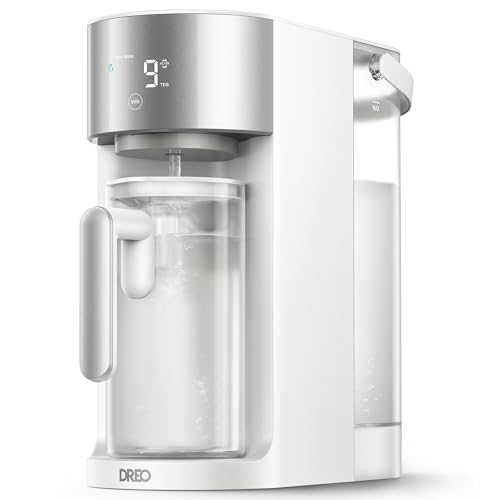
The DREO is best for renters or other buyers who prefer a countertop system without plumbing installation. Its listed features include seven-stage reverse osmosis filtration, a 3:1 pure-to-drain ratio, a pitcher with an auto-fill sensor, and automatic internal-tube cleaning. The product listing says it was tested by SGS to meet NSF/ANSI 58 standards and reports real-time TDS readings and filter-life monitoring.
Choose this model if you want RO filtration with a pitcher and visible maintenance information. The listed filtration claim includes several named contaminants, but buyers should consult the manufacturer’s documentation for the exact test conditions and reduction claims. Because it sits on the counter and uses a pitcher, it may be less suitable for kitchens where counter space is limited.
iSpring RCC7 Five-Stage RO System

The iSpring RCC7 is best for buyers who want a five-stage under-sink reverse osmosis system with a stated NSF/ANSI 58 certification. The product listing says it can reduce TDS by 80–90% and reports reductions for contaminants including lead, arsenic, fluoride, chlorine, and PFAS. It has a 75-gallon-per-day rating, a brushed-nickel faucet, and a transparent first-stage housing.
Choose this model if you prefer RO filtration without the RCC7AK’s added remineralization stage. Its listed design requires under-sink installation and a dedicated faucet, so it is not the best fit for buyers seeking a portable or no-plumbing option. The listed reduction percentages apply to the manufacturer’s stated conditions; review the system’s documentation for details.
Buying Guide: How To Choose A Filtered Drinking Water System
Should you choose reverse osmosis or a carbon-based filter?
Reverse osmosis is the better fit when you specifically want a system designed to reduce TDS and a broad range of contaminants. It typically uses multiple filtration stages and requires more installation and maintenance planning. Direct-connect filters such as the Waterdrop 10UA and ICEPURE are simpler options for improving taste and reducing specified substances such as chlorine. The Waterdrop TSA also fits buyers who want filtration while retaining minerals; its listing says it does not reduce TDS.
Does your water source match the filter?
Check the product’s stated source before purchase. The Waterdrop 10UA is specified for cold municipal water and is not suitable for well water or hot water. The ICEPURE capacity claim is stated for municipal water. Well-water users should select a system whose manufacturer explicitly supports that source and consider appropriate water testing before choosing treatment equipment.
What should you check before installation?
Measure under-sink space and check whether the system needs a separate faucet, power, a drain connection, or a particular feed-line size. Confirm that the included fittings match your plumbing. A countertop RO system avoids under-sink plumbing but occupies counter space and may require pitcher refills. Review filter replacement intervals and availability as part of the total ownership decision.
How should you compare certifications and claims?
Look for the specific standard and filtration claim rather than relying on a broad phrase such as “certified” or “removes contaminants.” NSF/ANSI 42 generally relates to aesthetic effects such as chlorine taste and odor, while NSF/ANSI 58 applies to reverse osmosis systems. Confirm the exact model, tested substances, and reduction claims in the manufacturer’s certification or performance documentation.
Frequently Asked Questions
Do filtered drinking water systems reduce TDS?
Not all systems do. Reverse osmosis systems are designed to reduce TDS, while the Waterdrop TSA listing says it does not reduce TDS and retains beneficial minerals.
Is reverse osmosis better than a basic under-sink filter?
It depends on your goal. Choose RO when you want TDS reduction and broader specified contaminant reduction; choose a direct-connect filter when taste and selected contaminant reduction are the priority.
Can I use the Waterdrop 10UA with well water?
No. Its product details specify municipal tap water and say it is not suitable for well water or hot water.
Do countertop water filters need installation?
The DREO countertop system is described as installation-free, unlike the under-sink models in this comparison. It still requires counter space and use of its pitcher.
How often should I replace a water filter?
Follow the manufacturer’s replacement guidance and any filter-life indicator. Actual replacement timing can vary with water quality and how much water the household uses.