Best Foundation Insulation Protection Boards for Fire Safety and Energy Efficiency
Choosing the right foundation insulation protection board helps improve fire resistance, moisture management, and energy efficiency in residential and light commercial builds. The products below are designed to shield foundation areas, basements, boilers, kilns, and other high-heat or moisture-prone zones. This guide compares options across stone wool, ceramic fiber, and reflective barrier boards to help you select materials that fit safety codes and performance needs.
| Product | Brand | Key Benefit |
|---|---|---|
| Rockwool RXCB11224 ComfortBoard 80 | Rockwool | Fire resistant, vapor permeable, prevents mold growth |
| Lynn Manufacturing Ceramic Fiber Board | Lynn Manufacturing | High-temperature tolerance, easy to cut and install |
| BXI Ceramic Fiber Thermal Insulation Board | BXI | High temp, inorganic, low smoke and good rigidity |
| SIMOND STORE Ceramic Fiber Insulation Board | SIMOND STORE | 2300°F rated, versatile for wood stoves, kilns, furnaces |
| Pellethead Universal Ceramic Fiber Baffle Board | Pellethead | High heat resistance, scalable 24″x18″ format |
Selected products cover a range of baseboard, firebox, and wall applications. The list emphasizes inorganic and mineral-based boards for superior fire performance, while including high-temperature options for stoves, boilers, and kilns. Availability and exact dimensions vary, so check each listing for compatibility with your project needs and local building codes.
Rockwool ComfortBoard 80 R-6.3

Rockwool RXCB11224 ComfortBoard 80 is a rigid stone wool insulation board measuring 1.5″ x 24″ x 48″ and covering 48 square feet. It is noncombustible and fire resistant, helping to contain a fire and slow its spread. The stone wool composition provides vapor permeability, supporting wall systems with higher drying potential and reducing condensation risk. Inorganic composition also minimizes mold growth. This makes it suitable for foundation insulation where fire safety and moisture control are priorities.
Lynn Ceramic Fiber Board 2300°F
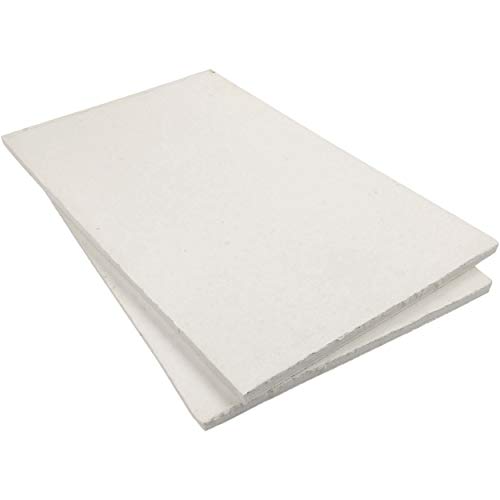
Lynn Manufacturing ceramic fiber board is rated for 2300°F and comes in a pack of two pieces, each 15″ x 24″ x 3/4″. With a low thermal conductivity and low thermal mass, it resists thermal shock, making it suitable for high-heat environments such as boiler rooms, stoves, furnaces, and kilns. The board is easy to cut with common tools and adaptable for creating target walls, front plates, or combustion chamber insulation. This offers versatility for renovation or new builds requiring robust heat protection.
BXI Ceramic Fiber Board 2732°F
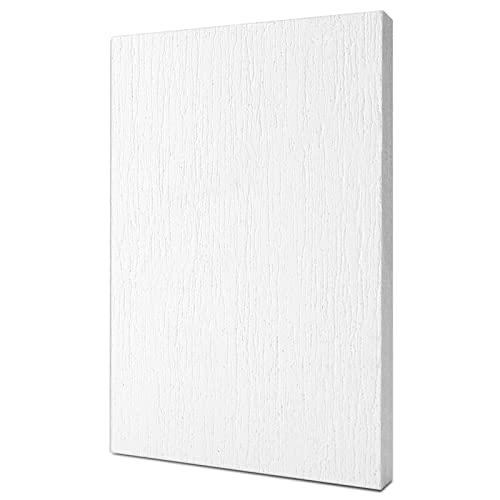
BXI Ceramic Fiber Thermal Insulation Board offers a 12″ x 8″ x 0.4″ panel rated for long-term service up to approximately 2552°F (1400°C) and maximum use temperatures near 2732°F (1500°C). It’s an inorganic board with a thermal conductivity of 0.082 W/(m·K) and an R-value around 0.12 m²·K/W. The board provides high rigidity, durability, and lower smoke and odor compared with organic fiber products, making it a solid choice for high-temperature foundation or appliance insulation.
SIMOND STORE 2300°F Ceramic Fiber Board

SIMOND STORE ceramic fiber board is rated up to 2300°F and measures 0.47″ x 12″ x 24″ per panel, with a density of 20–24 lb/ft³. It can be cut with knives or hacksaws and is suitable for wood stoves, pizza ovens, forges, kilns, furnaces, and boilers. The board’s high-temperature performance and relatively easy fabrication support custom fits around irregular foundation features or heating ducts, providing a reliable thermal barrier in demanding environments.
Pellethead Ceramic Fiber Baffle Board

The Universal Ceramic Fiber Insulation Baffle Board from Pellethead measures 24″ x 16″ x 3/4″ and is rated up to 2300°F. It features vacuum-cast ceramic fiber material with a density around 500 kg/m³, offering low thermal conductivity and resistance to thermal shock. The board can be cut to fit boiler, stove, forge, or kiln configurations and is suitable for general high-temperature insulation, baffle construction, and fireproofing tasks in foundations and equipment rooms.
INSULATION MARKETPLACE SmartSHIELD Reflective Barrier
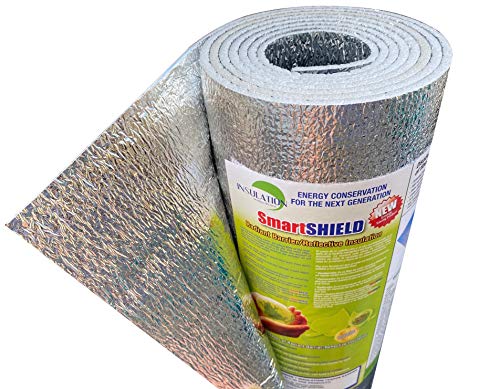
SmartSHIELD is a reflective insulation roll designed as a radiant barrier with a 3 mm closed-cell polyethylene foam core and an engineered foil on both sides. It reflects up to 95% of radiant energy and functions as a vapor barrier. The product is versatile for indoor or outdoor use and is noted for ease of installation and cutting. While primarily a radiant barrier, it can complement other foundation insulation strategies by reducing heat gain or loss through exposed foundation surfaces and exterior walls.
F&L Fiberglass Board Acoustic Panels

F and L fiberglass boards offer acoustic insulation along with thermal protection for walls, ceilings, studios, and HVAC ducts. Available in thicknesses from 1″ to 2″ and formats 24″ x 24″ or 24″ x 48″, these panels help reduce noise transfer while contributing to a balanced thermal envelope. They are suitable where sound control is a consideration, in addition to insulation for foundation or adjacent spaces that require both thermal and acoustic performance.
Sasylvia Ceramic Fiber Insulation Board 2-Pack

Sasylvia provides two 12″ x 8″ x 0.4″ ceramic fiber boards. The boards are lightweight and designed to prevent heat transfer while offering reliable fire resistance. They are easy to cut to fit around irregular shapes or piping in foundation zones and other heat-prone areas. This option complements other high-temperature boards by providing smaller pieces for precise coverage and detail work.
Buying Guide: Key Purchase Considerations And Comparisons
- Temperature rating: For high-heat zones such as boilers, kilns, and stoves, prioritize boards rated 2300°F or higher. In general-purpose foundation insulation, a rating around 1200–2000°F is often sufficient.
- Material type: Stone wool (mineral wool) and ceramic fiber are common inorganic options. Stone wool provides moisture management and mold resistance, while ceramic fiber offers superior high-temperature performance with low thermal mass.
- R-value and thermal performance: Check R-values or thermal conductivity (k) values to compare insulating effectiveness. Higher R-values indicate better insulation, but permeance and installation context also matter.
- Vapor and moisture management: Vapor-permeable boards can reduce condensation risks in foundation walls. Consider reinforcement with a vapor barrier if moisture intrusion is a concern.
- Fire resistance: Noncombustible or flame retardant materials help meet safety codes for foundations and mechanical rooms. Inorganic boards typically perform best in this category.
- Cutting and installation: Some boards cut easily by hand with a knife or hacksaw, while others may require tools or professional fabrication. Ensure compatibility with your project’s install methods and local regulations.
- Durability and rigidity: Panels designed for high-temperature exposure often emphasize rigidity to resist deformation and crumbling under heat cycling. This matters for long-term protection in basements and equipment rooms.
- Application fit: Match board type to location—wood stove clearance, boiler walls, furnace enclosures, or foundation footings. Some boards are better for target walls, front plates, or baffle areas than others.
- Size and quantity: Consider panel dimensions and pack contents. Larger panels reduce seams in continuous runs, while smaller pieces can adapt to irregular shapes or retrofit work.
- Code and safety: Verify product compliance with local building codes and safety standards for fire resistance, odor, and smoke when exposed to heat sources.
- Cost and availability: While price isn’t listed here, factor in long-term performance, installation labor, and compatibility with existing insulation systems to determine total value.
When selecting insulation boards for foundation protection, balance fire safety, moisture control, and heat management. For projects near heat sources, prioritize high-temperature inorganic boards with robust physical integrity. For basement walls and moisture-prone areas, consider vapor-permeable stones or ceramic fibers that resist mold and minimize moisture buildup. Combining radiant barriers with mineral wool or ceramic boards can offer a comprehensive thermal and fire protection strategy while supporting energy efficiency goals.