Best Garage Floor Epoxy Primers for Concrete and Recoating
The best garage floor epoxy primer depends on the concrete and the coating you plan to apply. SIMIRON is suited to slabs where moisture vapor is a concern, while Slip Doctors targets demanding commercial or industrial conditions. Rust-Oleum is designed for previously painted or sealed floors, and Coral Crystal is a waterborne penetrating option for porous concrete. DWIL is a floor coating kit that includes primer for buyers seeking a combined system.
| Product | Best For | Notable Feature |
|---|---|---|
| SIMIRON Moisture Vapor Barrier | Problem or moisture-prone slabs | 100% solids, two-component formula |
| Slip Doctors Base Coat 2K | Commercial and demanding floors | Chemical-resistant epoxy primer |
| Rust-Oleum Recoat Primer | Previously coated concrete | No sanding or grinding stated |
| Coral Crystal 105 Fl Oz | Porous concrete and masonry | Waterborne penetrating formula |
| DWIL Garage Floor Epoxy Kit | Buyers wanting primer and coating | Primer included in a floor kit |
SIMIRON Moisture Vapor Barrier Epoxy Primer

Best for new concrete or slabs where moisture vapor transmission may threaten coating adhesion, this two-component epoxy primer is a clear, 100% solids product. The listed features describe it as a single-coat application at 16 mils, with a three-gallon kit covering 300 square feet. It is intended for use beneath Simiron coating systems and is also described for garages, warehouses, retail spaces, and floors with prior polymer coating failures.
Why it stands out: Its moisture-barrier focus makes it a specialized choice for problem slabs. The product information lists zero VOCs and low-odor application. Limitation: It is a two-part kit, so follow the product’s mixing and application directions rather than treating it like a ready-to-use primer.
Slip Doctors Base Coat 2K Epoxy Primer

Choose this light-gray, two-part epoxy primer if you need a base coat for a demanding garage, warehouse, or commercial setting. The manufacturer describes it as designed to resist peeling and flaking and to provide corrosion and chemical resistance. Listed coverage is 300 square feet per gallon, making the coverage estimate useful when planning a project.
Best for: Buyers prioritizing a durable primer beneath floor topcoats in areas exposed to harsh substances or weather-related wear. Why it was selected: It is explicitly formulated as a two-component epoxy floor primer, rather than a general-purpose concrete sealer. Limitation: The supplied product details do not specify a recoat window or surface preparation steps, so check the label before scheduling the coating process.
Rust-Oleum Concrete And Garage Recoat Primer

This ready-to-use, one-part water-based primer is best for previously painted, sealed, coated, or smooth concrete floors. Rust-Oleum states that it can prime interior and exterior concrete without sanding or grinding. Listed coverage is up to 400 square feet per gallon on those smooth or previously treated surfaces, and the product can be topcoated after six hours.
Why choose it: It is the clearest fit in this group for recoating an existing floor, particularly when the product’s no-sanding, no-grinding approach suits the project. Limitation: Its listed use centers on previously coated or smooth concrete; the provided details do not establish it as the right choice for every bare, porous slab.
Coral Crystal Waterborne Penetrating Primer
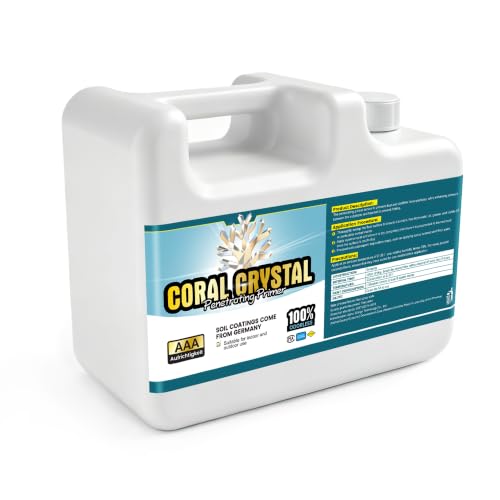
Best for porous concrete, cement, or masonry, this 105-fluid-ounce waterborne primer is designed to penetrate the surface and bind loose particles. The listed uses include preparing a base for epoxy colored-sand floor paint, polyurethane, or acrylic topcoats. It is also described as reducing substrate porosity and restricting water vapor transfer and salt buildup.
Why it was selected: Its penetrating action makes it a different option from a film-forming, two-part epoxy primer, especially for dusty or uneven substrates. The product information also describes a low-odor formulation for indoor application. Limitation: It is a waterborne penetrating primer, not a complete epoxy floor coating; a compatible topcoat is needed if the goal is a finished floor.
DWIL Garage Floor Epoxy Kit With Primer

Choose this kit if you want a garage floor coating and its included primer together rather than buying a primer alone. The light-gray, two-part kit is listed for 250 square feet of concrete. Its primer is described as penetrating pores, reinforcing weak surfaces, and blocking moisture vapor. The epoxy coating is described as water-based and low-odor, with a glossy, stain-resistant finish.
Best for: Homeowners looking for a bundled coating system and a stated application timeline: touch-dry in two to three hours, foot traffic in three days, and vehicle use in seven days. Limitation: This is a complete floor kit, not a standalone primer, and its instructions should guide preparation and curing.
Buying Guide: How To Choose A Garage Floor Primer
Is the concrete bare, porous, or previously coated?
Match the primer to the substrate. Penetrating options such as Coral Crystal are intended for porous surfaces and loose particles. Rust-Oleum is specifically described for previously painted, sealed, coated, or smooth concrete. Do not assume one type works equally well on every floor condition.
Does the slab have moisture concerns?
For a floor where moisture vapor transmission is a concern, compare products specifically described as moisture barriers. SIMIRON identifies this use directly, while the DWIL kit says its included primer blocks moisture vapor. These descriptions do not replace checking the slab and following the product’s preparation instructions.
Do you need a standalone primer or a full coating kit?
A standalone primer lets you select a separate compatible topcoat. A bundled kit, such as DWIL, combines primer and finish coating, which can simplify product selection. Confirm that the primer and topcoat are suitable for your concrete and intended use before application.
What should you compare before applying?
- Coverage: Compare the listed area with your floor size, and account for the product’s stated surface conditions.
- Application type: Ready-to-use water-based primers differ from two-part epoxy products that require mixing.
- Recoat timing: Rust-Oleum lists a six-hour topcoat interval; check other product instructions for their specific timing.
- End use: Consider whether the floor is residential, commercial, exposed to chemicals, or subject to vehicle traffic.
Frequently Asked Questions
Do I need primer before applying epoxy to a garage floor?
It depends on the coating system and concrete condition. Use primer when the coating manufacturer specifies it or when the selected primer is intended to address your substrate, such as porous concrete or moisture concerns.
Can I use epoxy primer on a previously painted floor?
Some primers are intended for previously coated concrete. Rust-Oleum’s listed use includes previously painted, sealed, or coated floors. Check the product directions and confirm the existing coating is suitable.
How much primer do I need?
Use the coverage stated for the specific product and substrate. The listed examples range from 100 square feet per gallon for SIMIRON at its specified application to up to 400 square feet per gallon for Rust-Oleum on smooth or previously treated floors.
Can a penetrating concrete primer replace epoxy floor paint?
Not necessarily. Coral Crystal is described as a primer and surface treatment that can prepare concrete for a topcoat. A separate finish coating may be needed for the intended appearance and protection.
How long should I wait before applying a topcoat?
Follow the product label. Rust-Oleum lists six hours before topcoating, while the supplied information does not give a topcoat interval for every other primer in this guide.