Best Garage Floor Moisture Barriers for Concrete and Water Control
The best garage floor moisture barrier depends on whether moisture is rising through concrete, entering beneath the garage door, or collecting as drips and condensation. For flooring projects, ROBERTS Moisture Barricade film is designed as an underlayment vapor barrier; Rust-Oleum’s sealer is intended to seal concrete. A threshold strip helps block water at the door, while absorbent socks manage small leaks and condensation. These products address different moisture problems, so match the solution to the source.
| Product | Best For | Barrier Type |
|---|---|---|
| ROBERTS 600 sq. ft. Film | Larger flooring projects | Polyethylene vapor barrier |
| ROBERTS 120 sq. ft. Film | Smaller flooring projects | Polyethylene vapor barrier |
| Rust-Oleum Moisture Stop | Sealing concrete floors | Penetrating concrete sealer |
| ToLanbbt Threshold Seal | Water entering at the garage door | Door-bottom threshold |
| PIG Absorbent Socks | Leaks and condensation | Absorbent containment |
ROBERTS 70-117 Moisture Barricade Film

This 6-mil polyethylene film provides 600 square feet of coverage. It is intended as a Class 1 vapor barrier beneath vinyl, laminate, SPC, and engineered wood flooring. The listed features also identify it for floating resilient products such as SPC over concrete and for laminate flooring with attached underlayment.
Best for: Homeowners preparing a larger concrete floor for a compatible floating-floor installation. Its broad coverage makes it more suitable than a small roll for projects requiring substantial area.
Limitation: This is an underlayment film, not a garage-door seal or a coating for exposed concrete. Check the flooring manufacturer’s installation requirements before using it.
ROBERTS 70-115 Moisture Barricade Film

This 6-mil film is designed as a vapor barrier beneath vinyl, laminate, SPC, and engineered wood floors. The roll unfolds to a 10-by-12-foot area, or 120 square feet. Its listed thickness exceeds NWFA requirements for use over concrete subfloors.
Best for: Smaller flooring jobs or buyers who want a defined roll size for a limited area. It serves the same general underlayment purpose as the larger ROBERTS roll, but covers less ground.
Limitation: The stated coverage is 120 square feet, so measure the installation area and account for seams and layout before choosing a roll.
Rust-Oleum Concrete Moisture Stop Sealer
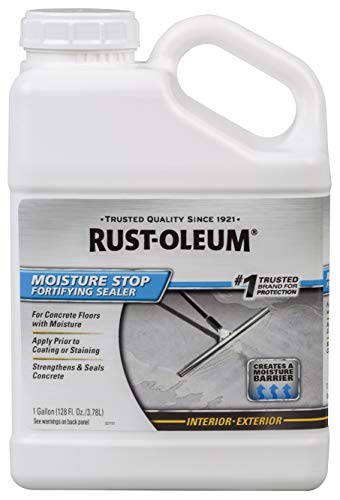
This concrete sealer is designed to seal floors and prevent moisture from leaking through, helping prepare the surface for a coating. The product description says it bonds to concrete without altering the surface’s appearance. It is applied by allowing it to penetrate for 45 minutes, and one gallon covers up to 200 square feet.
Best for: People who need a treatment applied directly to a concrete floor rather than a loose film beneath a floor covering. It is the most directly targeted option here for sealing concrete before coating.
Limitation: The listed coverage is up to 200 square feet per gallon. Follow the product label and confirm that the intended coating and floor conditions are appropriate.
ToLanbbt Universal Garage Threshold Seal

This 20-foot threshold strip uses flexible EPDM rubber and includes sealant or adhesive. Its 1/2-inch profile is designed to form a seal with a closed garage door. The listed uses include concrete, asphalt, and painted or treated surfaces. It is intended to help block wind-driven rain, snow, leaves, dust, and dirt at the door opening.
Best for: Garages where water enters at the door threshold rather than rising through the slab. It addresses surface water intrusion and is a different solution from a vapor barrier installed beneath flooring.
Limitation: It cannot stop moisture migrating through the concrete itself. The package may contain different adhesive packaging, according to the product details.
PIG Mildew-Resistant Absorbent Socks

This four-pack includes flexible, 3-inch-wide, 4-foot-long absorbent socks. Each sock absorbs up to one gallon, according to the product details. They are intended to collect leaks, spills, and condensation, with suggested placement under freezers and coolers, along walls, or around equipment.
Best for: Managing small, localized sources of moisture in a garage, such as condensation or equipment drips. Choose these for cleanup and containment rather than as a permanent floor barrier.
Limitation: The socks do not prevent water from entering or vapor from passing through concrete. The manufacturer says not to leave them in direct sunlight or launder them.
Buying Guide: How to Choose a Garage Floor Moisture Barrier
Is moisture coming through the slab or under the door?
First identify where water appears. If moisture is coming through concrete, consider a concrete sealer or a suitable vapor barrier beneath a compatible floor covering. If rain or melting snow enters at the garage door, a threshold seal is the more relevant option. Absorbent socks can collect limited leaks or condensation but do not correct the source.
Do you need a coating, film, or surface seal?
Polyethylene film is designed for installation beneath certain flooring types. A concrete sealer is applied to the slab and may be used to prepare it for a coating. These products are not interchangeable: follow the flooring or coating manufacturer’s instructions, including surface preparation and moisture requirements.
How much coverage should you plan for?
Compare the floor area with the listed coverage: the larger ROBERTS roll provides 600 square feet, while the smaller roll provides 120 square feet. Rust-Oleum lists coverage up to 200 square feet per gallon. Allow for the installation layout and check package instructions rather than assuming every square foot will be usable coverage.
What if the garage has more than one moisture source?
A garage may need separate measures for slab moisture and rainwater entry. A sealer or flooring underlayment addresses one kind of concern; a door threshold addresses another. Absorbent socks can be added for localized drips. If water intrusion is persistent or substantial, identify and address the source before relying on absorbent products.
Frequently Asked Questions
Can a polyethylene underlayment film stop water entering under a garage door?
No. The ROBERTS films are intended as vapor barriers beneath flooring. A threshold strip is designed to help block water entering at the garage door.
Can I use absorbent socks as a permanent moisture barrier?
No. They absorb limited leaks, spills, and condensation. They do not seal concrete or prevent moisture from entering the garage.
Which product is designed for moisture coming through concrete?
Rust-Oleum Moisture Stop is described as a concrete floor sealer intended to prevent moisture from leaking through. ROBERTS film is designed for use beneath flooring.
How do I choose between the two ROBERTS rolls?
Choose based on the coverage you need and the flooring installation requirements. The 600-square-foot roll suits larger areas, while the 120-square-foot roll covers a smaller area.