Best Gas Tankless Water Heaters With Recirculating Pumps for Homes
This guide highlights top gas-powered, tankless water heaters with built-in recirculating pumps or ready-to-pair pump systems. Designed for households seeking on-demand hot water and reduced wait times, these models optimize energy use and comfort. Below, five products are examined for performance, installation versatility, and warranty considerations, helping you compare options for natural gas or propane supply and indoor or outdoor placement.
| Product | Brand | Fuel Type | Recirculation | Notes |
|---|---|---|---|---|
| Rinnai REP199iN | Rinnai | Natural Gas | Built-In Smart-Circ Recirc | Indoor, up to 7.9 GPM |
| Rinnai REP199iP | Rinnai | Propane | Built-In Smart-Circ Recirc | Indoor, up to 7.9 GPM |
| Rinnai REP199eN | Rinnai | Natural Gas | Built-In Smart-Circ Recirc | Outdoor, up to 7.9 GPM |
| Rinnai RX199iN | Rinnai | Natural Gas or Propane | Smart Sense (Recirc compatibility via system) | Indoor/Outdoor, up to 11.1 GPM |
| Rinnai RX160iN | Rinnai | Natural Gas or Propane | Smart Sense (Recirc compatibility via system) | Indoor/Outdoor, up to 9 GPM |
Rinnai REP199iN Smart-Circ Non-Condensing Natural Gas Tankless Water Heater
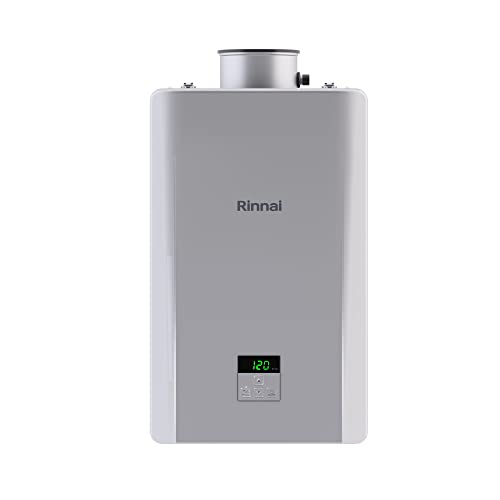
The REP199iN model combines a compact footprint with a built-in Smart-Circ recirculation pump. It learns your water-use patterns to optimize pump activity, reducing wait times for hot water and improving overall efficiency. With up to 7.9 GPM, it supports multiple fixtures simultaneously in indoor installations. The unit is non-condensing, emphasizing a straightforward design that fits in tight spaces. Rinnai offers warranties for heat exchanger, labor, and parts, reflecting a focus on durable construction. A ControlR module enables optional WiFi monitoring, though it is not included.
Key considerations include the balance of flow rate versus heat rise, space for venting, and the compatibility of existing gas lines. This model is suitable for regions with steady cold-water input and households prioritizing recirculation without additional external pumps. Maintenance typically involves periodic descaling and annual checks on venting and gas connections to preserve efficiency.
Rinnai REP199iP Smart-Circ Non-Condensing Propane Tankless Water Heater

This REP199iP unit mirrors the REP199iN’s Smart-Circ recirculation approach but runs on propane, expanding options for homes without natural gas service. It delivers up to 7.9 GPM and fits compact indoor spaces, with the same built-in recirc capability designed to minimize cold-water sandwiches at taps. Like the natural gas variant, it includes a robust warranty structure for heat exchanger, labor, and parts, and supports the optional ControlR module for WiFi control.
When choosing propane models, ensure the system is sized for peak hot-water demand and verify adequate propane supply and regulator capacity. Venting considerations and distance to the fuel source remain important for efficiency. This model is ideal for smaller homes or retrofits where natural gas is unavailable or cost-prohibitive.
Rinnai REP199eN Smart-Circ Non-Condensing Natural Gas Tankless Water Heater

The REP199eN is an outdoor-friendly version with a built-in Smart-Circ recirculation pump for natural gas installations. Its compact profile is paired with up to 7.9 GPM, enabling several fixtures to run concurrently. The outdoor rating requires appropriate venting and weather considerations, but the unit maintains the same learning-based recirculation logic to optimize hot-water delivery. Warranties cover heat exchanger, labor, and parts, providing long-term protection for outdoor configurations.
Outdoor placement adds flexibility for installations where indoor space is limited or code constraints exist. Ensure durable weatherproofing, protective housing if needed, and proper clearances from combustible materials. The model supports integration with ControlR for remote monitoring, though WiFi control is optional.
NEW Rinnai RX199iN Condensing Smart Sense Tankless Water Heater

The RX199iN is a condensing model supporting either natural gas or propane, with indoor or outdoor installation using Versa Vent. It delivers up to 11.1 GPM, suitable for higher flow needs across multiple fixtures. Its Quick Flush feature simplifies maintenance, and its high-energy efficiency (UEF near .98) supports ongoing operating cost savings. The Smart Sense control system enables adaptable performance, with optional WiFi control via ControlR.
Considerations include ensuring compatibility with your energy source, venting requirements, and outdoor-installation preparations. Condensing technology generally achieves higher efficiency but may require more attention to condensate drainage. This model is well-suited for households demanding higher hot-water capacity within a compact footprint.
NEW Rinnai RX160iN Condensing Smart Sense Tankless Water Heater

The RX160iN offers indoor/outdoor versatility with Smart Sense gas control and Versa Vent. It supports propane or natural gas and delivers up to 9 GPM, making it capable of serving multiple fixtures with consistency. Its compact design and Quick Flush feature support straightforward maintenance, while ControlR compatibility enables optional remote monitoring. This model is suitable for moderate hot-water demands in homes that require flexible installation options with high efficiency.
Key factors include venting strategy, space requirements for outdoor use, and coordinating with existing gas supply lines. The RX160iN is a solid choice for homes needing reliable performance without sacrificing energy efficiency or installation flexibility in a compact unit.
Buying Guide
- Fuel compatibility: Choose natural gas or propane based on your home’s fuel supply and utility costs. Some models support both via a change in gas control settings.
- Recirculation method: Built-in recirculation pumps provide immediate hot water at taps, reducing water waste. Verify pump speed, compatibility with existing plumbing loops, and energy use in standby mode.
- Ventilation and placement: Indoor vs. outdoor installations affect venting requirements, corrosion considerations, and weather resistance. Condensing models typically require condensate drainage planning.
- Flow rate vs. fixture demand: gallon-per-minute (GPM) ratings indicate how many fixtures can run simultaneously. Select a unit with a buffer above peak demand to avoid cold-water sandwiches.
- Maintenance and warranty: Look for warranties on heat exchanger, labor, and parts. Consider ease of flushing, mineral buildup resistance, and access to service support.
- Control and connectivity: Optional WiFi modules (ControlR) allow monitoring and maintenance scheduling. Confirm compatibility with your smart-home setup if applicable.
- Installation considerations: Some models are outdoor-ready but require weatherproofing and professional venting. Ensure gas line sizing, vent routing, and clearance requirements meet local codes.
- Longevity and cost of ownership: Condensing units typically offer higher efficiency but may involve more complex servicing. Weigh initial cost against long-term energy savings and utility rates.