Best High-Density Batt Insulation for Soundproofing and Fire Resistance
Choosing high-density batt insulation improves both sound attenuation and thermal performance, especially in walls, ceilings, and mechanical spaces. This article highlights top-density options designed to block noise, resist heat transfer, and provide enhanced fire resistance. For American homes, these products combine mass, durability, and safer materials to meet modern building codes. Below you’ll find five leading high-density batt insulation choices, followed by a practical buying guide summarizing key purchase considerations and how to compare options.
| Product | Brand | Highlights |
|---|---|---|
| 8 lb Density Soundproofing Batts, 2′ x 4′, 3″ Thick (5-Pack) | BRB Products | High mass for superior sound blocking; non-combustible stone wool; up to 2150°F fire resistance; rugged and durable. |
| Roxul AFB Acoustical Fire Batts, 2″ x 24″ x 48″, Case of 6 | Roxul | Mineral wool composition; flexible batt type; good density for sound and heat resistance. |
| 8 lb Density Soundproofing Batts, 2″ x 4′, 10-Pack | BRB Products | Same high-density performance in larger bundle; strong fire resistance; excellent sound absorption. |
| Knauf R-30 Kraft Faced 15″ x 48″ Fiberglass Batt Insulation (2×8 Cathedral) | Knauf | Kraft faced with moisture barrier; high-density for cathedral and attic applications; cost-effective. |
| Owens Corning R-19 Faced 23″ x 48″ Fiberglass Batt Insulation | Owens Corning | Kraft faced; moisture barrier; versatile for 2×6 walls and larger spaces; commonly stocked. |
8 lb Density Soundproofing Batts, 2′ x 4′, 3″ Thick (5-Pack)
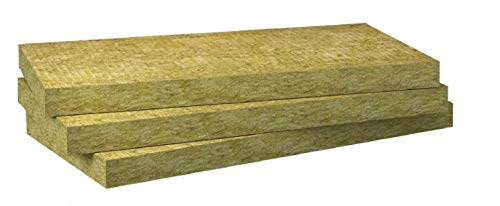
The 8 lb density delivers greater mass in the same space, enhancing its ability to block soundwaves and reduce heat transfer. It also offers maximum fire resistance, withstanding temperatures up to 2150°F (1177°C) and auto-ignition safety due to non-combustible mineral wool. The material resists compression, maintains shape under vibration, and supports durability in busy environments such as home theaters or mechanical rooms.
Features include a dense, non-directional fiber structure optimized for sound absorption and blocking of airborne noise, making it well-suited for quiet-room applications while providing a robust fire-safe profile for added peace of mind.
Roxul AFB Acoustical Fire Batts, 2″ Thick

These mineral wool batts combine acoustical performance with heat resistance. At 2″ thickness and a density around 2.5 pounds per cubic foot, they offer flexible installation characteristics akin to dense fiberglass but with superior fire safety and sound attenuation. The product is designed to be cut and fit into irregular spaces, helping to reduce noise transfer in multi-room environments.
8 lb Density Soundproofing Batts, 1″ Thick, 2′ x 4′ (10-Pack)

This option mirrors the high-density philosophy in a thinner profile, enabling efficient mass deployment in spaces where thickness is constrained. The 8 lb density supports excellent sound absorption and blocking, providing strong resistance to sound transmission while maintaining a manageable thickness in wall cavities. Fire resistance remains a key feature, aligning with building safety expectations for many residential projects.
8 lb Density Foil-Faced Stone Wool Panels, 2″ Thick
These high-density panels combine rock wool’s fire resistance with an integrated foil-scrim-kraft facing, creating a built-in vapor barrier and radiant heat reflection. The 2″ thickness yields substantial mass for thermal control and robust sound dampening in spaces requiring strict acoustics, such as studios or mechanical rooms. The non-combustible composition remains a critical attribute for safety-conscious installations.
Rockwool Foil-Faced Stone Wool Panels, 2″ Thick

This Rockwool option emphasizes professional-grade soundproofing with ultra-dense 8 lb/ft³ stone wool. The integrated foil-facing provides a built-in vapor barrier and radiant heat reflectivity, improving overall thermal performance. Its fire resistance remains a central feature, safeguarding against high-temperature exposure and reducing fire spread risk in walls, ceilings, and around ductwork.
Lynn Manufacturing 1″ CeraBlanket Insulation

Cerablanket-based insulation provides a flexible, high-temperature solution with a density of 8 lb. This product is designed for furnace linings, kiln linings, boilers, and pipe wraps, offering low thermal conductivity and minimal heat storage. It is particularly suitable where high-temperature environments require a durable, flexible insulation with strong thermal resistance.
Buying Guide: High-Density Batt Insulation Considerations
- Density and R-value: Higher density usually means better sound attenuation and improved thermal resistance. Compare products by both density (lb/ft³) and R-value per inch to estimate performance for your space.
- Fire resistance and safety: For many applications, mineral wool and stone wool provide non-combustible properties, with some products rated up to 2150°F (1177°C). Fire performance should align with local building codes and safety goals.
- Acoustical performance: If sound control is primary, prioritize products marketed as acoustical or soundproofing batts with dense, non-directional fibers that minimize airborne noise.
- Moisture management: Consider foil-faced or kraft-faced options with vapor retarders to manage moisture in exterior walls or damp environments. Ensure compatibility with climate and ventilation plans.
- Installation and fit: Thicker, denser batts can be stiffer and harder to cut. Plan for precise measurements and potential tooling needs to achieve a snug fit and avoid gaps that compromise performance.
- Vapor barriers and facing: Some products include integrated facing (foil, kraft, or foil-scrim-kraft) that acts as a vapor barrier or radiant heat reflector. Match facing to your wall assembly and moisture strategy.
- Durability and long-term performance: High-density batts resist compression and vibration better than lighter options, maintaining R-value and acoustical performance over time in high-traffic or mechanical spaces.
- Compatibility with existing structures: Check for compatibility with studs, joists, and retrofit constraints. Some products are easier to install in tight cavities or awkward angles.
- Code and warranty considerations: Verify that chosen insulation meets local building code requirements and manufacturer warranties for your specific application and climate.
In selecting high-density batt insulation, evaluate whether your priority is soundproofing, fire safety, or overall thermal performance. Quantify needs by space type (walls, ceilings, attics), climate, and occupancy to identify the best balance of density, thickness, and facing. Where possible, consult installation guidelines or a building professional to optimize performance and code compliance.