Best Internal Wall Insulation Boards for Modern Homes
Choosing the right internal wall insulation boards can improve comfort, energy efficiency, and fire resistance in American homes. This guide reviews five top-rated ceramic fiber and mineral wool boards, highlighting their durability, temperature tolerance, and ease of installation. Each product is selected for performance in interior walls, fireplaces, stoves, and industrial spaces where high heat or strict safety standards matter.
| Product | Brand | Key Benefit |
|---|---|---|
| BXI Ceramic Fiber Thermal Insulation Board 2732F (0.4″ thick) | BXI | Very high temperature tolerance; rigid, durable; low smoke/mist when heated |
| Rockwool ComfortBoard 80 R-6.3 | Rockwool | Noncombustible; excellent fire resistance; vapor permeable for drying potential |
| Lynn Manufacturing Ceramic Fiber Board 2300F | Lynn Manufacturing | High-temperature capability; easy to cut and install; versatile for stoves and boilers |
| Universal Ceramic Fiber Insulation Baffle Board (2300F) | Pellethead | Machinable dimensions; resistant to thermal shock; suitable for bellows, kilns, and forensics |
| SIMOND STORE Ceramic Fiber Insulation Board 2300F | SIMOND STORE | Rigid, high-temperature performance; compact 12×24 size for targeted area insulation |
Note: These boards are listed for interior and high-temperature applications. Always follow safety guidelines, local building codes, and manufacturer instructions during installation. The select list emphasizes inorganic ceramic fiber or mineral wool boards that offer fire resistance, dimensional stability, and manageable installation for interior walls and fire-related components.
BXI Ceramic Fiber Board, 0.4″ Thick
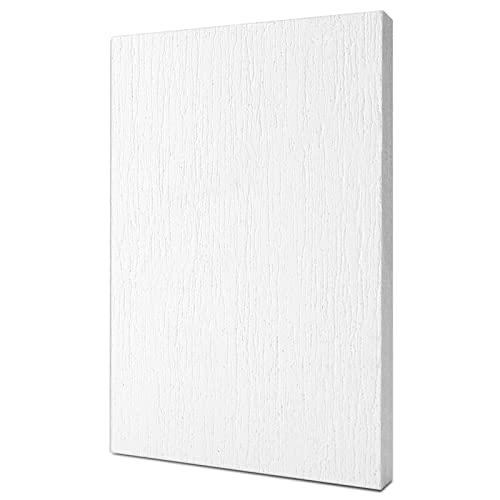
Specification details indicate a 12″ x 8″ x 0.4″ board with a density of 600 kg/m3. The board uses aluminosilicate composition and is fire resistant to Class A1 with a long-term service temperature around 1400°C (2552°F). Maximum use temperature reaches 1500°C (2732°F). Thermal conductivity is 0.082 W/(m·K), delivering an R-value of 0.12 m²·K/W. An inorganic composition helps reduce smoke, odor, and haze compared to organic ceramic fibers, while offering rigidity and durability. This makes it suitable for interior fireboxes, high-temperature walls, or lining near heat sources where compact boards are needed.
Rockwool ComfortBoard 80 R-6.3

Rockwool ComfortBoard 80 is a rigid mineral wool board designed for interior walls and fire-rated assemblies. Dimensions in the listing indicate a large panel footprint (1.5″ x 24″ x 48″) with coverage of about 48 square feet. It is noncombustible and fire resistant, helping to contain a fire and limit spread. The board’s vapor permeability supports wall systems’ drying potential, reducing condensation risk. Inorganic stone wool contributes to mold resistance and long-term stability, making it a solid choice for occupants seeking durable, fire-safe interior insulation with good moisture handling.
Lynn Manufacturing Ceramic Fiber Board
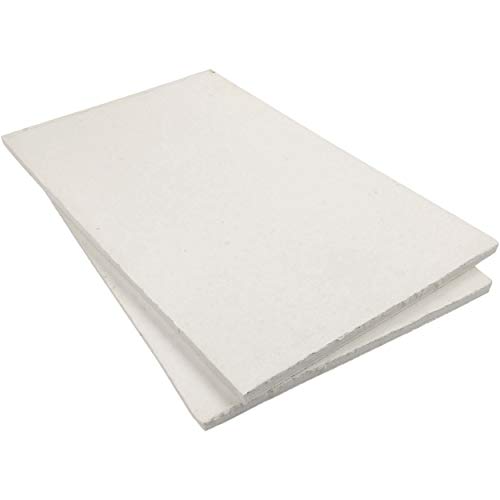
This Lynn Manufacturing board is rated for 2300°F and ships as a pack of two panels measuring 15″ x 24″ x 3/4″. The board features vacuum cast ceramic fiber refractoriness with a density around 16 lbs/ft³. It’s designed for high-heat applications such as boilers, stoves, and kilns while also serving as baffle or firebox insulation. The board is easy to cut with simple tools and can be drilled or machined, enabling customized installations in tight or irregular spaces where heat containment is essential. Its properties support thermal shock resistance and stable performance under repeated heat cycles.
Universal Ceramic Fiber Insulation Baffle Board

Pellethead’s Universal Ceramic Fiber Insulation Baffle Board provides a 24″ x 18″ x 3/4″ panel with a ceramic fiber composition rated up to 2300°F. The board’s 500 kg/m³ density supports rigidity and dimensional stability for interior fire-safe assemblies, smoke control, and high-temperature zones. It’s designed to be cut to size and customized for ladders, stoves, and other internal installations where heat containment is needed without adding excessive bulk. This board offers a strong balance of heat resistance and workability for builders and renovators.
SIMOND STORE Ceramic Fiber Board 2300F

SIMOND STORE offers a 2300°F rated ceramic fiber board, measuring 0.47″ x 12″ x 24″ per pack. With a density in the 20–24 lb/ft³ range and a compressive strength that supports structural stability, this board is suitable for interior fireproofing in wood stoves, kilns, furnaces, and boilers. It is designed to withstand thermal expansion and contraction without significant warping, making it reliable for retrofit or new builds where high-temperature containment is required. Its compact size helps target specific areas that need heat tolerance without excessive material waste.
Buying Guide: Key Purchase Considerations
When evaluating internal wall insulation boards, consider the following factors to ensure the right match for your project:
- Temperature rating: For high-heat interiors such as near stoves or boilers, choose boards rated around 2300°F (1260°C) or higher. Ensure the board’s thermal conductivity and R-value meet your insulation goals without compromising fire safety.
- Material type: Ceramic fiber and mineral wool boards provide strong fire resistance and dimension stability. Ceramic fiber boards tend to be lighter and easier to cut, while mineral wool offers exceptional noncombustibility and vapor-permeable properties that aid in moisture management.
- Density and rigidity: Higher density boards generally offer better structural stability and reduced deformation under heat. Consider whether you need a rigid panel for wall lining or a flexible option for curved or irregular spaces.
- Size and customization: Interior installations may require boards in particular dimensions. Packs that can be cut to size or come in standard panels close to your wall dimensions help minimize waste.
- Moisture handling: If humidity or condensation is a concern, select boards with vapor permeability or moisture resistance to prevent mold growth and preserve indoor air quality.
- Ease of installation: Look for boards that can be cut with common tools and drilled or machined as needed. For retrofit projects, lightweight boards with straightforward mounting are beneficial.
- Fire safety certifications: Verify that the board complies with relevant class ratings (e.g., Class A1) and local building codes for interior applications near heat sources.
- Cost vs. performance: Compare R-values, temperature tolerance, and installation requirements against the project budget. Higher-performance boards can reduce long-term energy costs and improve safety margins.
- Compatibility with existing assemblies: Ensure the chosen board integrates with surrounding materials, fasteners, and any moisture barriers used in your wall system.
In summary, interior insulation boards with high-temperature tolerance and fire resistance offer durable protection for walls near heat sources, along with improved energy efficiency. When selecting a product, prioritize temperature performance, material composition, and installation practicality to achieve a safe, comfortable living environment.