Best Liquid Rubber Floor Coatings for Durable Waterproofing and Foundation Protection
Liquid rubber floor coatings offer a flexible, durable membrane for concrete foundations, basements, roofs, and other surfaces. This guide reviews five top options, highlighting their strengths for indoor and outdoor use, crack sealing, and long-term waterproofing. Each pick is evaluated for adhesion, elongation, and versatility across materials like concrete, masonry, wood, and metal.
| Product | Brand | Volume | Key Use |
|---|---|---|---|
| Liquid Rubber Basement and Foundation Repair Sealant – 5 Gallon | Liquid Rubber | 5 Gallon | Basement waterproofing and foundation leaks |
| Liquid Rubber Basement and Foundation Repair Sealant – 1 Gallon | Liquid Rubber | 1 Gallon | Temporary to moderate leaks, DIY projects |
| Liquid Rubber Waterproof Sealant – 1 Gallon (Flat/Low Slope Roofs) | Liquid Rubber | 1 Gallon | Flat roofs, foundations, gutters |
| Liquid Rubber Color Waterproof Sealant – White – 5 Gallon | Liquid Rubber | 5 Gallon | Roofing and foundation protection with color |
| Ames Block & Wall Liquid Rubber Waterproofer – 1 Gallon | AMES | 1 Gallon | Basements and foundations, general waterproofing |
Liquid Rubber Basement and Foundation Repair Sealant – 5 Gallon

Liquid Rubber’s 5-gallon foundation sealer delivers a permanent waterproof membrane designed for basement waterproofing, foundation leak repair, shower liners, and planter boxes. The formula boasts 900% elongation, offering superior flexibility to accommodate movement and temperature changes without cracking. This makes it a strong choice for continuous basements or foundations exposed to moisture and hydrostatic pressure.
The product aims to outperform traditional concrete paints and standard sealants by sealing active leaks and moisture. It is compatible with self-leveling concrete applications, enabling use in DIY projects or professional installations. The coating forms a flexible barrier that adheres to concrete, masonry, wood, metal, and foundation surfaces, extending its utility beyond basements to various moisture-prone areas.
Liquid Rubber Basement and Foundation Repair Sealant – 1 Gallon

This 1-gallon variant shares the same core technology as the 5-gallon option, delivering a permanent waterproof membrane with up to 900% elongation. It’s suited for basement leaks, foundation repair, and other interior or exterior waterproofing tasks. The sealant remains flexible across temperature ranges, helping to prevent future cracks and damage on multiple substrates.
Its broad adhesion profile includes concrete, masonry, wood, metal, and other foundation surfaces, making it adaptable for DIY projects or small-scale professional work. The product is designed to form a durable, flexible layer that resists moisture intrusion and supports long-term protection against water damage.
Liquid Rubber Waterproof Sealant – DIY Leak Repair Coating (1 Gallon)

This 1-gallon bottle uses an industrial-strength bitumen formula to form a seamless waterproof membrane on flat roofs, metal surfaces, foundations, gutters, and more. It emphasizes superior flexibility and durability, with elongation over 950% to accommodate building movement. The coating resists cracking, peeling, and UV damage, providing a long-lasting defensive layer against water infiltration.
Application options include brushing, rolling, or spraying, enabling efficient coverage on roofs and vertical surfaces. Coverage varies by surface and coat thickness, with recommended multi-coat applications to achieve a robust 60-80 mil membrane on flat roofs and 30 mil on foundations. This versatility suits both preventative maintenance and repair projects.
Liquid Rubber Color Waterproof Sealant – White – 5 Gallon

The color variant provides the same waterproof membrane benefits with a white finish, suitable for roofing and foundation projects where a lighter appearance is preferred. The formula delivers a flexible, seamless barrier that stops leaks and water damage on metal roofs, flat roofs, low slope roofs, gutters, concrete repair, and basement walls. It’s designed to be a long-lasting alternative to traditional roofing tar or patch products.
With a one-bucket approach covering 150-250 square feet (depending on surface and coat thickness), it offers straightforward, paint-like application using brushes, rollers, or sprayers. The coating remains five times more flexible than traditional sealants, enabling reliable performance under seasonal shifts and weather exposure.
Ames Block & Wall Liquid Rubber Waterproofer – 1 Gallon
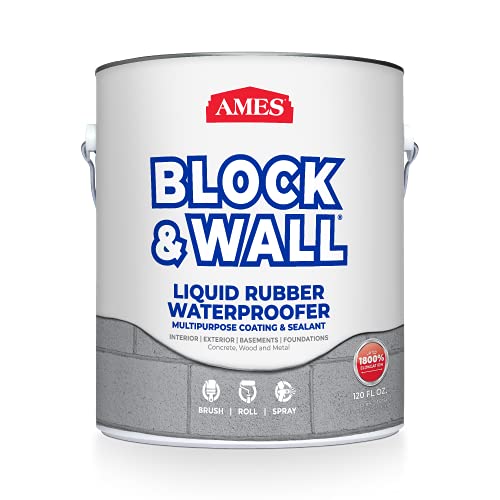
Ames Block & Wall Liquid Rubber Waterproofer is a versatile, white 1-gallon coating designed for concrete sealant and foundation waterproofing. While compact in volume, it provides a practical option for smaller projects or as a supplementary coating in larger installations. The product’s weight and origin details indicate a consumer-friendly choice for DIYers focusing on basement and foundation protection.
It supports multiple substrates and provides a flexible seal against moisture intrusion. The product’s simple packaging and straightforward application suit homeowners who prefer a quick, dependable waterproofing solution without heavy equipment or complex processes.
Buying Guide: Key Purchase Considerations And Comparisons
- Surface compatibility: Most liquid rubber sealants adhere well to concrete, masonry, wood, and metal. Verify whether your project involves roofs, foundations, basements, or planters to select the best membrane type and thickness.
- Elongation and flexibility: Higher elongation values (often 900%–950%) indicate better resistance to movement and temperature changes. This reduces crack formation over time, especially in foundations and roofs.
- Coverage and coat thickness: Roof applications typically require multiple coats to achieve a durable membrane (e.g., 60–80 mil). Foundations may need thinner but consistent coats. Always follow the manufacturer’s coverage guidelines for your surface and climate.
- Application method: Paint-on membranes can be brushed, rolled, or sprayed. For complex shapes or vertical surfaces, spray methods may save time, but surface preparation is critical for adhesion.
- Color options: White or light colors reflect heat, which can be advantageous for roofs and noticeable exterior applications. Color variants may also help with visibility of repair zones during maintenance.
- UV resistance and climate tolerance: Some formulations resist UV exposure and broad temperature ranges, which is important for outdoor use or exposed foundations. Check product specs if your project endures freeze-thaw cycles or heavy sun exposure.
- Durability and maintenance: Look for sealants that resist cracking, peeling, and aging. Long-term performance matters for basements and foundations where moisture is persistent.
- Safety and surface preparation: Work in well-ventilated areas and wear protective gear. Ensure surfaces are clean, dry, and free of loose particles before applying a membrane to maximize adhesion and cure quality.
- Cost and project scale: Larger projects benefit from higher-volume options (like 5-gallon units). For small repairs, 1-gallon or similar sizes offer a practical entry point with scalable options for future work.