Best Low Profile Ridge Vent Options for Roof Ventilation
Choosing a low profile ridge vent can improve attic ventilation without drawing attention to the roofline. The following products are designed to maximize air flow while staying unobtrusive, making them suitable for modern homes and energy-conscious projects. This guide highlights five popular options, covering materials, installation notes, and key features to help homeowners and contractors compare accurately.
| Product | Brand | Key Feature |
|---|---|---|
| AIR VENT 84719 Ridge Vent with Nails | Air Vent | Nail gun friendly; built for quick installation |
| LCF Universal Vented Ridge Material for Metal Roofing | Lakeside Construction Fasteners | Vented closure suitable for metal or panel ridge caps |
| Cor-A-Vent Revolution Rolled Ridge Vent | Cor-A-Vent | 100% recycled plastic, long roll for easy coverage |
| Air Vent Rolled Ridge Vent 28ft. – Peak Performer I | Air Vent | High NFA per linear foot; compatible with various pitches |
AIR VENT 84719 Ridge Vent with Nails

The AIR VENT 84719 Ridge Vent with Nails is designed for straightforward installation using nails, aligning with nail gun workflows common in roofing projects. Its profile remains low to minimize visibility along the ridge, while offering standard ridge vent functionality. The packaging notes suggest a lean, lightweight product, suitable for typical residential roof profiles. Proper alignment along the ridge ensures consistent venting without gaps, supporting attic air exchange and moisture control. When installed with compatible nails, this vent can be integrated into a variety of roofing assemblies with relative ease.
LCF Universal Vented Ridge Material for Metal Roofing

The LCF Universal Vented Ridge Material is tailored for metal roofing systems, offering a vented closure that fits both Ag Panel and similar ridge caps. Each package includes enough material to cover both sides of a 10-foot ridge cap, with two 10-foot rolls per package. The rolls are 2 inches wide by 1 inch tall, designed to align with standard panel dimensions. This option is ideal for metal roof installations where ridge venting must integrate with existing metal seams and rib profiles, delivering consistent ventilation across the ridge line.
Cor-A-Vent Revolution Rolled Ridge Vent
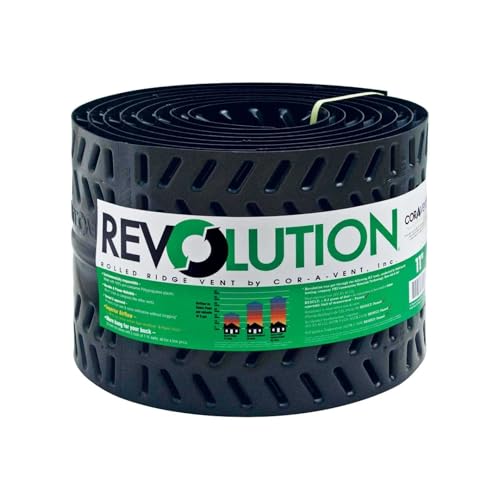
The Cor-A-Vent Revolution Rolled Ridge Vent is noted for its sustainable construction, being made from 100% pre-consumer recycled plastic. Each 20-foot roll measures 11 inches wide and provides a net free vent area of 12 square inches per linear foot, supporting robust attic ventilation. The shingle-over design adds weather protection, helping shield the attic from rain, snow, and insects. This option is well-suited for homeowners seeking an eco-friendly, long-length ridge vent that minimizes seams and potential leaks along the ridge line.
Air Vent Rolled Ridge Vent 28ft. – Peak Performer I

The Air Vent Rolled Ridge Vent 28ft. – Peak Performer I features a design optimized for nail gun compatibility, with two coils of nails included in the package. It provides 12 square inches of net free vent area per linear foot and is compatible with a range of roof pitches from 2/12 to 12/12. This product aims to streamline installation on longer ridge runs and deliver dependable venting across larger attic spaces, reducing heat buildup and moisture issues in various climates.
Buying Guide: Key Purchase Considerations
- Vent Area and Performance: Look for net free vent area (NFA) per linear foot to estimate overall airflow. Higher NFA generally means better attic ventilation, especially in larger or warmer homes.
- Material and Durability: Ridge vents come in plastic, rolled, and metal-compatible variants. Consider climate exposure, UV resistance, and potential for weather-related wear. Recycled materials offer environmental benefits but verify long-term performance in your attic.
- Compatibility With Roofing Type: Metal roofs may require vent closures or specific ridge materials, while shingle roofs often accommodate standard rolled or over-shingle designs. Ensure the chosen vent aligns with your roofing system.
- Installation Method: Some options are nail gun friendly, others require adhesive or mechanical fasteners. Consider your crew’s tools and experience, as well as whether you want pre-assembled components for faster installation.
- Ridge Profile and Aesthetics: A low-profile design helps minimize visibility from the ground and maintain the roof’s architectural appearance. Measure your ridge height and pitch to ensure a proper fit.
- Weather Protection: Sealing capability against rain, snow, and insects is important. Shingle-over designs and sealed closures reduce the risk of water intrusion at the ridge line.
- Environmental Considerations: Options made from recycled materials appeal to eco-conscious projects. Review the product’s environmental claims and certifications if relevant.
- Maintenance and Longevity: Some vents are easier to inspect and clean, which can extend service life and maintain airflow. Consider the ease of replacement or repair if sections are damaged.
- Cost and Availability: While not listing prices here, compare total installed cost, including nails, fasteners, and any additional hardware. Check supplier availability for your region and typical lead times.
- Warranty and Manufacturer Support: A solid warranty and readily available customer support can be valuable for ensuring long-term performance and addressing installation questions.
In summary, each product offers a distinct approach to low-profile ridge venting—from nail gun-friendly assemblies to metal-roof compatible closures and eco-friendly rolled designs. By weighing NFA, roof type compatibility, installation requirements, and long-term durability, you can select the ridge vent that best fits your project’s ventilation goals and aesthetic preferences.