Best Old Photo to Digital Scanners for Preserving Memories in 2026
Preserving precious memories from printed photos, negatives, and slides often means converting them to digital formats. The right scanner can simplify this task, delivering high-quality JPGs with minimal effort. Below, five top-rated devices are highlighted for American readers who want reliable, fast, and user-friendly options to digitize archival images.
| Product | Brand | Key Benefit |
|---|---|---|
| KODAK Slide N SCAN | KODAK | 5” LCD, multiple film formats |
| Epson FastFoto FF-680W | Epson | High-speed batch scanning |
| Magnasonic FS71 | Magnasonic | Built-in memory, HDMI output |
| DigitConvert Mobile Scanner | DigitConvert | Portable, battery-powered |
| HP FilmScan | HP | Touch-screen convenience |
KODAK Slide N SCAN Film & Slide Scanner Review
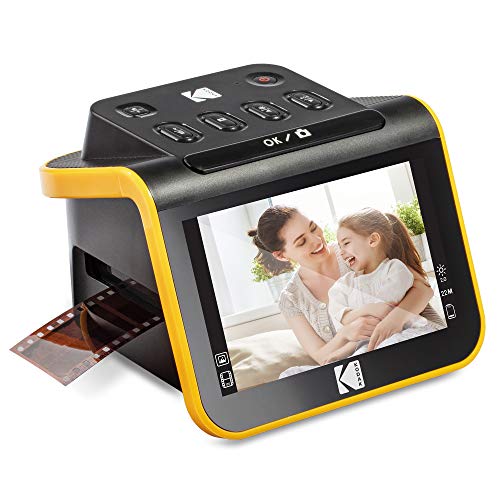
The Kodak Slide N Scan is designed for traditional 135, 110, and 126 film formats as well as slides, transforming old color and black-and-white negatives into digital JPEGs. Its 5” LCD display provides an immediate preview of scanned images, making it easy to edit and choose favorites before saving. The device supports direct saving to an SD card (not included) and includes a 50mm slide holder with adapters for multiple film types. Quick-load trays enable continuous scanning, which is ideal for archiving large batches of slides or negatives. A compact, all-in-one solution, the Kodak model emphasizes straightforward operation and decent output quality for typical home archiving needs.
Epson FastFoto FF-680W Wireless Photo Scanner

Designed for high-volume digitization, the Epson FastFoto FF-680W emphasizes speed and batch processing. It can scan thousands of photos rapidly—up to about one photo per second at 300 dpi—while supporting batch scans of up to 36 photos at once. This model is positioned for households and small offices with large photo collections, offering features that help organize and preserve memorabilia. The companion Epson FastFoto app enables adding voice notes and text to photos, enabling richer digital stories. It’s a robust option for users prioritizing speed and storytelling capabilities alongside image preservation.
Magnasonic All-in-One 24MP Film Scanner
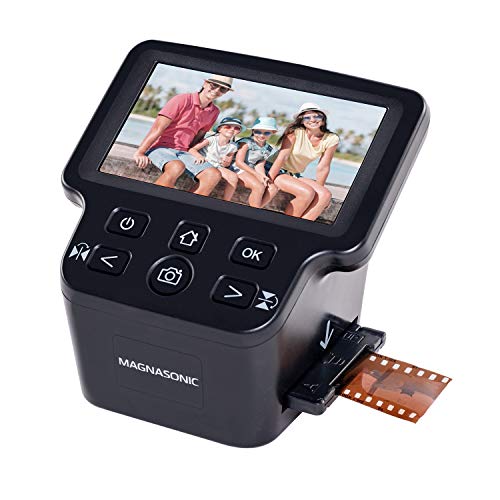
The Magnasonic FS71 All-in-One scanner combines 24MP film scanning with a built-in 5″ display and HDMI output for viewing on a TV or monitor. It supports 35mm, 126, 110 films, and 135, 126, 110 slides, converting negatives and slides into high-resolution digital JPEGs. An internal memory plus an SD card slot (up to 128GB) lets users save scans directly on the device or externally. The large display makes it convenient to inspect, edit, and share scanned images, offering a straightforward workflow for preserving a lifetime of memories.
DigitConvert Mobile Film Scanner for 35mm

The DigitConvert Mobile Film Scanner emphasizes portability and ease of use. It digitizes 35mm slides and 135 negatives into JPEGs with no complex setup, making it an attractive option for travelers or casual users who want quick conversions. Its foldable design reduces bulk, and the included scanning app compatibility expands its versatility, allowing users to pair the device with a preferred app for added features and sharing options. This model suits those who value compactness over large-scale batch processing.
BIGASUO Digital Picture Frame With Frameo

While primarily a digital picture frame, the BIGASUO model integrates a 10.1-inch display and Frameo app compatibility, making it suitable as a companion to your digitizing efforts. After scanning, you can push memories to the frame for immediate viewing and sharing across devices. It includes 32GB of internal memory and supports wireless photo transfers from a connected phone. This option is ideal for households seeking an elegant way to display scanned photos and slides without additional hardware.
BEONEGLOBAL ClearScan MINI Film Scanner

The BEONE GLOBAL ClearScan MINI focuses on ergonomic operation with front-facing controls and a compact 2.31″ LCD screen. It provides 16MP scans using a CMOS sensor, suitable for digitizing 35mm, 135, and 126 films and slides. The device emphasizes quick results and convenient SD card storage up to 32GB, enabling rapid sharing and archiving without complex software. It’s a compact option for users who want straightforward performance in a small footprint.
Buying Guide
- Film format compatibility: Check which formats the scanner supports (35mm, 126, 110, slides, Super 8). Some models handle multiple formats, reducing the need for additional devices.
- Image resolution: Look for scanners offering 14–24MP equivalents, with higher resolutions preferred for archival quality. Consider whether you’ll print enlargements or mainly store digital copies.
- Display and workflow: A built-in LCD or touch screen speeds up viewing and editing before saving. Some units include a gallery mode to preview slides like a digital frame.
- Storage options: SD card support and internal memory vary by model. If you plan to keep many scans, ensure adequate capacity or a straightforward transfer method to a computer.
- Speed and batch capability: For large collections, a scanner with batch scanning or fast single-pass performance saves time and effort.
- Portability vs. desk setup: Portable devices are ideal for travel, while larger units with displays suit a home office or workspace dedicated to digitization.
- Connectivity and sharing: Consider devices offering HDMI or TV compatibility for viewing on bigger screens, and app-enabled features for adding captions or creating slideshows.
- Ease of use and reliability: User-friendly interfaces and reputable brand support reduce frustration during long digitization projects.
- Cost of ownership: Besides the device price, account for additional items like SD cards, adapters, and software subscriptions for enhanced features.
When choosing among these options, assess your volume, preferred workflow, and whether you value a built-in display, batch processing, or portability. Each listed model targets a different balance of convenience, speed, and image quality, making it feasible to preserve a wide range of old photos and film memories in a modern digital library.