Best Outdoor Deck Floor Covering for All Weather Spaces
Transform your patio, balcony, or backyard with durable, slip-resistant decking that handles every season. This guide highlights top interlocking deck tiles and outdoor floor coverings designed for quick installation, easy drainage, and long-lasting appeal. Explore options made from pressure-treated wood, acacia wood, and rugged plastics to suit your design and climate needs.
| Product | Material | Coverage | Pattern/Color |
|---|---|---|---|
| THYOI 10 Pcs Deck Tiles (Dark Brown Crossed) | Acacia Wood | 10 sq ft | Dark Brown Crossed |
| THYOI Deck Tiles (Golden Teak Crossed) | Acacia Wood | 10 sq ft | Golden Teak Crossed |
| 36 sq. ft Plastic Interlocking Deck Tiles (Dark Grey) | Plastic | 36 sq ft | Dark Grey |
| Yaheetech 54pcs Hardwood Interlocking Deck Tiles | Acacia Wood | 54 pcs (12″ x 12″ tiles) | Natural Wood |
| THYOI 30 Pcs Acacia Wood Interlocking Deck Tiles (Dark Brown 12S) | Acacia Wood | 30 sq ft | Dark Brown 12S |
THYOI 10 Pcs Deck Tiles (Dark Brown Crossed Pattern)

These interlocking deck tiles are built from 100% natural acacia wood with a PPC base, delivering durability and water resistance for outdoor use. The tiles offer a smooth surface, firm footing, and a premium aesthetic. They are versatile enough to cover patios, balconies, garden paths, or even indoor spaces like bathrooms. The set can be cut to fit irregular shapes for a clean, seamless look. Quick drainage between slats reduces water pooling and slip risk, especially after rain. A snap-lock mechanism simplifies installation and removal for seasonal rearrangement.
THYOI Deck Tiles (Golden Teak Crossed Pattern)

This variant uses the same premium acacia wood and PPC base construction, emphasizing a warm Golden Teak finish. Like the brown crossed version, it supports customization, can be cut for irregular areas, and is suitable for pool surrounds, outdoor kitchens, or indoor spaces. The design includes deliberate spacing to promote drainage and minimize moisture buildup, helping to maintain a dry, safe surface after rain or irrigation. The tiles are easily assembled with a snap-lock system for quick, tool-free installation.
36 sq. ft Plastic Interlocking Deck Tiles (Dark Grey)
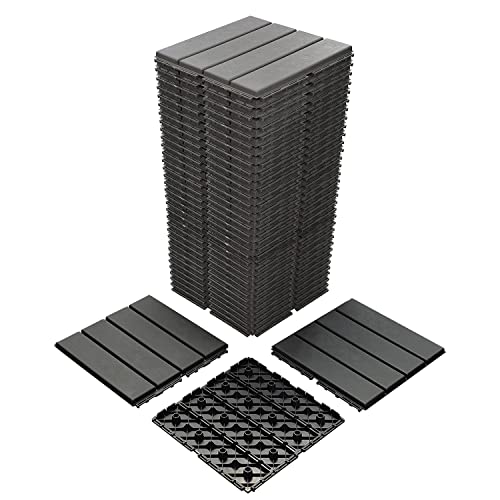
This option uses lightweight plastic interlocking tiles, ideal for quick projects or rental properties. Each tile measures 12″ x 12″ with a shallow profile to avoid door clearance issues. They snap together firmly, resist sliding, and are designed for both indoor and outdoor settings—porches, balconies, bathrooms, and more. They are easy to wash, provide a simple hollow drainage pattern, and are built to maintain rigidity under load. While durable, they present a more budget-friendly, temporary or portable decking solution.
Yaheetech 54pcs Hardwood Interlocking Deck Tiles

Yaheetech’s 54-piece set uses natural acacia wood with a water-based finish and a durable PVC base. The tiles feature a spaced slat design to improve traction and drainage, creating a non-slip surface ideal for all weather. Mortise-and-tenon joints ensure tight connections between boards and base, reducing gaps and cracking risk. This configuration supports versatile outdoor use—patios, gardens, pool decks, and more—while maintaining a natural wood appearance that suits many outdoor aesthetics.
THYOI Acacia Wood Interlocking Deck Tiles (12″ x 12″) Dark Brown 12S

This set features 30 square feet of coverage with 30 tiles, each measuring 12″ x 12″. It uses premium acacia wood with a PPC base for outdoor durability and water resistance. The tiles can be cut to fit irregular spaces and provide a secure, interlocking design that facilitates drainage and a clean, professional look. The Dark Brown 12S color complements many exterior styles, from contemporary to rustic, while offering a stable, comfortable surface for foot traffic and outdoor furniture.
Buying Guide: Key Purchase Considerations And Comparisons
Material selection matters for climate resilience and maintenance. Acacia wood tiles offer a natural, warm aesthetic with solid durability, but require occasional treatment to preserve finish in harsh sun or frequent moisture. Plastic tiles deliver easy installation and budget-friendliness but may lack the same natural look or long-term durability as wood. Mixed-use environments, such as near pools or in high-traffic areas, benefit from drainage-focused designs with visible gaps and snap-lock mechanisms to minimize pooling and ensure slip resistance.
Interlocking design is essential for a seamless surface and quick installation. Look for staggered or spaced slats, tight-fit joints, and a base that resists warping or deformation under temperature changes. Surface texture and grain alignment affect both safety and aesthetics; smoother finishes may feel comfortable under bare feet, while tactile textures can improve grip in wet conditions.
Dimensional flexibility matters for irregular spaces. Tiles that can be easily cut or trimmed help create a continuous, grout-free look around edges, posts, stairs, and planters. Ensure the product includes simple tools or instructions for cutting and aligns with your patio dimensions for optimal coverage with minimal waste.
Maintenance and durability should guide your choice. Wood tiles require periodic sealing or oiling to sustain color and prevent moisture damage, while plastic tiles typically resist rot and fading but may scratch or become brittle in extreme heat. Consider the expected climate, cleaning routines, and how often you plan to reconfigure the layout when selecting a deck tile system.
Warranty and support are practical indicators of quality. Reputable brands often offer warranties that cover color fade, warping, or structural failure under normal use. Review installation guides and customer support options to ensure you can get assistance if you need guidance during setup or maintenance.
Cost versus longevity balance is another factor. While plastic options may lower initial costs, premium wood tiles tend to retain value with durability and a natural look. For frequently used outdoor spaces or areas near water, investing in higher-quality interlocking wood tiles can reduce replacement frequency and improve long-term appeal.