Best Peel-and-Stick Ice and Water Shield for Roofing Projects
The best peel-and-stick ice and water shield depends on your roof’s temperature exposure, coverage needs, and installation conditions. Grace Self Adhering Ice and Water Shield is a strong fit for general roof-deck protection, while FT Synthetics Platinum HT-B is better suited to high-temperature applications. Grace HT is another option for hot-roof conditions; HydroShield emphasizes grip and easy handling, and Sasylvia is sized for narrow flashing and repair work.
| Product | Best For | Notable Feature |
|---|---|---|
| Grace Self Adhering Ice and Water Shield | General roof-deck coverage | Split release liner |
| FT Synthetics Platinum HT-B | High-temperature and low-slope applications | 100% butyl construction |
| Grace Ice & Water Shield HT | Hot-roof exposure | Up to 120 days of UV exposure |
| HydroShield Underlayment | Grip and straightforward handling | Sand-based surface |
| Sasylvia Self-Stick Roll | Narrow roof repairs and flashing | Six-inch-wide roll |
Grace Self Adhering Ice And Water Shield

This 36-inch-wide roll covers 200 square feet and uses a rubberized asphalt layer that seals around fasteners. The product information also highlights adhesion to the roof deck, water-tight membrane laps, and a slip-resistant surface.
Best for: Homeowners and roofing crews seeking broad coverage for common roof-deck water protection. The Ripcord split release liner is designed to make application easier by allowing the liner to be removed on demand.
Limitation: The listed features do not specify a high-temperature rating or a UV exposure limit. Check the product instructions and roofing-system requirements if either detail is important for your project.
FT Synthetics Platinum HT-B

FT Synthetics Platinum HT-B is a 41-mil, self-adhering underlayment with a 100% butyl construction. Its listed features include bonding to plywood or OSB roof decks, nail sealability, and compatibility with low-slope roofing materials such as EPDM and TPO. The product description states that it meets and exceeds ASTM D1970.
Best for: Buyers considering a butyl-based shield for high-temperature conditions or a low-slope roofing assembly. Choose this if deck adhesion and compatibility with the listed membrane types are priorities.
Limitation: Confirm that the product’s installation requirements match the specific roof system. The provided feature list does not give an allowable UV exposure period.
Grace Ice And Water Shield HT
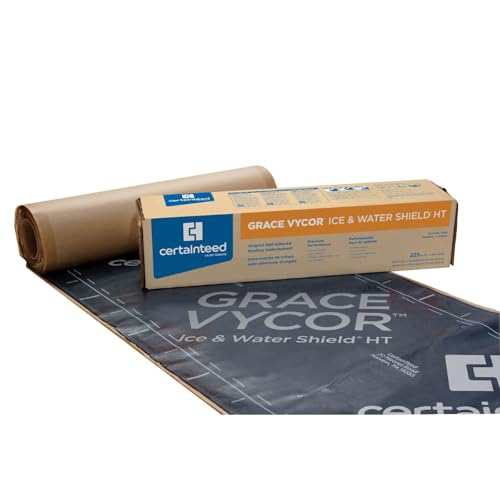
Grace Ice & Water Shield HT is a self-adhered membrane made with aggressive rubberized asphalt and a polyethylene film. The listed features describe it as high-temperature resistant, slip resistant, and able to seal around fasteners. It is intended to protect beneath sloped roofs and allows up to 120 days of UV exposure.
Best for: Roof projects where high-temperature resistance and a defined temporary UV exposure period matter. Its fastener-sealing feature is relevant where nails penetrate the membrane.
Limitation: The supplied product details do not state the roll’s coverage area. Verify the package dimensions and required coverage before planning quantities.
HydroShield Self-Adhering Underlayment

HydroShield is a single-square roll of self-adhering underlayment with a sand-based surface intended to provide foot grip. Its split-back release liner is designed to support handling and application, and the membrane self-seals around nails and fasteners. The product is specified for roof slopes of 2:12 or greater.
Best for: Installers who value a grippy surface and split-liner handling on shingle rooftops. Its stated slope requirement helps buyers compare it with the roof’s pitch.
Limitation: The listed UV exposure limit is 60 days, and maximum storage temperature is 104°F. Plan storage and installation timing accordingly.
Sasylvia Self-Stick Roofing Roll

This butyl-rubber roll measures 6 inches wide by 33 feet long and covers about 16 square feet. It has a reflective aluminum surface and is described for use on metal or plastic roof panels, dormers, porch roofs, mobile homes, and roof repairs.
Best for: Small, narrow repairs or flashing details where a wide underlayment roll would be impractical. The product’s listed dimensions make it easier to assess whether it suits a localized job.
Limitation: Its narrow width and limited coverage make it a poor choice for covering an entire roof deck. Confirm that this roll fits the intended roofing material and repair area.
Buying Guide: How To Choose Ice And Water Shield
Does the roof need a high-temperature product?
Check the roof assembly and the membrane manufacturer’s installation guidance. High-temperature resistance is specifically listed for Grace HT and FT Synthetics Platinum HT-B. Do not assume every self-adhering membrane has the same temperature performance.
How much coverage do you need?
Compare the area listed for each roll with the roof section you plan to cover. Grace’s standard roll lists 200 square feet, HydroShield is sold as one square, and Sasylvia covers about 16 square feet. Allow for the layout and required membrane overlaps when estimating quantities.
What roof slope and surface are involved?
HydroShield is specified for slopes of 2:12 or greater and for shingle rooftops. FT Synthetics lists compatibility with low-slope materials including EPDM and TPO. Verify that any product is approved for the roof surface and assembly in your project.
How long can the membrane remain exposed?
Temporary UV exposure limits vary. Grace HT lists up to 120 days, while HydroShield lists 60 days. Grace’s standard shield and FT Synthetics’ listed features do not provide an exposure period, so consult their current instructions before leaving a membrane uncovered.
Which handling features matter during installation?
A split release liner can help control application, while a slip-resistant or sand-based surface may support footing. These features do not replace safe roof-access practices. Follow the installation instructions, use suitable fall protection, and check local code requirements.
Frequently Asked Questions
What does peel-and-stick ice and water shield do?
It is a self-adhering roofing membrane intended to help protect roof areas from water intrusion. Some listed products also describe sealing around nails or other fasteners.
Can ice and water shield be left exposed?
Exposure time depends on the product. Check its stated UV limit and installation instructions; HydroShield lists 60 days, and Grace HT lists up to 120 days.
Is every peel-and-stick shield suitable for a low-slope roof?
No. Product suitability depends on the membrane and roofing assembly. FT Synthetics lists compatibility with certain low-slope materials, while HydroShield specifies a slope of 2:12 or greater.
Should the membrane cover the entire roof?
Coverage requirements vary by roof design, local code, and manufacturer instructions. Determine the required areas before buying, including eaves, valleys, or other locations specified for the project.
Can a narrow self-stick roll replace a full-width underlayment?
Not necessarily. Sasylvia’s 6-inch width and approximately 16-square-foot coverage suit localized repairs or narrow details better than broad roof-deck coverage.