Best pH Water Filter Systems for Alkaline Drinking Water
The best pH water filter system depends on whether you want under-sink reverse osmosis, a countertop purifier, or a simple alkaline dispenser. The iSpring RCC7AK-BN and APEC ROES-PH75X combine reverse osmosis with mineral enhancement; SimPure adds minerals in a no-installation countertop design. Waterdrop and Invigorated Water offer simpler dispensers for buyers focused on alkaline filtration and convenient serving. Compare filtration style, space, and stated water limitations before choosing.
| System | Best For | Format |
|---|---|---|
| iSpring RCC7AK-BN | Under-sink RO with remineralization | Under sink |
| APEC ROES-PH75X | RO filtration with calcium enhancement | Under sink |
| SimPure Y7T-A | Countertop RO with a mineral pitcher | Countertop |
| Waterdrop WFD-40L-A | Alkaline filtration without RO | Dispenser |
| Invigorated Water 53-Cup | Large-capacity alkaline dispensing | Countertop |
iSpring RCC7AK-BN Reverse Osmosis System

Best for: Households seeking an under-sink RO system that adds minerals back to treated water. The six-stage system has a 75-gallon-per-day rating and a mineral AK stage intended to enhance water pH and add minerals. Its transparent first-stage housing lets users see buildup, while the top-mounted fastener is designed to make faucet installation easier from above the counter.
Choose this system if you want reverse osmosis filtration paired with a remineralization stage. A practical limitation is that this is an under-sink setup, so it is less suited to renters or kitchens where installation is not feasible.
APEC ROES-PH75X Six-Stage Alkaline RO

Best for: Buyers who want an under-sink reverse osmosis system with calcium-based pH enhancement. APEC lists a 75-gallon-per-day capacity and says the system is designed to reduce contaminants including chlorine, fluoride, arsenic, lead, heavy metals, and VOCs. Its final calcium stage is intended to add minerals and improve alkalinity.
The stated operating range is 40–85 psi feed-water pressure, with a maximum total dissolved solids level of 2,000 ppm. Check that your source water falls within these limits before selecting it. This is a fixed under-sink system, not a portable countertop option.
SimPure Y7T-A Countertop Mineral RO Filter

Best for: Apartment residents, offices, and other buyers who want countertop RO without plumbing installation. SimPure describes a five-stage system and a borosilicate glass pitcher with an alkaline filter that adds calcium, magnesium, and potassium. The company says it is tested against NSF/ANSI 58 and designed for source water below 500 ppm TDS.
Choose it if you want a portable format and mineral enhancement after RO treatment. Its source-water TDS limit matters: it may not be suitable for water above the stated 500 ppm threshold. It also needs a power supply and counter space.
Waterdrop WFD-40L-A Alkaline Dispenser
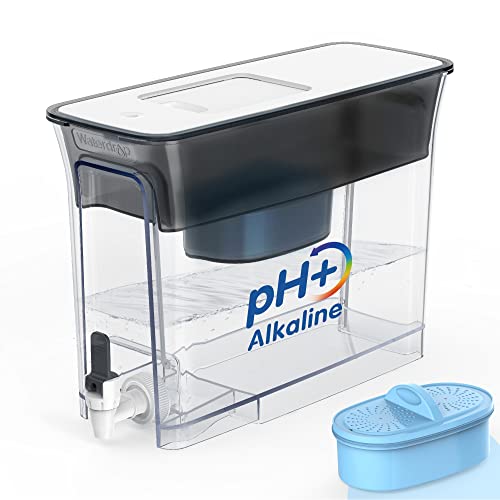
Best for: Buyers who want a dispenser-style filter that adds alkaline substances without reverse osmosis. Its six-layer filtration is described as reducing chlorine, fluoride, taste and odor, aluminum, iron, copper, and mercury. The product information specifically says this system does not lower TDS, which is an important distinction from RO systems.
Pick it if you want alkaline filtration in a dispenser format and do not need TDS reduction. Avoid it if lowering TDS is a priority; the manufacturer points buyers with that requirement toward a different Waterdrop model.
Invigorated Water 53-Cup Alkaline Dispenser

Best for: Households that want a large-capacity countertop dispenser and an alkaline filter that retains minerals. The 53-cup unit includes three filters. The manufacturer says each filter raises pH up to pH 9, removes unwanted particles and heavy metals, and keeps minerals such as calcium and magnesium. The listed combined filter capacity is up to 288 gallons.
This is a straightforward choice for dispensing alkaline water without an under-sink installation. The supplied information does not provide a detailed list of contaminants or reduction rates, so compare its filtration claims carefully if you need a system for a specific water concern.
Buying Guide: How To Choose A pH Water Filter
Do you want reverse osmosis or alkaline filtration?
RO systems such as iSpring, APEC, and SimPure are designed to filter water through a membrane, then use a mineral stage to enhance mineral content or alkalinity. Dispensers such as Waterdrop and Invigorated Water offer alkaline filtration without the RO format. Do not assume that an alkaline filter reduces TDS: Waterdrop explicitly says its listed dispenser does not.
Which format fits your kitchen?
Under-sink systems keep the main equipment out of sight but require space and installation. Countertop systems and dispensers avoid plumbing changes, but occupy counter or refrigerator-shelf space. For portable use or a rental, consider a no-installation countertop option; for a more permanent drinking-water setup, compare under-sink models.
What source-water details should you check?
Review the product’s stated limits and claims against your water conditions. SimPure lists a source-water limit below 500 ppm TDS; APEC specifies feed pressure of 40–85 psi and maximum TDS of 2,000 ppm. If you are targeting a particular contaminant, look for explicit reduction information rather than relying on a general “alkaline” description.
How important is mineral enhancement?
Some buyers want water treated by RO and then remineralized. iSpring lists a mineral AK stage, while APEC describes calcium enhancement and SimPure lists calcium, magnesium, and potassium. Dispenser filters may take a different approach by retaining minerals while filtering. Compare the stated approach, rather than assuming all pH systems work alike.
Frequently Asked Questions
Does an alkaline water filter always reduce TDS?
No. The Waterdrop WFD-40L-A product information says it does not lower TDS. Check each system’s specifications to distinguish alkaline enhancement from TDS reduction.
Can reverse osmosis water be remineralized?
Yes. The iSpring, APEC, and SimPure products listed here include mineral-enhancement features intended to add minerals or improve alkalinity after RO filtration.
Which type is easiest to install?
Countertop products are designed to avoid under-sink plumbing installation. SimPure specifically states that it requires no installation, while iSpring and APEC are under-sink systems.
How do I choose a system for a specific contaminant?
Compare the product’s stated contaminant claims with your water test results and the concern you want to address. Look for named contaminants and clear system limits; “alkaline” alone does not describe the full filtration capability.