Best Waterproof Paints and Coatings for Basements, Bathrooms, and Repairs
The best waterproof paint depends on the surface and the moisture problem: INSL-X WaterBlock is designed for masonry walls, while Zinsser WaterTite targets waterproofing walls against water pressure. For small cracks and leaks, consider a brush-on sealant; for tubs and tile, choose a purpose-made refinishing paint. The options below compare their intended uses and important application limits.
| Product | Best For | Key Consideration |
|---|---|---|
| INSL-X WaterBlock | Concrete and masonry walls | Made for vertical surfaces |
| Zinsser WaterTite | Waterproofing dry walls | Latex-based coating |
| Wadities Invisible Sealant | Cracks and leak repairs | Requires multiple coats and curing time |
| TUFINEIN Rubber Sealant | Flexible indoor and outdoor repairs | Not for walking surfaces |
| DWIL Tile Paint | Bathtubs and tile refinishing | Listed coverage is 25–30 square feet |
INSL-X WaterBlock Acrylic Masonry Waterproofer
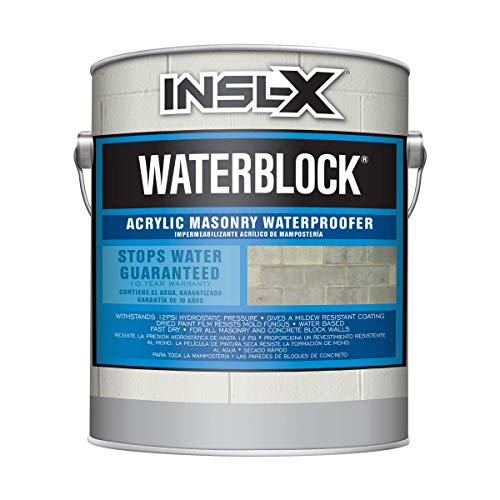
Best for: Homeowners sealing vertical concrete and masonry walls, including basement walls, foundations, and retaining walls. This water-based coating is also listed for cinder block, stucco, and brick, for interior or exterior use.
Its high alkali resistance, up to pH 13, is a useful feature for masonry applications. The product is described as fast drying, which may help when completing a wall coating project.
Why it was selected: It is specifically presented as a masonry waterproofer rather than a general-purpose decorative paint.
Limitation: Its stated uses focus on vertical walls. Do not assume it is suitable for floors or other surfaces not listed by the manufacturer.
Zinsser WaterTite Mold And Mildew Waterproofing Paint

Best for: Buyers seeking a white latex-based waterproofing coating for dry walls. The product is described as resisting water pressure up to 20 pounds and providing a smooth, bright white, non-gritty finish.
It can be applied with a brush or roller, according to the listing. Those features make it a relevant option when the project calls for a wall coating that combines a finished appearance with water resistance.
Why it was selected: Its listed water-pressure resistance distinguishes it from ordinary interior paint and general surface sealers.
Limitation: The directions specify application to dry walls. It should not be treated as a way to coat an actively wet surface without addressing the source of moisture.
Wadities Invisible Waterproof Sealant

Best for: Small repair jobs involving cracks, joints, or leaks on surfaces such as walls, ceilings, roofs, and window sills. This transparent, water- and rubber-based sealant is intended to penetrate cracks and form a waterproof layer.
It can be applied by brush or roller when temperatures are above 50°F, including overnight temperatures. The listed instructions call for two to three coats, with each coat allowed to dry before the next. The waterproof layer forms after 48–72 hours.
Why it was selected: It is a targeted option for sealing leaks and cracks where an opaque wall paint may not be the right repair product.
Limitation: It requires several coats and a longer cure period. Follow the temperature and drying instructions rather than exposing the coating to moisture immediately.
TUFINEIN Rubber Liquid Waterproof Sealant

Best for: Buyers who need a flexible coating for small repairs across several listed surfaces. Suggested uses include metal roofs, sheds, concrete basements, walls, gutters, wooden skylights, flower pots, and low-pressure small pools or fountains.
The product features describe a rubber coating that can cover small gaps and cracks, with initial film formation in two to four hours. Its stated temperature range is -40°F to 176°F, and it is intended for indoor and outdoor use.
Why it was selected: Its flexibility and broad list of repair surfaces make it a versatile choice for targeted leak work.
Limitation: The listing says it is not suitable for walking surfaces because it remains tacky when cured.
DWIL Tile Paint Tub And Tile Refinishing Kit

Best for: A bathroom or kitchen project focused on refinishing a bathtub, sink, or tile rather than waterproofing a basement wall. The kit contains a water-based acrylic paint and is listed for 25–30 square feet of coverage.
Its listed features include low odor and cleanup with water. The acrylic formula is described as providing a durable finish intended to resist flaking and wear.
Why it was selected: It addresses a common water-exposed surface that masonry wall paints are not specifically designed to refinish.
Limitation: It is a surface refinishing product, not a general-purpose leak repair coating. Check the project area against the stated coverage before starting.
Buying Guide: How To Choose Waterproof Paint
What surface are you coating?
Match the product to the material. INSL-X is listed for vertical masonry, while DWIL is intended for tubs and tile. Flexible liquid sealants may suit cracks and leak repairs on their listed surfaces. Avoid choosing solely by the word “waterproof”; product descriptions often specify a narrower use.
Is this paint, a wall coating, or a sealant?
Waterproofing paint generally coats a surface, while sealants are intended to penetrate or cover joints and cracks. A decorative refinishing paint may improve the finish on tile but is not automatically a substitute for repairing a leak. Identify the moisture source before applying a coating.
How much preparation and curing time can you allow?
Read the application directions for surface condition, temperature, number of coats, and drying time. WaterTite specifies dry walls, and Wadities calls for two to three coats with 48–72 hours for a waterproof layer to form. Plan the job around those requirements.
Should you use a coating for active leaks?
Do not assume paint alone will solve ongoing water intrusion. A coating can be appropriate for the stated use, but persistent leaks may require fixing the underlying source. Choose a product whose instructions specifically address the surface and condition you have.
Frequently Asked Questions
Can waterproof paint stop water from entering a basement?
Some products are designed for basement or masonry walls. INSL-X is listed for basement walls and foundations, while Zinsser WaterTite is described as resisting water pressure. Confirm the wall is prepared as directed and address the source of significant water intrusion.
Can I use masonry waterproofing paint on a bathtub?
Do not assume so. The products listed for masonry walls are not presented as tub refinishing paints. DWIL is specifically marketed for bathtubs and tile.
How many coats of waterproof sealant should I apply?
It depends on the product. Wadities specifies two to three coats and calls for drying between coats. Follow the instructions for the exact coating you purchase.
Is waterproof paint suitable for floors?
Not necessarily. Check the listed surfaces and limitations. TUFINEIN specifically says it is not suitable for walking surfaces because it may remain tacky when cured.
Does water-based mean a coating is waterproof immediately?
No. Water-based describes the formula, not the time required to resist water. Follow the product’s drying and curing directions before exposing a new coating to moisture.