Best Plaster Guard Shower Valve Guide for Quick, Durable Renovations
Choosing the right plaster guard shower valve is essential for a fast, clean bathroom remodel. This guide covers reliable valve options with plaster guards that simplify installation, reduce leaks, and provide enduring performance. Below is a quick summary of five top picks, highlighting each product’s key strengths and compatibility to help you compare at a glance.
| Product | Brand | Key Feature | Inlets / Outlets |
|---|---|---|---|
| Gerber G00GS555S Treysta | Gerber | Plaster guard with integrated depth indexing | 1/2″ IPS/sweat |
| Gerber G00GS505S Treysta | Gerber | Plaster guard, depth indexing; quick-install design | 1/2″ IPS/sweat |
| Gerber G00GS507 Treysta | Gerber | Plaster guard, pressure test cap; easy mounting | 1/2″ PEX/IPS |
| American Standard RU101SS Flash | American Standard | Flat back for flush mounting; multi-connection options | Universal inlets/outlets |
| R10000-UNBXHF Universal Shower Rough-In | OYIMNB | Broad compatibility with many trim kits; high flow | 1/2″ universal inlets |
Throughout this guide, each product section provides practical details to help you determine fit for your bathroom’s plumbing layout, repair needs, and installation timelines. The goal is to present objective information that supports confident shopping decisions.
Gerber G00GS555S Treysta Tub and Shower Valve
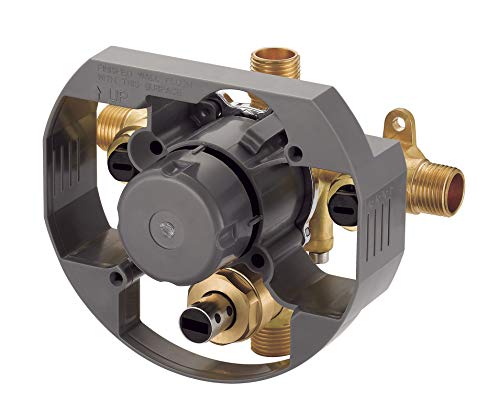
The Gerber G00GS555S Treysta valve pairs a forged valve body with a plaster guard and a pressure test cap, designed for straightforward installation. It features 1/2” horizontal IPS/sweat inlets and outlets, plus built-in diverter, service stops, and an easy-access mounting system. The plaster guard includes integrated depth indexing to help ensure correct depth during rough-in work. The design aims to reduce leak points and speed up installation, making it a practical choice for both new builds and remodels where plaster restoration is a consideration.
Gerber G00GS505 Treysta Tub and Shower Valve

Gerber’s G00GS505S Treysta model emphasizes a plaster guard with integrated depth indexing, along with a robust forged valve body. The valve supports 1/2” IPS/sweat inlets and outlets and leverages a quick-install approach with an easy-access mounting system. This configuration minimizes the number of on-site adjustments and helps ensure a clean plaster line after installation, a common goal in bathroom remodels where walls are being repaired or replaced.
Gerber G00GS505S Treysta Tub and Shower Valve

This variation features a plaster guard and a focus on quick installation with an integrated depth indexing system. The valve’s 1/2” IPS/sweat inlets and outlets align with common supply lines, and the built-in service stops offer a straightforward approach to maintenance without significant wall intrusion. Its design emphasizes durability and ease of use, reducing the typical complexity of a remodel where plaster work is a factor.
R10000-UNBXHF Universal Shower Rough-In
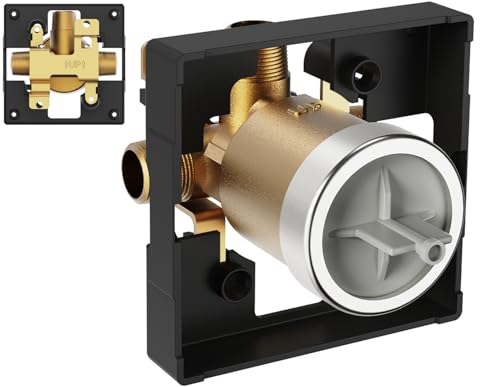
The R10000-UNBXHF universal rough-in from OYIMNB focuses on broad compatibility, allowing you to upgrade shower trims without altering behind-the-wall plumbing. It offers 1/2-inch universal inlets capable of adapting to copper, iron pipe, PEX, or CPVC adapters. Constructed from solid brass, it emphasizes rust- and wear-resistance for long-term reliability, making it suitable for homeowners planning a flexible, future-proof shower system. The high-flow capability supports various trim configurations without sacrificing performance.
Gerber G00GS507 Treysta Tub and Shower Valve
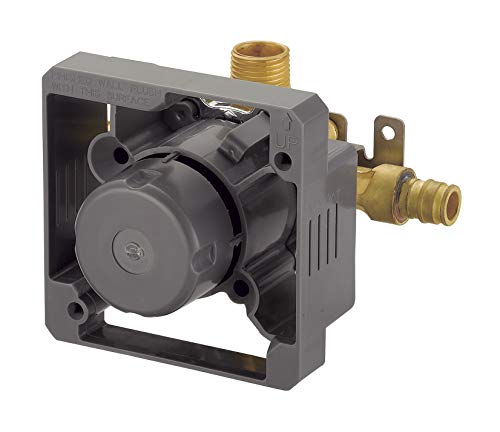
The Gerber G00GS507 offers a plaster guard with a pressure test cap and 1/2” horizontal PEX inlets (cold expansion) and 1/2” IPS/sweat outlets. With no service stops, the model emphasizes a lightweight, straightforward installation while maintaining depth indexing to help achieve an even plaster line. This option is well-suited for remodels where traditional copper piping is replaced with PEX, reducing complexity during rough-in work.
Buying Guide: Key Purchase Considerations
- Plaster guard design and depth indexing: A plaster guard helps protect the wall opening and provides accurate depth references, which is essential for achieving a clean plaster finish around the valve box.
- Inlet/outlet compatibility: Check whether the valve uses IPS, PEX, or universal connections and ensure compatibility with your existing supply lines or planned piping (copper, PEX, CPVC, etc.).
- Installation ease: Features like easy-access mounting, universal inlets, and integrated test caps can significantly reduce installation time and avoid wall damage during remodeling.
- Service stops: Valves with service stops simplify maintenance and shutoffs without dismantling wall components. Consider whether you need this feature based on how often you anticipate service work.
- Durability and materials: Brass valve bodies resist corrosion and wear, offering greater longevity in wet environments. Evaluate the overall build quality and exposed surface finishing as part of long-term planning.
- Compatibility with trim kits: If you plan to upgrade your shower trim later, choose a rough-in that supports a broad range of trim configurations and series to avoid future compatibility issues.
- Flat back vs. recessed mounting: For walls with cross members or tight behind-wall spaces, a flat-back design can improve installation stability and wall alignment.
- Budget and project timeline: While plaster-guard models often streamline installation, factor in material costs and whether your project benefits from quick-install solutions that reduce labor time.