Best Pole Barn Insulation Rolls for Climate Control and Energy Savings
Pole barns need reliable insulation to maintain comfortable temperatures and reduce energy costs. The following insulation rolls are designed for large spaces, offering radiant heat reflection, moisture resistance, and easy installation. This guide highlights five top choices and compares their key traits to help you select the right solution for metal buildings, sheds, and similar structures.
Summary of chosen products
| Product | Brand | Size | Type | Notes |
|---|---|---|---|---|
| EcoFoil Single Bubble Insulation Roll | EcoFoil | 48″ x 125′ (500 sq ft) | Single Bubble Reflective Foil | USA-made, 96% radiant heat reflectivity |
| US Energy Products Double Bubble White/Foil Roll | US Energy Products | 48″ x 125′ (500 sq ft) | Double Bubble Reflective | Thick 1/4″ structure, moisture resistant |
| UBMOVE Reflective Insulation Bubble Roll | UBMOVE | 48″ x 125′ (125 ft) (approx.) | Bubble Roll with Foil | Made in USA, versatile for climate control |
| INSULATION MARKETPLACE Double Reflective Roll | INSULATION MARKETPLACE | 48″ x 50 ft | Double Reflective Foil | Vapor barrier, reduces radiant transfer |
| SmartSHIELD 48″ x 25 ft Roll | INSULATION MARKETPLACE | 48″ x 25 ft | Foil/Foil with Foam Core | High R-value, moisture control |
Note: Each product below covers large surface areas typical of pole barns. Consider wall and roof coverage, installation method, and local climate when planning your project.
EcoFoil Single Bubble Insulation Roll
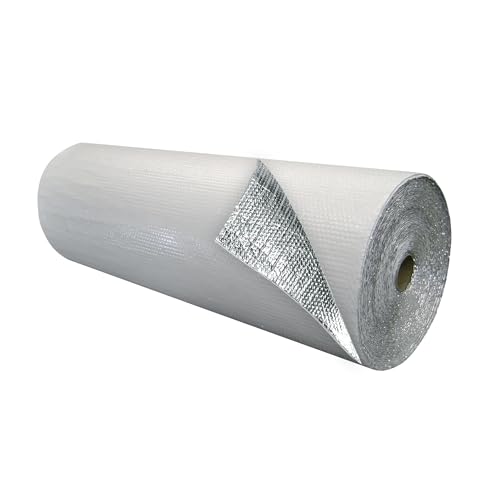
EcoFoil’s single bubble roll is designed to reflect radiant heat while remaining lightweight and easy to handle. With a width of 48 inches and a total length of 125 feet, it provides a substantial coverage area (500 sq ft) for pole barn walls or ceilings. The product features a white side and foil exterior, contributing to a Class 1 / Class A fire rating. It is non-toxic, free of off-gassing, and made in the USA, making it suitable for projects prioritizing safety and local sourcing.
Key features include 96% radiant heat reflectivity and significant reductions in energy use. Installation is straightforward: cut with scissors or a sharp knife and apply to surfaces without specialized equipment. This insulation is designed to stay durable under typical indoor/outdoor conditions, making it a practical option for pole barns that experience varied temperatures throughout the year.
US Energy Products Double Bubble Reflective Roll
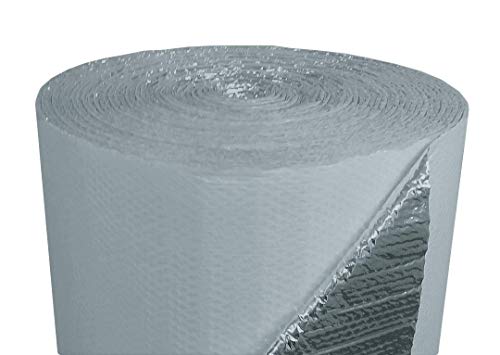
This double-bubble insulation combines two reflective layers of metalized film with internal polyethylene bubbles. The result is a thicker, more robust barrier at roughly 1/4 inch, designed for walls, basements, crawl spaces, metal buildings, and under-slab radiant heating. The material’s moisture resistance helps prevent condensation and maintains performance in damp environments, which is advantageous for pole barns exposed to humidity or ground moisture.
Its high reflectivity translates to strong radiant heat control, contributing to energy savings during both summer and winter. The roll’s substantial thickness helps dampen temperature fluctuations and provides a durable barrier for rugged workshop or equipment-storage areas that require reliable insulation.
UBMOVE Reflective Insulation Bubble Roll

UBMOVE offers a versatile 48-inch wide bubble roll with a 3/16-inch bubble layer and a foil outer layer. This single-sided package is suitable for a range of climate-control applications, from garage ceilings to greenhouses and general insulation. The roll is designed for easy installation and cutting, making it a practical option for DIY pole barn projects. As a US-made product, it supports local manufacturing and accessibility for contractors who prioritize domestic sourcing.
The included bubble layer provides insulation performance while the foil outer layer helps reflect radiant heat. It’s a convenient choice when you need a balance between ease of handling and effective thermal performance, especially in spaces that experience seasonal extremes.
INSULATION MARKETPLACE Double Reflective Roll

This 48-inch by 50-foot roll delivers a double-reflective barrier designed to reflect up to 95% of radiant energy. It also acts as a vapor barrier, offering condensation resistance in humidity-prone spaces. While well-suited for pole barns, this product can be used in various indoor and outdoor settings where radiant heat transfer is a concern. The inclusion of a vapor barrier helps minimize moisture-related issues, contributing to a more stable interior environment.
Its compact length compared to longer rolls makes it a practical choice for projects that require multiple shorter runs or targeted coverage in specific areas like attic access points or wall cavities within a pole barn build.
INSULATION MARKETPLACE Double Reflective Foil Roll

This 48-inch by 50-foot option features a foil/foil double reflective design, optimized for radiant barrier performance. It emphasizes moisture resistance and vapor-control characteristics, making it suitable for pole barns exposed to varying humidity levels. The product’s reflective surface aims to lower radiant heat absorption, contributing to cooler interior conditions in hot climates and more stable temperatures year-round.
Ideal for roof and wall applications, it pairs well with other insulation layers or radiant barriers for enhanced energy efficiency in metal buildings and sheds with larger roof spans or wall areas.
SmartSHIELD 20mm Foam Core Roll

SmartSHIELD’s 20mm foam-core insulation delivers substantial R-values for a compact, foam-based panel with radiant barrier properties. This 48-inch by 25-foot roll can be used where space is limited or where a higher insulating value is preferred in combination with radiant reflection. The product meets ASTM standards and offers a Class A fire rating, along with vapor-barrier performance to reduce condensation risk. It provides a robust option for pole barns where space and performance are both important considerations.
SmartSHIELD 5mm Foam Core Roll

This lighter, 5 mm foam-core option offers a compact solution with radiant barrier properties and easy handling. It suits smaller pole barn areas or retrofit projects where existing structures require an added layer of insulation without bulk. The vapor barrier feature helps resist condensation, and the product is designed to meet relevant industry standards while providing a practical balance of cost and performance for general-use insulation tasks.
Buying Guide: Key Considerations For Pole Barn Insulation Rolls
- Radiant heat reflectivity: Higher reflectivity reduces cooling loads in hot climates and heat loss in cold months. Look for values around 95–96% for best results.
- Thickness and density: Double bubble or foam-core options typically deliver stronger barriers and moisture resistance, beneficial for damp or variable environments.
- Vapor barrier capabilities: In humid or damp settings, vapor barriers help prevent condensation and mold growth inside walls and ceilings.
- Fire rating and safety: Class A fire rating indicates greater resistance to fire. Consider products with fire and off-gassing certifications for workshops and storage spaces.
- Installation ease: Lighter single-bubble rolls are easier to handle; thicker double-bubble or foam-core options may require more installation planning but offer higher performance.
- Durability and longevity: Choose materials designed to endure temperature swings, moisture exposure, and mechanical handling during construction.
- Compatibility with existing structures: Ensure the insulation can be applied to metal wall panels, roofing, and supporting frames without compromising ventilation.
- Indoor air quality and safety: Non-toxic, fiber-free options with minimal off-gassing are preferable for workshops and living-adjacent spaces.
- Local climate considerations: In colder regions, higher R-value and vapor-control features may be prioritized; in hotter regions, radiant reflectivity can yield the greatest savings.
When planning a pole barn insulation project, it can be beneficial to pair radiant barrier rolls with complementary insulation layers or mechanical ventilation strategies. The right combination depends on climate, building use, and energy goals. Contractors should assess the roof, walls, and any crawl spaces to identify the most effective layout and coverage.