Best Pool Heat Pump Costs for 2026: Smart Ways to Extend Your Swim Season
Finding the right pool heat pump involves balancing upfront costs, operating efficiency, and long-term savings. This guide highlights five top-performing models to help American pool owners compare value, performance, and ease of use without overspending. Below you’ll find a concise intro, a summary table of the selected products, detailed product sections, and a practical buying guide to help you make an informed decision.
Summary of Selected Products
- Aquastrong Inverter Swimming Pool Heat Pump, 55,000 BTU – 16,000 Gallons (WiFi, 220V)
- Aquastrong Inverter Swimming Pool Heat Pump, 75,000 BTU – 21,000 Gallons (WiFi, 220V)
- Varpoolfaye 35,100 BTU Electric Pool Heater – 10,000 Gallons (WiFi, 220V)
- TURBRO 50,000 BTU Inverter Pool Heat Pump – Up to 16,000 Gallons (WiFi, 220-240V)
- MICOE 35,000 BTU Inverter Pool Heater – 12,000 Gallons (WiFi, 220-240V)
Aquastrong Inverter 55,000 BTU Heat Pump for Large Pools

The Aquastrong 55,000 BTU heat pump is designed for large residential pools up to 16,000 gallons. It offers dual-mode heating and cooling, enabling comfortable water temperatures from 47°F to 104°F in heating and 83°F in cooling. The inverter-based system aims for energy efficiency and faster warm-up times, with app control for remote operation and scheduling. This model targets users seeking robust performance without needing gas-assisted heaters, promoting extended swim seasons even in cooler months.
Key features include: 55,000 BTU heating capacity, compatibility with 220V power, app and control panel management, and a focus on energy efficiency through inverter technology. The unit emphasizes a wide temperature range and flexible scheduling to fit family routines and climate needs.
Aquastrong 75,000 BTU Heat Pump for Extra-Large Pools
This 75,000 BTU model is meant for very large pools up to 21,000 gallons. It mirrors the dual heating/cooling approach and provides strong heating performance for rapid warm-up in cool climates. The inverter system supports high efficiency and energy savings compared with traditional electric or gas systems. Users can monitor and adjust settings via a mobile app and a traditional control panel, making it suitable for families who want convenient remote control and predictable operating costs.
Features to note include 75,000 BTU heating, compatibility with 220V, and an emphasis on energy efficiency and user-friendly control. The unit is positioned as a long-term investment for substantial outdoor pools needing reliable temperature management.
Varpoolfaye 35,100 BTU Heat Pump With WiFi Control

The Varpoolfaye heater offers 35,100 BTU for pools up to 10,000 gallons. It provides both heating and cooling modes, enabling comfortable water temperatures across seasons. The unit includes WiFi control for scheduling and remote operation, which supports easier maintenance and timing. It is described as suitable for both above-ground and inground setups, aligning with cost-conscious buyers who still want inverter-driven efficiency and modern connectivity.
Important aspects include 35,100 BTU capacity, 220V operation, cooling mode, and smart WiFi scheduling. This model looks to balance mid-range heating power with flexible control for mid-sized pools.
TURBRO 50,000 BTU Inverter Heat Pump (Beluga Series)

The TURBRO Beluga 50,000 BTU heat pump supports pools up to 16,000 gallons. It uses inverter technology to adjust heating output based on ambient conditions and water flow, promoting stable temperatures with potential savings over gas or electric resistance heating. The unit is praised for a relatively high COP and compatibility with 220–240 V. It also notes IPX4 waterproofing and WiFi-enabled control for convenient scheduling and monitoring across devices.
Key considerations include the efficiency advantages of inverter cooling/heating, the 50,000 BTU capacity, and the ability to run on common American pool power setups. It is positioned as a versatile choice for mid-to-large size residential pools seeking a balance of performance and economy.
MICOE 35,000 BTU Inverter Pool Heater

The MICOE 35,000 BTU model targets mid-sized pools up to about 12,000 gallons. It features an inverter-driven heating system with a titanium heat exchanger, designed to resist corrosion in saltwater. It operates in a wide temperature range and provides both heating and cooling options via a simple app or control panel. This unit emphasizes extended shoulder-season swimming and the flexibility of scheduled heating to fit daily routines.
Considerations include 35,000 BTU capacity, 220–240 V operation, app-based control, and a corrosion-resistant heat exchanger suitable for saltwater or treated water environments.
MICOE 100,000 BTU High-Capacity Heat Pump
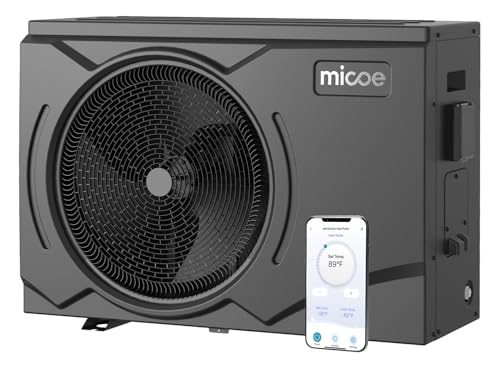
This high-capacity model is designed for very large pools or those with heavy use. It offers 100,000 BTU heating power and a large, efficient inverter system. The unit targets pools up to 26,000 gallons, extending swimming seasons with robust performance. Connectivity remains a priority, with WiFi scheduling and remote control to support proactive pool management. The unit highlights efficient heating for substantial outdoor spaces while maintaining manageable operating costs for high-demand scenarios.
Key points include 100,000 BTU capacity, 220–240 V operation, smart scheduling, and a titanium heat exchanger option noted for durability in diverse water conditions.
Buying Guide: Key Purchase Considerations For Pool Heat Pumps
- Pool size and BTU needs: Match the heater’s BTU rating to your pool’s gallons and climate. Larger pools require higher BTU or additional units for even heating.
- Energy efficiency and COP: Inverter-driven units with high COP (coefficient of performance) reduce energy usage, especially in shoulder seasons when temperatures swing.
- Power requirements: Most models run on 220V or 240V. Confirm your electrical setup and any required upgrades before purchasing.
- Heating and cooling capabilities: Dual-mode heat pumps offer both heating and cooling, useful for varied climates and pool usage.
- Smart control and connectivity: WiFi app control, remote scheduling, and energy tracking help optimize operation and comfort.
- Durability and water resistance: Look for corrosion-resistant heat exchangers (titanium is common) and IP-rated housings for outdoor exposure.
- Noise and placement: Consider unit sound levels and location relative to living areas and windy sites for comfort and neighbor relations.
- Installation and maintenance: Check warranty terms, required professional installation, and routine maintenance needs to preserve efficiency.
- Operating climate: In very cold climates, verify the unit’s minimum operating temperature and efficiency at low ambient temperatures.
- Cost of ownership: Evaluate upfront price against long-term energy savings, maintenance, and potential repairs to estimate total cost of ownership.
Each model above provides a different balance of capacity, efficiency, and connectivity. When evaluating options, consider your pool size, local climate, electrical readiness, and how important remote control and scheduling are to your routine. This will help you choose a heat pump that delivers reliable comfort while controlling running costs over time.