Best Portable DI Water Systems for Spot-Free Washing
The best portable DI water system depends on how much deionized water you need and how you plan to use it. For simple vehicle rinses, H&G lifestyles offers a straightforward car-wash-focused option. CR Spotless is designed for vehicles, windows, and solar panels, while VEVOR and Filterelated specify resin capacity and water-quality monitoring or output details. AKM is a practical choice for buyers who want a prefilled system with a bypass valve and included hose connectors.
| System | Best For | Notable Detail |
|---|---|---|
| H&G lifestyles | Basic vehicle washing | Designed to reduce TDS for spot-free rinsing |
| CR Spotless DIC-20B | Multiple outdoor cleaning tasks | Integrated bypass |
| VEVOR 10L DI System | Tracking water quality and capacity | TDS meter and stated 400-gallon capacity under specified conditions |
| AKM 5L System | Simple hose-connected use | Prefilled resin, meter, and bypass |
| Filterelated 10L System | Final-rinse resin conservation | 10L resin and bypass |
H&G Lifestyles Water Deionizer

This system is best for vehicle owners looking for a portable DI water setup focused on spot-free washing. Its product information says it reduces total dissolved solids (TDS) and removes minerals and other impurities to help limit water spots and streaks.
Choose this model if your main goal is to rinse cars, motorcycles, boats, or solar equipment with deionized water. The listing emphasizes air drying without manual towel drying, but actual results depend on incoming water quality and how much resin capacity is available during use.
Limitation: The supplied details do not specify resin volume, rated output, or a TDS meter, so buyers who need to plan consumption or monitor exhaustion may prefer a model with those details.
CR Spotless DIC-20B With Bypass

The CR Spotless DIC-20B is best for buyers who want one portable DI system for more than car washing. Its stated uses include vehicles, windows, and solar panels, and its integrated bypass lets users switch between filtered and regular water.
That bypass can help reserve deionized water for the final rinse rather than using it throughout a wash. The product description presents the system as a way to rinse and let surfaces air dry, reducing the need for towel drying. It is a better fit for varied outdoor cleaning than a product described only for vehicle washing.
Limitation: The supplied product details do not list resin volume, rated gallon capacity, or a TDS meter. Check those details if you need to estimate replacement intervals or verify output purity.
VEVOR 10L DI System With TDS Meter

This VEVOR system is best for users who want stated resin capacity and a way to check water quality. It includes 10 liters of mixed-bed resin, a bypass valve, and a TDS meter. The listing says the system can produce up to 400 gallons under average 200 ppm water conditions.
Choose this model if you wash vehicles, RVs, motorcycles, or windows and want to monitor when the resin may need attention. The manufacturer recommends replacement around a 30 ppm reading. Its bypass valve also supports using regular water for earlier wash steps and DI water for the final rinse.
Limitation: The 400-gallon figure is tied to the stated average 200 ppm conditions; output may differ with incoming water quality and use.
AKM Prefilled 5L DI Water System
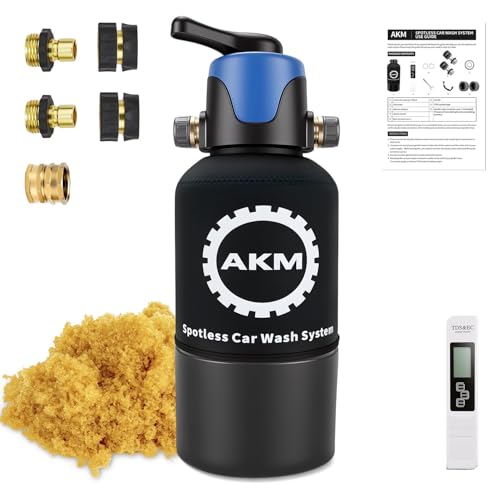
AKM is best for buyers who want a prefilled, hose-connected system with basic accessories included. The package description lists 5 liters of mixed-bed resin, two 3/4-inch garden hose quick connectors, a TDS meter pen, and a bypass valve.
The bypass is useful for reserving resin: use regular water during most of the wash, then switch to filtration for the final rinse. This makes the AKM a suitable choice for occasional vehicle, RV, bike, or boat washing where straightforward operation matters.
Limitation: The supplied features do not provide a rated water capacity, so the number of washes per resin fill cannot be determined from the listed information alone.
Filterelated 10L DI System With Bypass
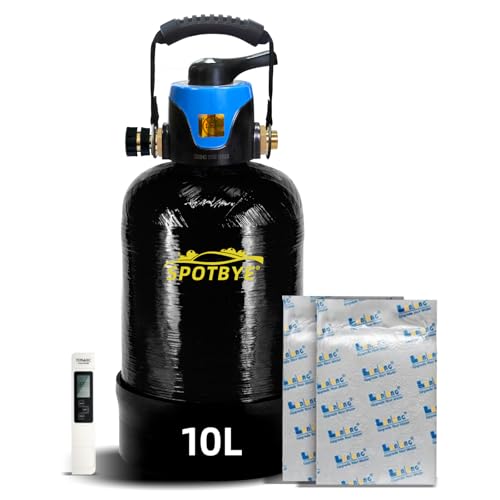
This Filterelated model is best for buyers who want a larger listed resin volume and a bypass for conserving DI water. It includes two 5-liter packs of mixed-bed resin and is described for washing and rinsing cars, motorcycles, and RVs.
The product information states an approximate output of 560 gallons under average 200 ppm TDS conditions. As with other resin-based systems, using DI water only for the final rinse can help limit resin consumption. Consider it if the stated capacity and bypass arrangement match your expected washing routine.
Limitation: The 560-gallon figure is an estimate under the stated water conditions, not a guaranteed output for every location.
Buying Guide: Choosing a Portable DI Water System
Do you need deionization or water softening?
A DI system removes dissolved ions from water using resin, with the goal of producing low-TDS water for a spot-free rinse. A water softener uses a different process to reduce hardness minerals and is generally intended for softened water use. These are not interchangeable products. For a spot-free final rinse, compare the DI systems in this guide rather than assuming a softener produces the same result.
How much resin capacity do you need?
More resin can mean more potential output, but actual service life depends on source-water TDS and how much water you filter. Compare listed resin volume and any stated capacity conditions. A capacity estimate tied to 200 ppm water may not apply to a home or campsite with different incoming water quality.
Is a bypass valve useful?
A bypass lets you use regular water for washing and switch to DI water for the final rinse. This can reduce unnecessary resin use. If conserving resin matters, prioritize a system with a clearly described bypass, such as the CR Spotless, VEVOR, AKM, or Filterelated options above.
Should the system include a TDS meter?
A TDS meter gives you a way to check the water’s dissolved-solids reading and decide when to inspect or replace resin. VEVOR lists a meter, and AKM includes a meter pen. If a meter is not included, confirm how you will monitor water quality before relying on air drying for a spot-free finish.
Frequently Asked Questions
What is a portable DI water system used for?
It filters water through deionizing resin to reduce dissolved ions. Common uses in these product listings include spot-free rinsing of vehicles, RVs, windows, and solar panels.
Can DI water help prevent water spots on a car?
DI water can reduce mineral residue that contributes to water spots. Results depend on the system’s output quality, resin condition, and washing technique.
Why use DI water only for the final rinse?
Using regular water for earlier washing steps and DI water for the last rinse can help conserve resin while still reducing mineral residue as the vehicle dries.
How do I know when DI resin needs attention?
Use a TDS meter if available and follow the system’s stated guidance. For example, the VEVOR listing recommends replacement around a 30 ppm reading.
Does a water softener work the same as a DI system?
No. A softener reduces water hardness through ion exchange, while a DI system removes dissolved ions using deionizing resin. Choose based on whether you need softened water or low-TDS rinse water.