Best Portable Tent Air Conditioners for Camping and Outdoor Comfort
The best portable tent air conditioner depends on your space, power source, and need for heating. The Outohome 5200 BTU is best for campers seeking compact cooling, while the FO-KOKO 6800 BTU dual-hose model suits buyers who want stronger cooling and heating. The Cybertake S2 Pro offers multiple power options, and the Disaenvir 3300 BTU is a smaller, simpler choice. Compare the listed capacity, modes, and power details before choosing.
| Product | Best For | Key Listed Feature |
|---|---|---|
| Outohome 5200 BTU | Portable everyday cooling | Four modes and under 400W rated consumption |
| FO-KOKO 5200 BTU | Small enclosed spaces | Dual-loop water cooling |
| FO-KOKO Dual Hose 6800 BTU | Cooling and heating | 6800 BTU cooling, 7500 BTU heating |
| Disaenvir 3300 BTU | Basic cooling and moisture control | Cool, dehumidify, and fan modes |
| Cybertake S2 Pro | Flexible power options | Wall, vehicle, and 48V DC power inputs |
Outohome 5200 BTU Portable Camping AC

This Outohome unit is best for campers who want a balance of cooling capacity, portability, and comfort settings. Its listed GMCC compressor provides 5200 BTU, and the temperature range is 60°F to 88°F. The product information states that it can lower ambient temperature by 18°F within five minutes under cooling mode; actual results can depend on conditions.
At 22.4 by 11.2 by 13.8 inches and 31 pounds, it has a carry grip for transport. Cooling, dehumidifying, sleep, and fan modes are controlled by remote, with a 24-hour timer. Listed rated power consumption is below 400W per hour, and sleep-mode noise is 46–50 dB. Choose it if these modes suit your trip; note that its listed sleep-mode noise is not silent.
FO-KOKO 5200 BTU Dual-Loop Cooling AC

This FO-KOKO model is best for buyers who prioritize compact cooling for a tent, van, RV, or other small space. It has a 5200 BTU compressor and a stated cooling coverage of 130 square feet. Its dual-loop water-cooling design sprays water to cool the condenser; the listing says this produces airflow 3.6°F colder than standard air conditioners.
The unit measures 12.8 by 10.6 by 22.8 inches and includes a carry handle. It is rated at 400W, has a 60°F to 88°F temperature range, and is described as capable of an 18°F temperature drop in five minutes. The carry bag can remain on while the unit operates. Choose it if condenser cooling and bag-friendly transport matter; check your power setup before relying on it outdoors.
FO-KOKO 6800 BTU Dual-Hose AC And Heater

This model is best for campers who want both cooling and heating, rather than a cooling-only unit. Its listed capacity is 6800 BTU for cooling and 7500 BTU for heating. The dual-hose design is described as cooling tents up to 50% faster than single-hose models, while five modes cover cool, heat, dry, fan, and sleep operation.
Temperature settings range from 60°F to 86°F. The listing also describes 30-second cooling and 60-second heating, plus sleep-mode noise of 45 dB. Touch controls and a remote provide two ways to adjust settings. Choose this unit when seasonal versatility is a priority. Its feature list does not specify power consumption, so verify your available power source and capacity before purchase.
Disaenvir 3300 BTU Tent Air Conditioner

The Disaenvir is best for buyers seeking a smaller unit with basic cooling and moisture-control modes. It provides 3300 BTU cooling and offers cool, dehumidify, and fan settings. The listed dimensions are 14.01 by 11.73 by 14.48 inches, and it weighs 30 pounds, making its footprint compact compared with the 5200 BTU options in this guide.
A safety lock is intended to prevent accidental setting changes, and sleep mode is described as quieter and energy-saving. Choose this model if three operating modes meet your needs and portability matters. The product is listed as 110V and no battery, so it is not a battery-powered option; plan for access to a suitable power source.
Cybertake S2 Pro Multi-Power Camping AC
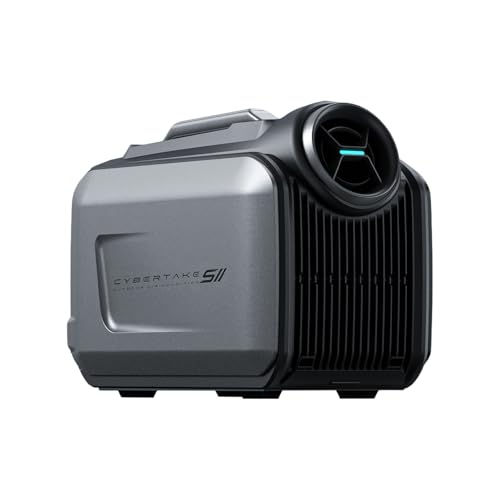
The Cybertake S2 Pro is best for buyers who need more than one power-input option. The listing names 100–240V wall power, 12V or 24V vehicle power, and 48V DC power from a portable power station. It provides 5100 BTU cooling and 6100 BTU heating, with a stated capacity for spaces up to 130 square feet.
Its modes include cool, heat, dehumidify, and Eco+, with three fan speeds and a timer of up to 12 hours. The listing says Eco+ can use as little as 1 kWh over eight hours. Important limitations: the boost converter must be purchased separately, and the remote control is also sold separately. Check those requirements before choosing this model for off-grid use.
Buying Guide: How To Choose A Portable Tent AC
How much cooling capacity do you need?
Compare the listed BTU ratings, but do not treat them as a guarantee of cooling performance in every tent. Tent size, sunlight, ventilation, humidity, and ambient temperature can affect results. The products here range from 3300 to 6800 BTU for cooling. For a small space or lighter-duty needs, compare lower-capacity options; for more capacity or added heating, consider the 6800 BTU dual-hose model.
What power source will you use?
Confirm the unit’s power requirements against your campsite, vehicle, or power station. The Disaenvir is listed as 110V with no battery. The Outohome and FO-KOKO 5200 BTU listings include power-consumption information, while the Cybertake names wall, vehicle, and 48V DC inputs. For the Cybertake, account for the separately purchased boost converter if needed.
Do you need heating or humidity control?
Cooling-only units can suit warm-weather trips. If you also camp in cooler conditions, a model with heating may be more useful. Dehumidifying modes are available on several products and may help manage damp air, but they are not a substitute for ventilation or appropriate moisture management inside a tent.
How important are weight and noise?
Check listed dimensions and weight alongside your packing space and transport needs. The Outohome and Disaenvir weigh 31 and 30 pounds, respectively. Noise figures are provided for sleep mode on some models, but not all. If quiet rest is important, compare the listed noise information and remember that operating conditions can affect perceived sound.
Frequently Asked Questions
Can a portable air conditioner cool a tent?
Yes, these products are marketed for tent or camping use. Cooling results depend on the unit, tent size, outdoor temperature, ventilation, and power supply.
Do portable tent air conditioners need electricity?
Yes, the listed models require a power source. Requirements vary: some list wall power or vehicle and DC inputs, while the Disaenvir is listed as 110V and has no battery.
Is higher BTU always better for a tent?
Not necessarily. Compare capacity with the size and conditions of your space, as well as the unit’s power needs and portability.
Which option includes heating?
The FO-KOKO dual-hose model lists 7500 BTU heating, and the Cybertake S2 Pro lists 6100 BTU heating.
Can I run a portable tent AC from a power station?
The Cybertake listing includes 48V DC power from a portable power station and notes that a boost converter must be purchased separately. Check each unit’s electrical requirements against your power station before use.