Best Potable Water Expansion Tank Options for Safe Water Heating Systems
Choosing the right potable water expansion tank helps protect your home’s plumbing from pressure surges and reduces stress on water heaters and boilers. This guide highlights five reliable options, covering different capacities and installation styles. Each product focuses on durable materials, easy mounting, and proven performance to manage thermal expansion in closed-loop systems.
Product Overview
- TT FLEX Potable Thermal Expansion Tank, 2.1 Gallon
- Watts Watts Potable Water Expansion Tank, 4.5 Gallon
- Solimeta 2.1 Gallon Potable Water Expansion Tank
- Solimeta 4.5 Gallon Potable Water Expansion Tank
- Eastman 2-Gallon Mini Thermal Expansion Tank, Stainless
Product Summary Table
| Product | Capacity | Connection | Key Benefit |
|---|---|---|---|
| TT FLEX 2.1 Gal | 2.1 Gal | 3/4 in MNPT | Compact, easy install for smaller systems |
| Watts 4.5 Gal | 4.5 Gal | 3/4 in MNPT | Higher capacity for larger domestic setups |
| Solimeta 2.1 Gal | 2.1 Gal | 3/4 in MNPT | Bracket included for quick mounting |
| Solimeta 4.5 Gal | 4.5 Gal | 3/4 in MNPT | High-capacity option with wall bracket |
| Eastman 2-Gal Mini | 2.0 Gal | 1/2 in MIP | Stainless, compact, versatile mounting |
All products are designed to absorb pressure increases from hot water expansion and help maintain safe system pressures. When selecting a tank, consider capacity, mounting options, corrosion resistance, and compatibility with your existing piping.
TT FLEX Potable Thermal Expansion Tank — 2.1 Gallon

The TT FLEX 2.1 Gallon expansion tank is designed to manage thermal expansion in closed-loop heating or cooling systems, helping prevent damage from pressure spikes. It features a compact build suitable for smaller installations and a straightforward installation process that suits both professionals and DIYers. The 2.1 gallon capacity balances space constraints with expansion control for modest systems.
Key features include effective thermal expansion management, easy installation, and a generous 2.1 gallon capacity. The tank uses a diaphragm-based design to separate system water from the precharge air, supporting reliable performance over time. If your boiler or water heater sits in a tight space, this model provides a practical balance of capacity and footprint.
Watts Potable Water Expansion Tank — 4.5 Gallon

The Watts 4.5 gallon potable water expansion tank is built for both commercial and residential water heating installations, controlling thermal expansion and maintaining safe pressures. It mounts directly to the supply piping with a 3/4-inch male connection and stainless steel inlet, offering durable performance in varied environments. Its carbon steel body with epoxy finish adds long-lasting protection and resilience against corrosion while the internal membrane minimizes air-charge loss.
With a robust 4.5 gallon capacity, this tank suits mid-to-large homes or multi-unit setups. Its versatile mounting and durable construction enable flexible placement, whether on a water heater, boiler, or nearby supply line. The tank’s design emphasizes reliability and consistent pressure control, helping prevent relief valve activation during expansion cycles.
Solimeta 2.1 Gallon Potable Tank With Bracket
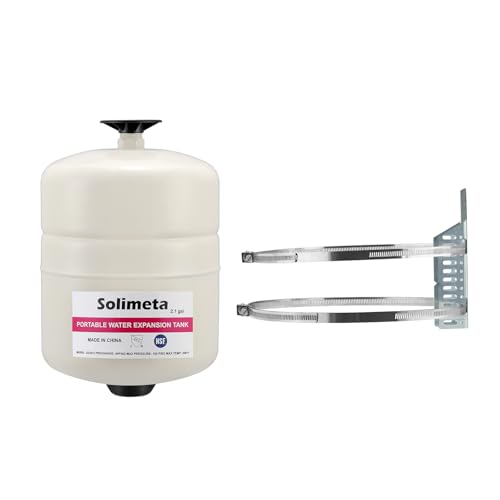
Solimeta’s 2.1 gallon potable expansion tank provides expansion control with an included wall mounting bracket set for quick and convenient installation. The 2.1 gallon capacity makes it suitable for smaller residential systems, while the 3/4″ MNPT threaded connection ensures compatibility with standard piping. The kit’s bracket simplifies mounting, reducing the need for additional accessories.
The tank is designed to prevent pressure buildup, extend system lifespan, and support energy efficiency by minimizing water hammer and leaks. Its durable construction and included mounting hardware make it a practical choice for compact installations where space is at a premium yet reliable expansion control is required.
TT FLEX Potable 4.5 Gallon Expansion Tank
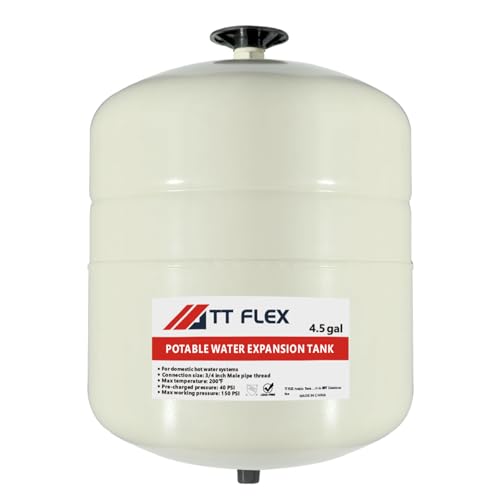
This TT FLEX model expands to 4.5 gallons and features an appliance-quality painted finish to resist external corrosion. It uses a 100% butyl diaphragm and features a plastic liner to separate system water from precharged air, reducing the risk of air loss. The design supports seamless return of expanded water to the system during hot-water usage and helps prevent relief valve trips. The installation remains straightforward for both pros and DIY installers, with a compact footprint.
Its inline configuration makes it a strong option for mid-sized households seeking higher expansion capacity without a large installation footprint. The combination of durable diaphragm construction and corrosion-resistant finish adds long-term reliability in typical home heating systems.
Watts ETX-90 6-Gallon Non-Potable Expansion Tank

The Watts ETX-90 is a larger, non-potable expansion tank intended for closed-loop hydronic heating systems. It pre-charges at 12 psi and has a 6 gallon volume with a carbon steel body and epoxy finish. A durable expansion membrane minimizes air-charge loss, supporting dependable operation over time. It connects with a 1/2 inch MNPT system connection and a 0.302-32 inch charging valve connection for on-site charging.
Although non-potable, this tank is suitable for many residential and light commercial heating networks that require robust expansion control. The 6-gallon capacity provides ample headroom for higher-temperature systems or larger radiated heat gains, while the steel construction contributes to a long service life in demanding environments.
Watts ETX-15 2.1-Gallon Non-Potable Expansion Tank

The Watts ETX-15 is a 2.1-gallon non-potable expansion tank designed for closed-loop hydronic heating systems. It features a carbon steel chassis with an epoxy finish and a 1/2 inch MNPT system connection with a 0.302-32 inch charging valve connection for on-site charging. The pre-charge and membrane design help maintain system pressure and reduce the risk of leaks from thermal expansion in smaller installations.
Its compact size and reliability make it a practical choice for tighter installations where space is limited, yet expansion control remains essential. The non-potable designation may suit certain boiler or heater configurations while offering solid performance in standard closed-loop setups.
Buying Guide: Key Purchase Considerations
- Capacity vs. system size: For smaller homes, 2.1 gallon tanks can be adequate; larger or multi-zone systems may require 4.5 gallon or more to prevent pressure spikes.
- Potable vs. non-potable: If you’re dealing with potable water heating systems, choose potable-rated tanks with corrosion-resistant bodies and membranes designed for potable use when applicable.
- Connection type and mounting: Most residential tanks use 3/4 inch MNPT connections; ensure compatibility with your piping. Include mounting brackets if space or orientation is a concern.
- Materials and durability: Look for epoxy-coated carbon steel or stainless steel bodies for longevity and resistance to corrosion and leaks.
- Air charge and diaphragm design: A high-quality diaphragm and stable precharge help prevent air loss and maintain steady pressure under expansion.
- Installation complexity: Some tanks include brackets and easy-install features, which can reduce installation time and labor costs.
- System compatibility: Verify that the tank is suitable for your boiler, water heater, or radiant heating loop, including pressure ratings and venting requirements.
- Maintenance needs: Consider tanks with simple access for charging and inspection, and check for warranty coverage and replacement parts.
When evaluating options, balance capacity, footprint, and installation practicality with your home’s heating load and future expansion plans. This approach helps ensure reliable pressure management and extended equipment life across seasons.