Best Pressure Treated Deck Stains for Protection and Wood Grain
The best pressure treated deck stain depends on whether you want to preserve visible wood grain, add a solid color, or simplify future maintenance. Restore-A-Deck is the most directly targeted option because its listing specifically names pressure-treated lumber. Armstrong-Clark and Ready Seal offer penetrating oil-based finishes, while SaverSystems provides water-based semi-transparent and solid-color choices. Compare finish, formula, and preparation guidance before choosing; always follow the product label and let new pressure-treated lumber dry as directed.
| Product | Finish or formula | Best suited for |
|---|---|---|
| Restore-A-Deck | Semi-transparent, penetrating | Pressure-treated and weathered wood |
| Armstrong-Clark | Semi-transparent, oil-based | Penetrating protection and maintenance |
| Ready Seal Natural Cedar | Stain and sealer | Large projects and easy application |
| SaverSystems #1 Deck Cedar | Semi-transparent, water-based | Visible grain and lower-VOC formula |
| SaverSystems #1 Deck Simply White | Solid-color, water-based | Opaque coverage and a light color |
Restore-A-Deck Semi-Transparent Wood Stain

Best for pressure-treated and weathered decks. The product listing specifically identifies pressure-treated lumber, along with old, weathered wood, decks, fences, docks, and siding. Its penetrating semi-transparent finish is designed to enhance the grain and help reduce peeling, making it a suitable choice for buyers who want a natural-looking finish rather than opaque coverage.
The product is designed to allow same-day preparation and staining when used with the brand’s Cleaner and Brightener system. That can help streamline a restoration project, though the listing says “can often” be applied the same day, not that every project will be ready on that schedule. Follow the label’s preparation and application instructions.
Limitation: Its natural, semi-transparent look will not hide the wood grain or provide the full-coverage appearance of a solid stain.
Armstrong-Clark Sierra Redwood Stain

Best for buyers seeking a penetrating oil-based finish. Armstrong-Clark describes this stain as using conditioning oils to penetrate wood fibers and drying oils to lock in protection. It is intended for exterior wood surfaces including decks, fences, siding, and logs. Its Sierra Redwood semi-transparent color is a better fit for buyers who want a tinted finish that does not advertise itself as opaque.
The listing says the finish resists UV exposure and water intrusion and can be applied in direct sunlight and warm temperatures. It also describes maintenance coats as requiring cleaning and reapplication without extensive sanding, stripping, or media blasting. These features may appeal to owners planning routine upkeep.
Limitation: It is oil-based, so choose it only if that formula fits your project and application preferences. Check the label for surface preparation and conditions.
Ready Seal Natural Cedar Stain and Sealer

Best for larger exterior projects and straightforward application. This five-gallon stain and sealer is listed for decks, fences, siding, and other exterior wood. Ready Seal promotes a “Goof Proof” formula intended to avoid laps, runs, and streaks without back brushing. Its natural cedar color suits buyers who want a warm-toned wood finish.
The product description also states that it provides moisture resistance and UV protection, and that it can withstand rain within minutes of application. It can be applied in direct sunlight, according to the listing. Those details make it a practical candidate for projects where application conditions may vary, but the product label should guide timing and weather decisions.
Limitation: The listing does not specifically identify pressure-treated lumber. Confirm the label’s instructions and the wood’s readiness before applying it to a pressure-treated deck.
SaverSystems #1 Deck Semi-Transparent Cedar
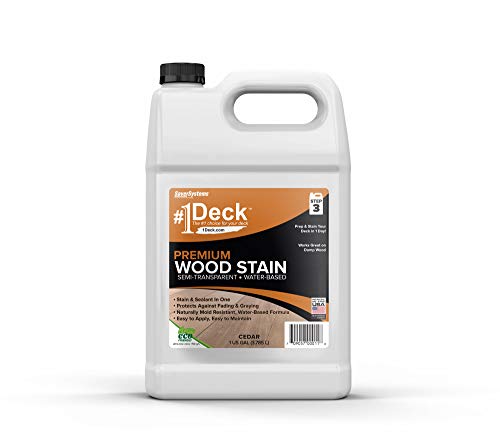
Best for visible grain and a water-based formula. This one-gallon stain and sealer is designed to let the natural grain show through while adding cedar color. SaverSystems says it penetrates wood pores and provides UV protection intended to help prevent fading and graying. The listing identifies it for decks, fences, and siding.
The water-based formula is listed at less than 50 grams per liter of VOC content. Choose this option if you prefer semi-transparent coverage and want the product to combine staining and sealing. It is distinct from the solid-color option below, which is intended to hide the grain.
Limitation: Because it is semi-transparent, it will not conceal existing color variation or wood grain like an opaque finish. The listing does not specifically name pressure-treated lumber, so verify suitability and preparation directions on the label.
SaverSystems #1 Deck Solid Simply White

Best for opaque coverage and a white finish. Unlike the semi-transparent options, this water-based stain and sealer is made to hide the natural wood grain with a solid, matte finish. Its listing describes UV protection against fading and graying and says it can be applied over existing solid stains that still have good adhesion.
Simply White is one of six listed solid colors. Consider it when a uniform appearance matters more than showing the pressure-treated wood’s grain. The combined stain-and-sealer format is intended for decks, fences, and siding.
Limitation: The opaque finish completely hides the grain, so avoid this product if preserving a natural wood appearance is a priority. Existing coatings must have good adhesion for the stated over-stain use.
Buying Guide: How to Choose a Pressure Treated Deck Stain
Should you choose a transparent, semi-transparent, or solid finish?
Choose a semi-transparent stain if you want color while retaining visible grain. Restore-A-Deck, Armstrong-Clark, and SaverSystems Cedar fit that general preference, though their formulas differ. Choose a solid stain if hiding the grain and creating a more uniform color are higher priorities. SaverSystems Simply White is the opaque option in this selection.
Does the formula matter?
Yes. Armstrong-Clark is oil-based, while the two SaverSystems products are water-based. Ready Seal’s listed features emphasize easy application, moisture resistance, and UV protection, but do not specify a water-based formula. Compare label directions, cleanup requirements, and application conditions before buying.
What should you check before staining pressure-treated lumber?
Check the deck’s condition and the stain manufacturer’s preparation instructions. Pressure-treated wood may need time to dry before a finish can be applied; do not assume a universal waiting period. Follow the product label’s readiness guidance, and prepare the surface as directed. Restore-A-Deck is the only option here whose listing explicitly names pressure-treated wood.
Frequently Asked Questions
Which option specifically lists pressure-treated wood?
Restore-A-Deck states that it is designed for pressure-treated lumber as well as old and weathered wood.
Which stain preserves the natural wood grain?
The semi-transparent options are designed to show the grain. SaverSystems Cedar explicitly describes a finish that lets natural grain show through.
Which product provides an opaque finish?
SaverSystems #1 Deck Solid Simply White is described as an opaque finish that completely hides the natural wood grain.
Can stain be applied to newly treated lumber right away?
Do not assume it can. Follow the stain label’s instructions for wood readiness and preparation, since application timing depends on the product and surface condition.