Best R-30 Ceiling Insulation for Attics and Ceiling Joists
R-30 fiberglass batts are a practical choice for ceiling projects when the product dimensions suit the framing and the facing matches the assembly. For a high-density batt sized for 2×8 spaces, consider Knauf or Owens Corning. For wider coverage in a 2×10 attic, Johns Manville offers a kraft-faced option; its unfaced batt is worth comparing when a facing is not needed. The products below differ in facing, stated coverage, and intended framing depth.
| Product | Facing | Stated fit or use | Best suited for |
|---|---|---|---|
| Knauf R-30, 15 x 48 | Kraft faced | 2×8 floor or attic | High-density batt applications |
| Johns Manville R-30, 24 x 48 | Kraft faced | 2×10 attic | Projects needing broad stated coverage |
| Owens Corning R-30, 15 x 48 | Kraft faced | 2×8 attic | Attics using high-density batts |
| Johns Manville R-30, 16 x 48 | Unfaced | 2×10 floor, ceiling, or attic | Assemblies where unfaced batts are specified |
| CertainTeed R-30, 16 x 48 | Kraft faced | 2×10 attic | Attic projects needing faced batts |
Knauf R-30 Kraft-Faced Batts

Knauf’s R-30 fiberglass batts measure 15 by 48 inches and are described as fitting 2×8 floor or attic spaces. The listing identifies the material as high density and kraft faced, with a stated total coverage of 440 square feet across eight bags.
Best for: Homeowners insulating an attic, floor, or cathedral-ceiling area with compatible 2×8 framing who want high-density batts. It was selected for its clearly stated dimensions, R-value, facing, and framing fit.
Consider: Kraft facing is a moisture-retarding layer, not a substitute for checking the vapor-control requirements of the specific ceiling assembly. Confirm the framing dimensions and installation instructions before ordering.
Johns Manville R-30 Kraft-Faced Batts

This Johns Manville package is listed as R-30, kraft faced, and sized 24 by 48 inches for 2×10 attic applications. The listing states eight bags and 704 square feet of total coverage. The kraft paper facing provides a moisture-retarding layer, according to the product details.
Best for: Attic projects with compatible 2×10 framing where a faced batt and a large stated coverage area are priorities. It was selected as a wider-format alternative to the 15-inch products.
Consider: A 24-inch batt is not intended for every joist spacing. Measure the cavities and verify the product’s dimensions before purchase; do not compress batts to force a fit.
Owens Corning R-30 High-Density Batts

These Owens Corning batts measure 15 by 48 inches and are described as high density for 2×8 attic applications. The listing identifies them as kraft faced and recommends placement between trusses. It states a total package coverage of about 568 square feet across ten bags.
Best for: Attic work using 2×8 framing where a high-density, faced batt is appropriate. It was selected for its stated attic use, framing fit, and larger listed package coverage than the Knauf option.
Consider: The product details say high-density material is less thick than normal R-30-density material. Check the listed dimensions and installation requirements rather than judging fit by nominal R-value alone.
Johns Manville R-30 Unfaced Batts
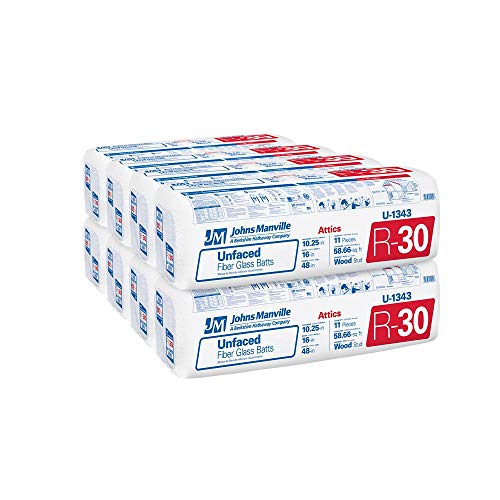
This unfaced Johns Manville product is listed as R-30 and 16 by 48 inches, with a stated fit for 2×10 floor-ceiling and attic applications. The listing describes eight bags and approximately 469 square feet of coverage. Unlike kraft-faced options, it has no attached moisture barrier.
Best for: Buyers whose ceiling assembly calls for unfaced insulation or already has an appropriate vapor-control layer. It was selected to provide a direct comparison with faced R-30 options in a similar 2×10 format.
Consider: Because it is unfaced, it does not provide the paper moisture-retarding layer found on kraft-faced batts. Confirm the assembly’s moisture-management needs before choosing it.
CertainTeed R-30 Kraft-Faced Batts
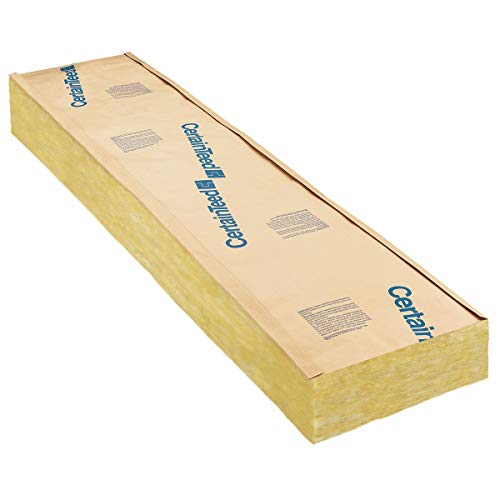
CertainTeed’s listed R-30 fiberglass batts measure 16 by 48 inches and are described as kraft faced for 2×10 attic use. The listing states eight bags and approximately 469 square feet of coverage. The product provides a faced alternative to the Johns Manville unfaced batts in a similar stated size.
Best for: Attic projects with compatible 2×10 framing that call for kraft-faced insulation. It was selected for its R-30 rating, specified dimensions, and stated attic application.
Consider: The listing does not provide as much detail about installation conditions as some other products. Check the packaging and manufacturer guidance to confirm suitability for your ceiling assembly.
Buying Guide: How to Choose R-30 Ceiling Insulation
Which batt width fits the ceiling framing?
Measure the clear space between joists or trusses and compare it with the batt width. The products here include 15-, 16-, and 24-inch widths. A proper fit helps the batt sit in the cavity without gaps or compression. Also check framing depth: the listings identify different products for 2×8 and 2×10 applications.
Should you choose faced or unfaced batts?
Kraft-faced batts have a paper backing described as a moisture barrier or retarder. Unfaced batts do not include that layer. The right choice depends on the ceiling assembly, climate, and existing vapor-control materials. Avoid installing an additional vapor barrier without checking local requirements or professional guidance.
How much coverage should you order?
Estimate the ceiling area, then compare it with the product’s stated package coverage. Allow for cutting and irregular spaces, but verify the actual coverage on the product packaging because listing details can vary. Coverage alone does not determine fit: dimensions and framing compatibility matter too.
What should you check before installation?
- Confirm the R-value and batt dimensions on the package.
- Check that the facing and vapor-control approach suit the assembly.
- Follow product instructions for attic ventilation and placement.
- Wear appropriate protective equipment and avoid blocking required ventilation paths.
Frequently Asked Questions
What does R-30 mean for ceiling insulation?
R-30 is the insulation’s stated thermal resistance rating. The correct amount and type for a home depend on the ceiling assembly, local climate, and applicable building requirements.
Can R-30 batts fit in 2×8 framing?
Some products in this list are specifically described for 2×8 applications. Verify the product dimensions and instructions, since thickness and density can differ by model.
Is kraft-faced insulation suitable for an attic?
Some listed kraft-faced batts are described for attic use. Confirm facing orientation and moisture-control requirements for the specific assembly before installation.
Can I use unfaced R-30 batts in a ceiling?
Yes, when the assembly calls for unfaced insulation and its moisture-control plan is addressed separately. The Johns Manville unfaced product is listed for floor-ceiling and attic applications.
Should insulation be compressed to fit a cavity?
No. Choose batts sized for the framing space and follow the manufacturer’s instructions. Compression can interfere with the intended installation and performance.