Best Rain Water Filtration Systems for Home and Emergency Use
The best rainwater filtration setup depends on how you plan to use the water: a countertop gravity system suits household storage, while portable filters and purification tablets are easier to use outdoors or during emergencies. The Purewell countertop system is best for gravity-fed home use; BKLES and Aquatabs offer portable treatment options; Uzima and Waterdrop are designed for outdoor gravity filtration. These products are not necessarily complete rainwater treatment systems, so collect water safely and check whether additional disinfection or testing is needed.
| Product | Best suited for | Format |
|---|---|---|
| Purewell 3-Stage Countertop System | Household gravity filtration | Stainless steel countertop |
| BKLES 3-in-1 Water Filter | Emergency and off-grid use | Electric, solar, and hand pump |
| Aquatabs Purification Tablets | Compact emergency treatment | Tablets |
| Uzima UZ-2 | Portable gravity filtration | Freestanding filter |
| Waterdrop Gravity Filter Straw | Outdoor use and small groups | Gravity bag and filter straw |
Purewell 3-Stage Countertop System

Best for: Households that want a gravity-fed countertop option for stored or pre-collected water. This system has a 304 stainless steel housing, stand, and spigot, with a listed 2.25-gallon capacity.
Its three-stage filter combines a 0.01-micron hollow-fiber membrane, silver-ion membrane, and activated carbon block. The product information says it is designed to reduce chlorine and intercept rust, sediment, organic matter, and heavy metals. It also lists NSF/ANSI 42 and 372 certifications for specified filter or material claims.
Why it was selected: Its larger countertop format and multi-stage filtration make it a practical household-style choice among the portable and emergency products here. Limitation: The listing does not establish that it removes every possible contaminant in roof-collected rainwater or replaces water testing.
BKLES 3-in-1 Emergency Water Filter

Best for: Emergency kits, camping, and off-grid situations where access to electricity may be uncertain. The BKLES BK3000 supports electric and hand-pump operation and includes solar charging, according to its product information.
The listed system uses dual 0.01-micron ultrafiltration membranes and six filtration stages, including PP cotton, KDF, and activated carbon materials. It weighs 450 grams, has a stated maximum flow rate of 800–1,000 milliliters per minute, and comes with a storage case.
Why it was selected: Multiple operating modes offer flexibility when power is unavailable, which can matter during an emergency. Limitation: The listed flow rate and capacity are product specifications, not a guarantee that untreated rainwater is safe to drink. Follow the manufacturer’s instructions and verify treatment needs for your source.
Aquatabs Water Purification Tablets
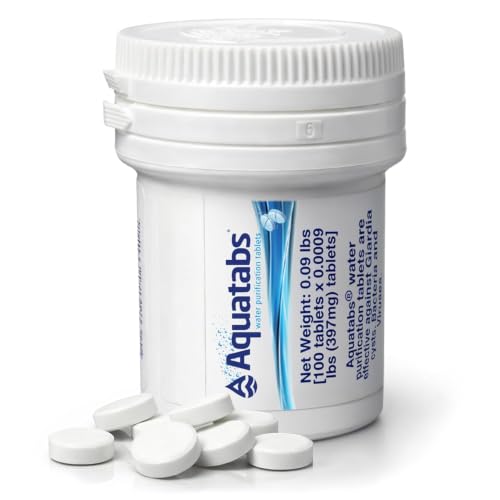
Best for: Buyers who need a lightweight treatment option for emergency storage or travel. The package contains 100 tablets, and the product information says each 397-milligram tablet treats four gallons in 30 minutes.
The listing states that the tablets remove 99.9999% of bacteria, 99.99% of viruses, and 99.9% of cysts, including Giardia. Tablets take little storage space and can be useful as a treatment step when a mechanical filter is not practical.
Why it was selected: They provide a compact option that can complement a rainwater collection plan. Limitation: Tablets are not a physical sediment filter, and the listing does not say they address every chemical contaminant. Follow the package directions, including its dose and wait time.
Uzima UZ-2 Gravity Water Filter

Best for: Campers and emergency planners who prefer gravity filtration without relying on an electric pump. The UZ-2 is described as portable and freestanding, making it suited to outdoor setups where a stable surface is available.
Its hollow-fiber filter is listed as protecting against 99.999% of bacteria. The product information also says the system is compatible with water purification tablets, allowing users to combine filtration with a separate treatment step when appropriate.
Why it was selected: Its gravity-fed design and stated tablet compatibility offer a straightforward portable approach. Limitation: The supplied information does not provide a full contaminant-removal profile for roof runoff. Do not assume bacteria filtration alone makes every rainwater source potable.
Waterdrop Gravity Water Filter Straw
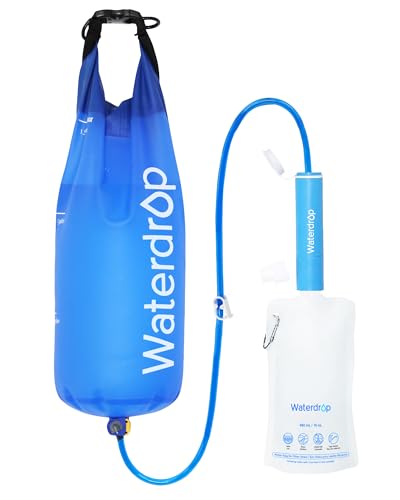
Best for: Outdoor users who want a gravity-fed system with a water bag. The included bag holds up to 1.5 gallons, and the product listing states a maximum flow rate of up to 700 milliliters per minute.
The five-stage system includes a 0.1-micron ultrafiltration membrane. Its listed targets include chlorine, particulates, sediment, sand, dirt, and unpleasant taste or odor. The manufacturer states that the filter can provide up to 1,400 gallons of filtered water.
Why it was selected: The bag-and-straw combination provides a portable way to process and hold water for outdoor use. Limitation: The listing does not establish removal of all microorganisms or chemical contaminants in rainwater. Check the filter’s instructions and use an appropriate additional treatment if necessary.
Buying Guide: What To Consider For Rainwater Filtration
Is a camping filter enough for rainwater?
Not necessarily. These products are marketed for drinking water, camping, or emergencies, but their listed capabilities differ. A filter that targets bacteria or sediment may not address every chemical, metal, or other contaminant that can enter rainwater from roofing, gutters, storage tanks, or nearby pollution. Match treatment to the collection surface, storage method, and intended use.
Should you filter and disinfect rainwater?
Filtering and disinfection serve different purposes. A mechanical filter may reduce particles and certain microbes; tablets provide a chemical treatment step according to their directions. Some sources may require more than one treatment method. Follow product instructions and local public-health guidance rather than assuming one device handles every risk.
What matters for household use?
Consider capacity, installation space, flow rate, and how often you need water. A countertop gravity system is more suited to repeated household use than a straw or small emergency device. Portable systems are easier to store or move, but may require more handling or have a smaller water capacity.
How should collected rainwater be managed?
Use a clean collection and storage setup, keep debris out, and inspect the tank and gutters regularly. If the water is intended for drinking, consider testing it and seek local guidance about treatment. Do not use water that may have been contaminated by chemicals or other hazardous materials based on filtration claims alone.
Frequently Asked Questions
Can filtered rainwater be used as drinking water?
Only when collection, storage, and treatment are suitable for the source. A filter’s listed capabilities do not automatically establish that all rainwater is safe to drink.
Which product is best for a home setup?
The Purewell countertop system is the most home-oriented option in this selection because it has a stainless steel housing, stand, spigot, and listed 2.25-gallon capacity.
Which option works without electricity?
The BKLES system lists a hand-pump mode, while the Uzima and Waterdrop products use gravity-fed designs.
Do water purification tablets remove sediment?
The Aquatabs listing describes microbial treatment, not physical sediment filtration. Pre-filter visibly cloudy water when product instructions or health guidance call for it.
Can these systems remove every rainwater contaminant?
No product information provided here establishes removal of every possible contaminant. Choose treatment based on testing and the specific risks associated with the collection and storage system.