Best Products for Replacing Kitchen Cupboard Doors
For a kitchen cupboard door replacement, start with an accurately measured door, then choose hardware that fits its style and opening. The ONESTOCK unfinished oak door is best for a customizable replacement; Chibery’s hinges are intended for Lazy Susan corners; and Ravinte handles update the look when their hole spacing matches. Repair plates and bumpers can help address worn hinges or noisy closing, but they do not replace a damaged door.
| Product | Best suited for | Key consideration |
|---|---|---|
| ONESTOCK Shaker door | Custom-finished door replacement | Measure exact width and height |
| Chibery 135° hinges | Lazy Susan corner doors | Designed for corner cabinets |
| MEXYNEAT repair plates | Loose or damaged hinge mounting areas | Repairs existing door or cabinet wood |
| Ravinte handles | Coordinated handle refresh | Requires 3-inch hole spacing |
| FATLODA bumpers | Quieter closing and cushioning | Adhesive surface must be suitable |
ONESTOCK Unfinished Oak Shaker Cabinet Door

This replacement door measures 16.25 inches wide, 17 inches high, and 3/4 inch deep. Its unfinished oak surface can be stained or painted, and the product description notes that buyers can drill for their own hardware. That makes it a practical choice when the goal is to match a kitchen’s color or update its finish.
Best for: Homeowners replacing one door or coordinating a custom finish. It was selected because it is the listed product designed to serve as a cabinet door, rather than a repair or accessory part. Measure the existing door carefully before ordering; the listed dimensions are specific, not universal.
Chibery 135-Degree Lazy Susan Hinges

This two-pack of hinge pairs is designed for 135-degree corner kitchen cabinets, including Lazy Susan applications. The hinges are concealed and offer six-way or three-dimensional adjustment, according to the product details. Adjustable screws are described as supporting different door thicknesses.
Best for: Replacing hinges on a compatible corner cabinet door, rather than selecting general-purpose hinges for a standard cupboard. Confirm the cabinet layout and existing hinge arrangement before choosing them. The stated 135-degree design limits their use to the relevant corner configuration.
MEXYNEAT Cabinet Hinge Repair Plate Kit

The kit includes four large plates, two small plates, and 36 self-tapping screws. Its stainless-steel plates are designed to spread hinge stress over a wider area, helping stabilize loose hinges and cover damaged mounting spots. This can be useful when a door is otherwise serviceable and its hinge attachment area is the main problem.
Best for: Repairing damaged hinge mounting areas without replacing the whole door. It was selected as a targeted option for common wear around cabinet hinges. It is a repair kit, not a replacement door or a complete hinge set, so it may not address a cracked or badly warped door.
Ravinte Brushed Nickel Cabinet Handles

This 30-pack of stainless-steel bar pulls has a brushed nickel finish. The listed center-to-center hole spacing is 3 inches, which is the key measurement to check when replacing existing handles. Matching that spacing can make a hardware update simpler; new doors may also need holes drilled at the correct distance.
Best for: Updating multiple cupboard doors with a consistent finish. The product was selected because handles are a visible part of a door replacement and can help coordinate the new doors with other nickel accessories. Avoid choosing them without checking the existing or planned hole spacing.
FATLODA Clear Cabinet Door Bumpers
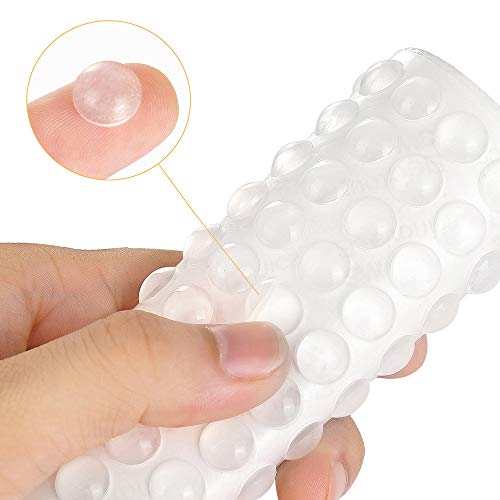
This pack contains 200 clear rubber bumpers, each listed as 0.4 inch in diameter and 3 millimeters thick. The self-adhesive bumpers are intended to cushion contact and reduce noise when cabinet doors or drawers close. The product description lists use on surfaces including wood, glass, metal, and ceramic.
Best for: Adding a cushioning touch after installing doors or refreshing cabinet hardware. These small accessories can help reduce closing noise, but they do not correct a misaligned door or repair a failing hinge. For best adhesion, use a clean, suitable surface.
Buying Guide: How To Choose Replacement Cupboard Doors
What should you measure before ordering?
Measure each existing door’s width and height, and note its thickness. Do not assume every door in a kitchen is identical; corner doors, end cabinets, and modified openings may differ. Also record whether the door sits inside the cabinet opening or overlays its front. Compare those measurements with the replacement product’s stated dimensions before buying.
Should you replace the door, hinges, or both?
Replace the door when it is damaged, warped, or unsuitable for the planned update. Replace or select hinges based on the cabinet layout and door movement. A repair plate may help when the hinge’s mounting area is damaged but the door remains usable. For Lazy Susan corners, verify that a hinge’s angle and configuration match the cabinet.
What finish and hardware details matter?
Unfinished doors offer the option to stain or paint, but require finishing work and hardware planning. For handles, measure the distance between screw holes from center to center. If new doors have no pre-drilled holes, choose a handle position and spacing before drilling. Bumpers are optional finishing accessories for cushioning and quieter closure.
Frequently Asked Questions
Can I replace only one kitchen cupboard door?
Yes, if you can find a door with dimensions and a style that suit the cabinet. Match the finish as closely as practical, or use the replacement as part of a broader visual update.
Do I need new hinges when replacing a door?
Not always. Existing hinges may be reusable if they are in good condition and suit the replacement door and cabinet. Check the hinge type and placement before installation.
Can a hinge repair plate replace a cupboard door?
No. A repair plate reinforces a hinge mounting area; it is not a door. Use it when the mounting area is the problem and the door itself remains serviceable.
How do I choose handles for new doors?
Check the handle’s center-to-center hole spacing and decide where the holes will go on the new door. The Ravinte handles listed here specify 3-inch spacing.