Best Reverse Osmosis Tap Filters for Cleaner Drinking Water
The best reverse osmosis tap filter depends on whether you want a dedicated sink system, a countertop purifier, or a replacement faucet for an existing setup. The DREO is best for installation-free countertop use, Waterdrop suits buyers seeking a high-capacity tankless system, and iSpring offers under-sink options with dedicated faucets. The WEWE faucet is an accessory, not a filtration system, so choose it only if you already have a compatible setup.
| Product | Best For | Type |
|---|---|---|
| DREO Countertop RO | No-plumbing convenience | Countertop purifier |
| iSpring RCC7AK-BN | Under-sink filtration with mineral stage | RO system and faucet |
| Waterdrop G3P600 | High-capacity tankless filtration | Under-sink RO system |
| iSpring RCC7-BN | Certified five-stage filtration | Under-sink RO system |
| WEWE Drinking Water Faucet | Replacing a dedicated RO faucet | Faucet accessory |
DREO Countertop Reverse Osmosis Water Filter
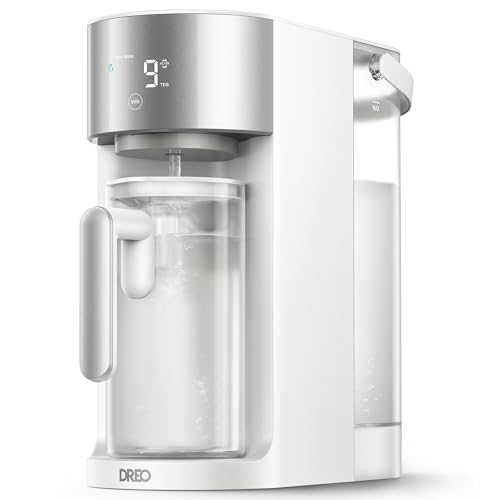
Best for: Renters, apartment residents, and households that want reverse osmosis without connecting equipment to a sink. This countertop unit is installation-free and includes a pitcher with an auto-fill sensor, making it a practical choice where permanent plumbing changes are not wanted.
The listed features include seven-stage filtration, real-time TDS readings for raw and purified water, filter-life reminders, and an automatic internal cleaning function. The manufacturer says it reduces 99.9% of possible contaminants, including PFOA, PFOS, chlorine, and fluoride, and reports SGS testing against NSF/ANSI 58 standards.
Limitation: It is a countertop purifier, not a faucet-mounted filter. Buyers who want water directly from a dedicated sink tap should consider an under-sink system instead.
iSpring RCC7AK-BN Alkaline RO System

Best for: Buyers who want an under-sink reverse osmosis system with a dedicated faucet and a mineral stage. The six-stage design adds natural minerals after RO filtration, according to the product details, and the brushed-nickel faucet can coordinate with similar kitchen hardware.
The top-mounted fastener is designed to make faucet installation easier from above the counter. A transparent first-stage housing also lets users see buildup and check the prefilter’s condition. Choose this model if you want a permanent sink installation and value the additional remineralization stage.
Limitation: Unlike a plug-in countertop purifier, this system requires under-sink installation. Its mineral stage may not be necessary for buyers who prefer water without remineralization.
Waterdrop G3P600 Tankless RO System

Best for: Households seeking a tankless under-sink system with high stated production capacity. The product is rated at 600 gallons per day and includes a smart display faucet with a TDS monitor and filter-life tracker, giving users at-a-glance information at the tap.
Waterdrop lists eight-stage filtration and says the system reduces TDS and substances including fluoride, chlorine, PFAS, and arsenic. The supplied details also report NSF/ANSI 58 certification for TDS reduction, NSF/ANSI 372 certification for lead-free materials, and NSF 42 certification for chlorine, taste, and odor reduction.
Limitation: This is an under-sink installation rather than a portable tap attachment. Check available cabinet space and installation requirements before choosing a tankless system.
iSpring RCC7-BN Five-Stage RO System

Best for: Buyers who want a conventional under-sink RO setup with a brushed-nickel drinking-water faucet. The five-stage system is rated at 75 gallons per day and is NSF/ANSI 58 certified, according to the supplied product information.
iSpring states that it reduces TDS by 80–90% and can reduce contaminants including fluoride, chlorine, and lead. The transparent first-stage housing makes filter condition easier to inspect, and the system does not require a power source. Choose it if you want a dedicated drinking-water tap and do not need the RCC7AK-BN model’s added mineral stage.
Limitation: The product requires under-sink space and installation. Its capacity and contaminant-reduction claims should be considered alongside the specific water concerns in your home.
WEWE Brushed-Nickel RO Drinking Water Faucet

Best for: Homeowners replacing or adding a separate drinking-water faucet to a reverse osmosis setup. This product is a faucet, not a filter or complete RO system. Its listed features include SUS304 stainless steel construction, a 360-degree rotating gooseneck, and a single handle with 90-degree control.
The brushed-nickel finish is intended to coordinate with kitchen fixtures, and the faucet is described as suitable for stainless-steel sinks or marble countertops. Choose it when the filtration system is already installed and you need a dedicated outlet for filtered water.
Limitation: The listing does not establish compatibility with every RO system or countertop opening. Confirm the mounting dimensions and plumbing connections before purchase.
Buying Guide: How To Choose A Reverse Osmosis Tap Filter
Do you need a faucet filter or a complete RO system?
First decide whether you need filtration equipment or only a dedicated tap. A faucet such as the WEWE model dispenses water from a compatible system but does not perform reverse osmosis itself. A complete RO system includes filtration components and may include its own faucet.
Should you choose countertop or under-sink filtration?
Countertop units like DREO avoid a permanent plumbing connection and suit renters or flexible setups. Under-sink systems connect to a dedicated faucet and keep the purifier out of sight, but require cabinet space and installation. Compare the setup requirements with your kitchen and housing situation.
Which features matter most?
- Filtration claims: Compare the specific substances listed and look for clearly stated testing or certification details.
- Monitoring: TDS displays and filter-life indicators can help track system readings and maintenance reminders.
- Capacity: Check the stated output rating and consider household drinking-water demand.
- Added stages: A remineralization stage may appeal to buyers who want minerals added after RO filtration.
- Installation: Verify faucet openings, plumbing needs, power requirements, and available under-sink space.
Frequently Asked Questions
Is a reverse osmosis faucet the same as a reverse osmosis filter?
No. The faucet is the outlet for filtered water. The RO system contains the filters and membrane that treat the water.
Can I install a reverse osmosis system without plumbing?
Some countertop RO purifiers are designed for installation-free use. Under-sink systems generally require a connection to the sink’s water supply and a dedicated faucet.
What does a TDS display tell me?
A TDS display reports total dissolved solids readings. It does not identify every contaminant, so it should not be treated as a complete water-safety test.
Do all RO systems add minerals back to water?
No. Some models include a remineralization stage, such as the iSpring RCC7AK-BN. Other RO systems do not list this feature.
How do I choose between a countertop purifier and an under-sink system?
Choose a countertop purifier for portability and simpler setup. Choose an under-sink system if you want a permanent installation with a separate drinking-water faucet.