Best RO Water Filtration Systems for Home Drinking Water
The best RO water filtration system depends on your space, installation preferences, and whether you want minerals added back after filtration. The DREO is best for renters or countertop use, while the Waterdrop G3P600 suits households wanting a tankless under-sink design. For remineralization, consider the iSpring RCC7AK-BN; for a conventional under-sink system, compare the iSpring RCC7-BN and APEC ROES-50.
| System | Best For | Key Feature |
|---|---|---|
| DREO Countertop RO | Installation-free use | Auto-fill pitcher and TDS monitoring |
| Waterdrop G3P600 | Tankless under-sink filtration | 600 GPD capacity and smart faucet |
| iSpring RCC7AK-BN | Remineralized water | Six-stage filtration with mineral stage |
| iSpring RCC7-BN | Standard under-sink RO | Five stages and NSF/ANSI 58 certification |
| APEC ROES-50 | DIY-friendly installation | 50 GPD and quick-connect fittings |
DREO Countertop Reverse Osmosis System
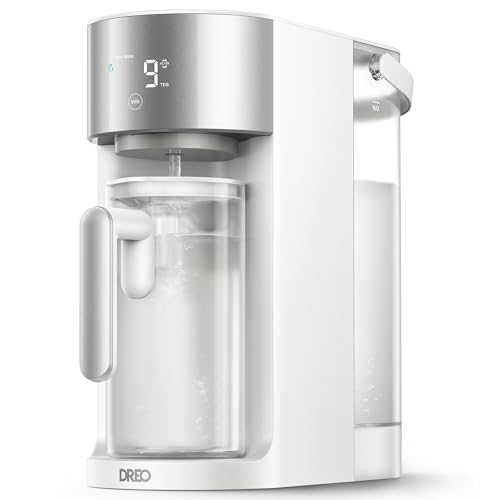
The DREO is best for people who want reverse osmosis filtration without installing equipment under a sink. Its countertop format includes an auto-fill pitcher, real-time raw-water and filtered-water TDS monitoring, filter-life reminders, and self-cleaning that flushes internal tubes.
The product listing describes seven-in-one filtration and says the system was tested by SGS against NSF/ANSI 58 standards. It also states that the system filters possible contaminants including PFOA, PFOS, chlorine, and fluoride. Choose this model if visible TDS information and pitcher convenience matter more than a permanent faucet installation.
Limitation: The system is countertop-based, so it occupies counter space and uses a pitcher rather than dispensing directly from a dedicated sink faucet.
Waterdrop G3P600 Tankless RO System

The Waterdrop G3P600 is best for households seeking an under-sink tankless system with a higher stated production capacity. Its listed capacity is 600 gallons per day, and its smart display faucet shows filtered-water TDS and filter life.
The product is certified to NSF/ANSI 58 for TDS reduction and NSF/ANSI 372 for lead-free materials. It is also certified to NSF 42 for reducing chlorine, taste, and odor. The listed eight-stage filtration is intended to reduce a range of substances, including fluoride, PFAS, lead, and arsenic. Choose it if you want a tankless design and information displayed at the faucet.
Limitation: This is an under-sink system, so it requires space and installation beneath the sink; it is less suitable if you need a portable, installation-free option.
iSpring RCC7AK-BN Alkaline RO System

The iSpring RCC7AK-BN is best for buyers who want an under-sink RO system with a mineral-remineralization stage. Its six-stage design adds minerals and alkalinity after reverse osmosis. The product listing also highlights a top-mounted faucet fastener, designed to make countertop faucet installation easier from above.
A transparent first-stage housing lets users visually check for sediment buildup. Choose this system if you prefer remineralized water and want a feature intended to simplify faucet installation. Its 75 GPD rating is stated in the product name.
Limitation: The alkaline stage is an added feature rather than a requirement of reverse osmosis. If you want straightforward filtration without remineralization, a standard five-stage option may be a better fit.
iSpring RCC7-BN Five-Stage RO System

The iSpring RCC7-BN is best for buyers who want a conventional under-sink RO system without an added alkaline stage. It is NSF/ANSI 58 certified and rated at 75 GPD. The listing says it reduces TDS by 80–90% and reduces contaminants including chlorine, fluoride, lead, and arsenic.
Its transparent first-stage housing supports visual inspection, and the product description says the system requires no power source. The top-mounted faucet design is intended to simplify faucet installation. Choose it if you want a certified five-stage system and do not need remineralization.
Limitation: Unlike the RCC7AK-BN, this model does not include the listed alkaline mineral stage. Check the cabinet space and installation requirements before choosing an under-sink system.
APEC Water ROES-50 Five-Stage System

The APEC ROES-50 is best for buyers who want a 50 GPD under-sink system with installation features aimed at DIY setup. Its five-stage filtration uses quick-connect fittings and colored tubing, which the product listing describes as aids for installation and maintenance.
The listing says the system reduces up to 99.99% of impurities and identifies arsenic, chlorine, lead, fluoride, heavy metals, PFAS, and microplastics among the substances addressed. Choose this model if a lower stated daily capacity is suitable and you value clearly identified tubing during setup.
Limitation: Its stated capacity is 50 GPD, below the 75 GPD iSpring under-sink models and 600 GPD Waterdrop model listed here. Compare capacity with your household’s expected water use.
Buying Guide: How To Choose An RO Water Filtration System
Should you choose countertop or under-sink filtration?
A countertop system such as the DREO avoids under-sink installation and can suit renters or people who do not want a dedicated faucet. An under-sink model keeps the equipment out of sight but requires cabinet space and installation. Check the product’s setup requirements and available space before buying.
Do you want remineralization?
Reverse osmosis and remineralization are separate features. The iSpring RCC7AK-BN includes an alkaline mineral stage, while the iSpring RCC7-BN is a standard five-stage system. Choose an alkaline model if you specifically want that finishing stage; choose a conventional model if you do not need it.
How much capacity do you need?
Compare stated daily capacity with household demand, rather than assuming a larger rating is necessary. The products here range from 50 GPD to 600 GPD. Capacity alone does not describe installation needs, filtration stages, or the system’s water-to-drain performance.
What certifications and maintenance information matter?
Look for certifications that match the reduction claims you care about, and read the product details for the specific standard and purpose. Monitoring features can help with upkeep: the DREO displays TDS and filter life, while the Waterdrop smart faucet shows TDS and filter-life information. Confirm filter replacement requirements before purchase.
Frequently Asked Questions
What does reverse osmosis filtration do?
Reverse osmosis pushes water through a membrane as part of a multi-stage filtration process. The systems listed describe reductions in TDS and various contaminants, but specific performance depends on the model and the substance.
Does an RO system need a dedicated faucet?
Many under-sink RO systems use a dedicated faucet, as shown by the iSpring models and Waterdrop system. The DREO is a countertop model with a pitcher, offering a different dispensing setup.
Is a tankless RO system better?
A tankless system can be a good choice if you want an under-sink design without a storage tank. Compare its stated capacity and installation needs with your household’s water use and cabinet space.
Does reverse osmosis remove minerals?
RO systems can reduce dissolved substances, including minerals that contribute to TDS. Some models, such as the iSpring RCC7AK-BN, include a mineral stage after RO filtration.
Can I use any RO system for an aquarium?
Not necessarily. The Aquatic Life RO Buddie is specifically described for aquarium, fountain, and similar uses; its product listing notes that its carbon block does not remove chloramines. Select a system designed for your intended water use.