Best Roof Vents for Metal Roofs: Pipe Flashing and Exhaust Options
The best roof vent for a metal roof depends on whether you need to exhaust air or seal a pipe penetration. CoVent is designed for bathroom or attic exhaust through metal panels, while ACNOYEL, VIVIDA, and Aothotop are pipe-flashing options. Tandefio is a passive turbine vent for general roof ventilation. Compare the opening or pipe diameter, roof profile, and intended use before choosing.
| Product | Best For | Key Fit Information |
|---|---|---|
| CoVent Metal Roof Exhaust Vent | Bathroom or attic exhaust | 3- or 4-inch flex hose |
| ACNOYEL #3 Flashing Kit | Pipe penetrations on corrugated panels | Pipe OD 1/4 to 5-3/4 inches |
| VIVIDA #3 Pipe Flashing | Corrugated roof pipe sealing | Pipe OD 1/4 to 5 inches |
| Aothotop Silicone Boot | High-temperature pipe flashing | Pipe OD 1/4 to 5-3/4 inches |
| Tandefio Turbine Roof Vent | Passive roof ventilation | Tube diameter about 4.33 inches |
CoVent Metal Roof Exhaust Vent
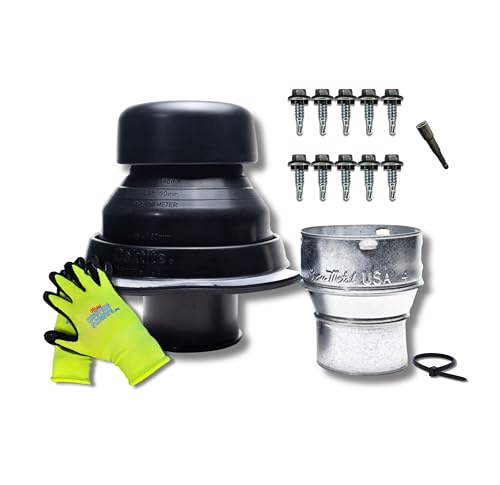
Best for: Homeowners routing bathroom or attic exhaust through a metal roof. This vent is designed for metal roof panels and connects to a 3- or 4-inch flex hose. Its included installation kit and adapter can simplify the component selection process.
The product uses an attached pipe boot flashing intended to conform to metal roofing panels. This makes it a more directly targeted option for exhaust applications than a general pipe boot or wall grille.
Limitation: It is not designed for dryer vents or heat applications. Confirm the exhaust hose size and intended use before selecting it.
ACNOYEL #3 Metal Roof Flashing Kit

Best for: Corrugated metal roofs with a pipe penetration that needs a flexible flashing boot. The square base is described as fitting corrugated roof styles, and the EPDM-and-aluminum construction is specified for temperatures from -65°F to 250°F.
The rubber sleeve can be cut to fit pipes with an outside diameter from 1/4 to 5-3/4 inches. The four-piece kit lists roofing screws, a hex socket, and scissors, which may be useful when preparing the installation.
Limitation: The sleeve must be cut to the required pipe size. Measure the pipe’s outside diameter before trimming, since an incorrect cut can prevent a proper fit.
VIVIDA #3 Metal Roof Pipe Flashing
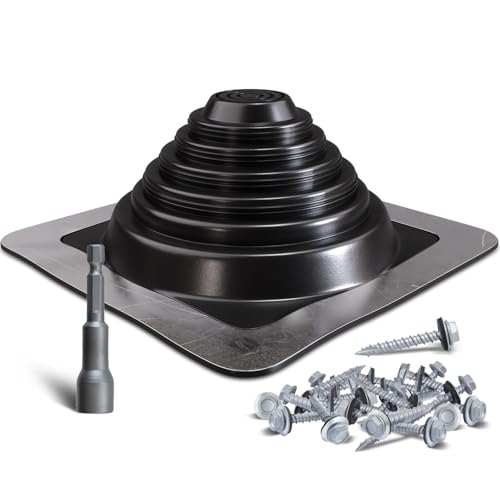
Best for: Corrugated metal roofing and pipe sizes from 1/4 to 5 inches in outside diameter. Its flexible square base is intended to mold to metal roof rib lines, and the rubber boot can be cut to size.
Choose this option if the pipe diameter falls within its stated range and the roof pitch is appropriate. The product notes suitability for 10/12 to 12/12 pitches, with a square base recommended for pitches greater than 10/12.
Limitation: The product advises choosing the next size up when corrugations are deeper than 1.5 inches. Avoid overtightening the screws, and verify the pipe size before ordering.
Aothotop High-Temperature Silicone Boot

Best for: Buyers looking for flexible pipe flashing with a stated high-temperature range. The boot combines a silicone sleeve with an aluminum base and is listed for pipe outside diameters from 1/4 to 5-3/4 inches.
The listed operating range is -165.2°F to 446°F. That specification makes it a relevant choice where temperature tolerance is an important selection factor, such as certain pipe-penetration applications. Its stated range is wider than the EPDM option listed above, though the appropriate boot still depends on the actual pipe and roof profile.
Limitation: The broad diameter range does not eliminate the need to confirm exact pipe size and roof compatibility before installation.
Tandefio Stainless Steel Turbine Vent

Best for: Buyers seeking passive roof ventilation rather than a ducted exhaust outlet. This non-powered turbine vent is made from 201 stainless steel and is supplied as a two-piece package.
The listed tube diameter is about 4.33 inches, and the turbine diameter is about 7.48 inches. These dimensions help buyers compare the vent with the planned roof opening and available installation space. Its stainless-steel construction is described as corrosion resistant.
Limitation: This is a non-powered turbine, not a fan connected to a bathroom exhaust hose. Confirm that the roof opening and installation method suit the metal roof before purchase.
Buying Guide: How to Choose a Roof Vent for Metal Roofing
Do you need exhaust ventilation or a pipe seal?
Start with the job. A ducted exhaust vent moves air from a bathroom or attic through a hose to the outdoors. A pipe boot seals around an existing pipe; it does not provide ventilation by itself. A turbine vent offers passive roof ventilation, while a pipe flashing product addresses water sealing around a penetration.
How should you check size and roof profile?
Measure the pipe’s outside diameter or the exhaust hose diameter, depending on the product type. Compare the measurement with the listed range, and check whether the boot can be trimmed. For corrugated panels, consider rib height and roof pitch; a flexible base must conform to the specific panel profile.
Which material and temperature details matter?
Compare the stated materials and temperature range when those factors apply to the installation. The options here include EPDM with aluminum and silicone with aluminum. A product’s temperature specification does not confirm that it is suitable for every pipe, roof design, or exhaust use.
What should you verify before installation?
Check the manufacturer’s instructions, roof-panel type, penetration location, opening size, and fastener requirements. Follow any cautions about trimming sleeves, deep corrugations, roof pitch, and screw pressure. If the roof assembly or ventilation system has special requirements, consult a qualified roofing or HVAC professional.
Frequently Asked Questions
Can I use a pipe boot as a bathroom roof vent?
No. A pipe boot is flashing for sealing around a pipe. Bathroom exhaust needs a vent designed to connect to the exhaust duct and discharge air outdoors.
What size pipe boot should I buy?
Measure the pipe’s outside diameter and choose a boot whose stated range includes that measurement. Check the product’s trimming instructions before cutting the sleeve.
Can a roof vent be installed on any metal roof?
Not necessarily. Roof profiles, corrugation depth, pitch, opening dimensions, and installation instructions can affect fit. Confirm compatibility with the specific roof panel and product.
Is a turbine vent powered?
The Tandefio product is described as non-powered. It is different from a powered exhaust fan connected to a duct.
Can the CoVent vent be used for a dryer?
No. Its product information says it is intended for bathroom and attic venting and is not designed for dryer vents or heat applications.