Best Safe Room Storm Shelters for Home Tornado Protection
The best safe room storm shelter depends on your available space, installation needs, and how many people need shelter. The SteelSafe 4×6 is a fit for buyers seeking an above-ground room with a wide, inward-swinging door; the Survive-A-Storm model highlights seating and supply storage; and the Safe Harbor E-Class is an option for buyers who need a shelter that can be installed without heavy equipment. The fourth product is a sign, not a protective shelter.
| Product | Best suited for | Key listed detail |
|---|---|---|
| SteelSafe 4×6 | Buyers prioritizing a 36-inch door | 4-by-6-foot footprint |
| Survive-A-Storm Extreme | Buyers seeking seating and storage | Locking bench seat; listing states protection against 250 mph winds |
| Safe Harbor E-Class Medium | Buyers looking for installation without heavy equipment | Anchoring to a concrete slab required |
| Safe Room Metal Sign | Buyers labeling a shelter entrance | 16-by-4-inch metal sign |
SteelSafe 4×6 Above-Ground Safe Room
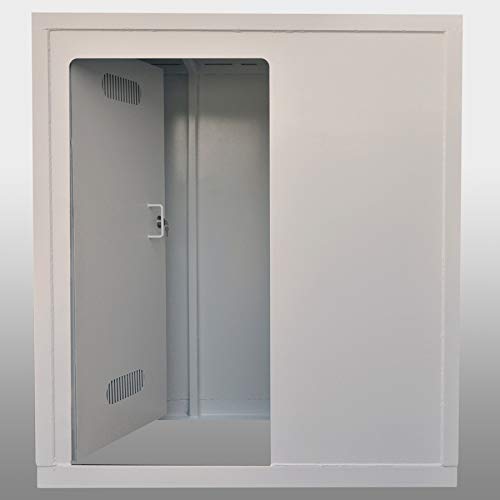
Best for: Homeowners who want a defined above-ground shelter footprint and a wider entry. The listed dimensions are 4 feet wide, 6 feet long, and 6 feet high. Its 36-inch inward-swinging door is described as handicap accessible, and the vent design can be installed inside or outside the home.
The size and door measurements make this model easier to compare against a room or installation area before purchase. Choose it if the listed dimensions and door configuration suit your household’s needs.
Limitation: A 6-foot listed height may not suit everyone, and the product details do not specify installation requirements. Confirm placement, anchoring, ventilation, and applicable local requirements with the seller or a qualified installer.
Survive-A-Storm Extreme Shelter

Best for: Buyers who value built-in seating and a place to secure emergency supplies. The listed features describe a locking bench seat that provides seating and storage for supplies and valuables. The product title identifies it as a 6-by-4 shelter for eight people.
The listing states that the shelter carries a National Storm Shelter Association seal and describes it as rated for protection against 250 mph EF5 tornado winds. It also lists an NIJ Level 2A ballistics rating. These are product-page claims; verify the documentation and what each rating covers before relying on them.
Limitation: The supplied details do not provide interior dimensions or installation instructions. Check the usable space and required installation conditions, especially if planning for the stated occupant capacity.
Safe Harbor Storm Shelter E-Class Medium

Best for: Buyers who need a shelter that the listing says can be installed without heavy equipment. The product details state that shelters were tested by a FEMA-certified facility, Texas Tech’s National Wind Institute. They list two standard sizes, 16 and 22.5 square feet, and an interior height of 84 inches.
This model may suit a buyer comparing interior area and installation logistics. Before choosing a size, determine how many people will use the shelter and whether the available floor area leaves enough room for occupants and emergency supplies.
Limitation: The shelter must be anchored to a concrete slab. Confirm that the proposed slab and installation location meet the manufacturer’s requirements; “without heavy equipment” does not mean installation has no site preparation.
Cohuodec Safe Room Metal Sign

Best for: Owners who already have a shelter and want to mark its entrance. This 16-by-4-inch metal sign is described as suitable for display on an entry door, in a basement, or in another area where security awareness is useful. Its rustic design is intended to serve as wall decor as well as identification.
This item is included as an accessory, not as a storm shelter. It does not provide tornado protection or replace a tested and properly installed shelter.
Limitation: The listing does not describe mounting hardware or protective performance. Choose it for labeling or decor only, and confirm how it attaches before ordering.
Buying Guide: How To Choose A Safe Room Storm Shelter
What size and capacity do you need?
Start with the number of people who may need shelter at once, then compare stated capacity, floor area, door width, and interior height. Do not assume that an advertised capacity guarantees comfortable space for every household. Account for mobility needs, pets, and emergency supplies when checking dimensions.
Should you choose an above-ground or slab-anchored model?
Compare the installation requirements before deciding. The SteelSafe listing gives above-ground dimensions and vent placement options, while Safe Harbor specifies anchoring to a concrete slab. Ask the manufacturer what site preparation, anchoring, and professional installation are required for the specific location.
How should you compare safety claims?
Look for documentation behind claims about wind performance, testing, and certifications. Confirm which model was tested, the test standard, and whether the stated result applies to the complete installed shelter. A product description alone may not answer those questions. Check applicable local building rules and consult a qualified professional when needed.
What features matter during an emergency?
Consider door operation, ventilation, seating, and where supplies can be stored. An inward-swinging door or built-in bench may fit particular needs, but compare the actual measurements with the intended users. Keep emergency supplies accessible without blocking the entrance or reducing usable space.
Frequently Asked Questions
What is the difference between a safe room and a shelter sign?
A safe room is a protective space designed for sheltering. A sign identifies a location but provides no physical protection.
Does the Safe Harbor E-Class require a concrete slab?
Yes. The supplied product details state that the shelter must be anchored to a concrete slab.
Is the SteelSafe door 36 inches wide?
Yes. The listing specifies a 36-inch-wide, inward-swinging door and describes it as handicap accessible.
Should I rely on a listed wind rating alone?
No. Verify the supporting documentation, model details, installation requirements, and what the rating covers before selecting a shelter.
Can the metal sign serve as storm protection?
No. It is a decorative identification sign and does not function as a storm shelter.