Best Septic Tank Camera Inspection Systems for Finding Pipe Problems
The best septic tank camera inspection system depends on how far you need to inspect and whether you need to locate a problem underground. The Sumkea 250-foot camera is best for long runs; the Anysun and ONDASHCAM models add 512Hz locating features; and VEVOR and ChoosePRO offer recording and viewing options for routine pipe checks. Compare cable length, locator equipment, image orientation, and recording features before choosing a system.
| Camera | Best For | Standout Feature |
|---|---|---|
| Sumkea 250Ft | Deep or extended line coverage | 250-foot cable |
| Anysun 165ft | Locating underground issues | 512Hz transmitter and receiver |
| ONDASHCAM 100FT | Self-leveling and pipe locating | 512Hz transmitter; receiver not included |
| VEVOR 164ft | Recorded inspections | Self-leveling camera and 16GB card |
| ChoosePRO 100FT | Large-screen viewing | 7-inch screen and 32GB card |
Sumkea 250Ft Borescope Snake Camera

Best for: Users who need extended reach through septic lines, buried laterals, branch drains, or main sewer lines. Its 250-foot fiberglass cable is the longest listed here, and the distance counter helps identify how much cable has been fed into a line.
The system records video and images to an included 32GB SD card. That can help preserve visual documentation for maintenance records, repair checks, or client reports. The reel, pull handle, and keyboard control support transporting and managing the cable during inspection.
Limitation: The supplied product details do not specify the camera’s screen size, resolution, or waterproof rating. Confirm those details if image quality or submersion capability is central to your inspection.
Anysun 165ft Camera With Locator

Best for: Inspectors who need to trace a problem’s underground position as well as view the pipe interior. The system includes a 512Hz sonde transmitter and receiver, which work together to help locate the camera head from above ground.
The camera is rated IP68, includes DVR recording to an SD card, and has an elastic spring at the camera end to help it pass through curved pipes and drainage openings. Its 165-foot cable offers substantial reach for many line inspections, while the carrying case supports transport.
Limitation: The listed display resolution is 1000TVL rather than a stated 1080p specification. Choose another option if a larger screen or explicitly specified 1080p image is a priority.
ONDASHCAM 100FT Self-Leveling Camera

Best for: Buyers who want upright image orientation and a way to trace the camera underground. Its 0.9-inch self-leveling camera keeps the view upright, and its built-in 512Hz transmitter can be traced with a compatible receiver.
The system has a 9-inch 1080p IPS screen, a 100-foot marked fiberglass cable, DVR recording, and a 32GB microSD card. The IP68-rated lens and adjustable LEDs are specified for wet inspections. The manufacturer lists pipe use from 1 to 12 inches, with a bend limitation for smaller pipes.
Limitation: The 512Hz receiver is not included, so budget for a compatible receiver if underground locating is required.
VEVOR 164ft Self-Leveling Sewer Camera
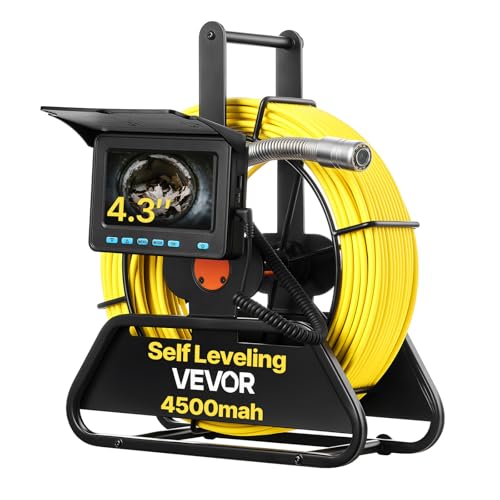
Best for: Users who want recorded inspection footage and an upright camera view without a very long cable. The self-leveling probe helps keep the image oriented, while length markings help track the camera’s position in the line.
Its 164-foot semi-rigid fiberglass cable is specified for 1.97- to 5.9-inch pipes. The camera has an IP68 waterproof sapphire lens, a 120-degree viewing angle, 12 LEDs, and a 4.3-inch 1080p display. A 16GB card supports photo capture and video recording.
Limitation: The stated pipe range is narrower than some septic and sewer applications may require. Check the line diameter and bends before selecting it.
ChoosePRO 100FT Camera With 7-Inch Screen

Best for: Buyers who prefer a larger display and want to save inspection footage. The 7-inch IPS screen shows a stated 1080p image, and the DVR includes a 32GB card for recording and playback. The product details also describe transferring files by SD card or USB-C.
The 100-foot cable has distance markings, and the reel uses a twist-unlock system for releasing or securing the cable. A stated 16× zoom can help users examine visible details more closely.
Limitation: Its 100-foot cable is shorter than the Sumkea, Anysun, and VEVOR options. The provided details do not specify a waterproof rating, so verify suitability for wet conditions before use.
Buying Guide: How To Choose A Septic Tank Inspection Camera
How much cable length do you need?
Match cable length to the likely distance from the access point to the inspection area. A 250-foot system offers the greatest reach among these choices, while 100-foot models may suit shorter routes. Extra cable length does not guarantee that a camera can navigate every bend; pipe layout and cable flexibility also matter.
Do you need to locate a problem from above ground?
A camera shows what is visible inside the line, but a locator helps identify where the camera head is underground. Anysun includes both a 512Hz transmitter and receiver. ONDASHCAM includes the transmitter but requires a compatible receiver separately. The other listed systems do not specify a locating feature.
Which viewing and recording features matter?
A larger screen may be easier to view during field work, while self-leveling can make pipe orientation simpler to interpret. Recording is useful for comparing inspections or documenting a repair. Check the included storage capacity and confirm whether the camera specifies the resolution and waterproof rating you require.
Check pipe dimensions and access conditions
Compare the stated camera or pipe-size range with the line being inspected. Consider bends, entry openings, cable diameter, and whether the camera will encounter water. Follow the product’s operating limits, and use appropriate septic-system safety procedures around tanks and access openings.
Frequently Asked Questions
Can a sewer camera inspect a septic tank?
A pipe inspection camera can inspect accessible pipes connected to a septic system. The listed product details do not establish that each camera is designed for viewing inside a tank itself.
Does a camera locator show the exact repair location?
A compatible sonde and receiver can help trace the camera head underground. The listed features describe locating assistance, not guaranteed pinpoint accuracy in every site condition.
Is a 100-foot cable long enough?
It depends on the distance from the access point to the area of interest. Measure or estimate the route before choosing; longer options are available in this selection.
Why choose a self-leveling camera?
A self-leveling camera keeps the image upright as the probe rotates, which can make it easier to interpret the orientation of visible pipe features.
Should inspection footage be recorded?
Recording can preserve visual evidence for later review, maintenance logs, or sharing findings. Check that the selected system includes storage and supports the recording method you need.