Best Small Reverse Osmosis Water Filters for Home and Travel
The best small reverse osmosis water filter depends on how you plan to use it: DREO suits buyers who want monitoring and automatic pitcher refills, Waterdrop adds minerals for a balanced taste, and Bluevua emphasizes a compact portable design. Aigerri offers larger separate water tanks without plumbing. These countertop options are useful for apartments, offices, and other spaces where an under-sink installation is inconvenient. Compare the features below, including pitcher capacity, purification claims, and water-use ratio.
| Product | Best for | Notable feature |
|---|---|---|
| DREO Countertop RO Filter | Monitoring and convenience | TDS readings and autofill pitcher |
| Waterdrop C2SL | Mineral-added water | Glass pitcher and mineral filter |
| DREO With Two Pitchers | Keeping a second pitcher ready | Two autofill pitchers |
| Bluevua RO100ROPOT-Travel | Portable use and small counters | Compact dimensions and carrying handle |
| Aigerri Countertop RO Filter | Larger tank capacity | Separate feed and purified water tanks |
DREO Countertop RO Filter
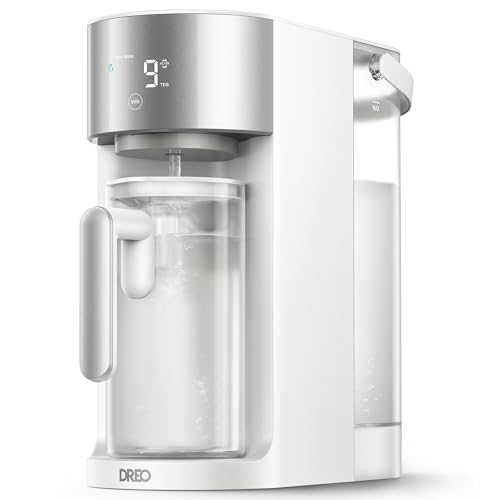
Best for: Buyers who want a compact, installation-free system with visible water and maintenance information. DREO reports a 3:1 pure-to-drain ratio and includes real-time raw-water and purified-water TDS monitoring, filter-life reminders, and an autofill pitcher.
The brand describes the system as a 7-in-1 filter that reduces 99.9% of possible contaminants, including PFOA, PFOS, chlorine, and fluoride, and says it was tested by SGS against NSF/ANSI 58 standards. Its self-cleaning feature flushes internal tubes.
Why it was selected: It combines countertop convenience with monitoring and automated pitcher refilling. A limitation is that it requires countertop space and access to a power outlet; it is not a permanently plumbed system.
Waterdrop C2SL With Mineral Filter

Best for: People who prefer mineral-added water and a detachable glass pitcher. This installation-free countertop model has a 108-ounce feed tank and a 40-ounce glass pitcher that can be stored in a refrigerator.
Its seven-stage filtration uses a 0.0001-micron RO membrane. The supplied product information reports SGS laboratory test reductions for PFOA, PFOS, microplastics, lead, chlorine, and fluoride. A mineral stage adds calcium, magnesium, potassium, and sodium to the filtered water.
Why it was selected: The mineral stage distinguishes it from models focused only on RO filtration, and the glass pitcher supports serving and storage. A limitation is the 40-ounce pitcher capacity, which may require more frequent refilling for a busy household.
DREO RO Filter With Two Pitchers

Best for: Buyers who want two pitchers for serving or keeping a reserve chilled. This DREO countertop model is described as installation-free and self-cleaning, with a 3:1 pure-to-drain ratio, TDS monitoring, and filter-life information.
The listed filtration claim is 99.9% reduction of possible contaminants, including PFOA, PFOS, chlorine, and fluoride; the brand says the system was tested by SGS to meet NSF/ANSI 58 standards. The listed feature information for this version does not detail pitcher capacity or provide the same full feature list as the other DREO model.
Why it was selected: Two autofill pitchers can make it easier to keep purified water available without relying on a single pitcher. Avoid choosing it based on unlisted capacity or monitoring details; confirm those specifications before purchase if they are essential.
Bluevua RO100ROPOT-Travel
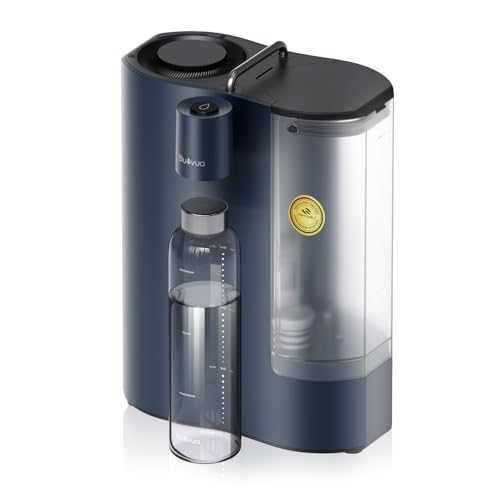
Best for: People who prioritize portability or have limited counter space. The listed dimensions are 10 by 5 by 13.5 inches, and the unit has a stainless steel handle. The brand positions it for small living spaces, offices, and travel use.
The system combines a 5-in-1 filter with UV light and uses a 0.0001-micron RO membrane. Bluevua reports a 3:1 filtered-to-waste ratio and includes a high-borosilicate glass bottle. The brand says the unit was tested by SGS and certified by WQA.
Why it was selected: Its stated dimensions and handle make it a clear option for buyers comparing compact or portable systems. A limitation is that its included bottle may hold less than a larger household pitcher; check capacity needs before choosing it.
Aigerri Countertop RO Filter

Best for: Buyers who want larger water tanks and no permanent installation. Aigerri lists a 5-liter feed tank and a separate 2-liter purified-water tank. The unit is plug-and-play and is presented for kitchens, apartments, offices, and RVs.
Its five-stage system includes a PPC filter and an RO filter. The brand lists a 5:1 pure-to-drain ratio and up to 529 gallons of purified water from the filters.
Why it was selected: The separate 2-liter purified-water tank is a practical distinction for users who want a stored supply rather than a pitcher. A limitation is that the larger tanks may take more counter space than the smallest portable models.
Buying Guide: How to Choose a Small RO Filter
How much counter space do you have?
Check the product’s full dimensions, including any pitcher or water tank that sits beside the unit. Bluevua lists specific measurements, while other listed models emphasize tanks or pitchers without giving complete exterior dimensions. Leave room for filling, pouring, and routine filter changes.
Do you prefer a pitcher or a built-in water tank?
A detachable pitcher can be convenient for refrigeration and serving. A separate purified-water tank can suit buyers who want water stored in the unit. Compare the listed capacity with household demand; smaller containers may need more frequent refills.
What filtration information matters?
Review the contaminants named in the product information and the testing or certification language provided. A percentage reduction claim applies to the stated test conditions and should not be treated as proof that every contaminant is removed. Check replacement-filter availability and maintenance instructions before buying.
How should you compare water efficiency?
The pure-to-drain ratio describes how much purified water a system produces relative to wastewater, as reported by the brand. A higher listed ratio can be a useful comparison, but it does not replace checking tank capacity, filtration details, and the manufacturer’s operating instructions.
Frequently Asked Questions
Does a countertop reverse osmosis filter need plumbing?
The listed DREO, Waterdrop, Bluevua, and Aigerri models are countertop systems that do not require permanent plumbing installation. They require water to be added to a tank and, as applicable, an electrical outlet.
Which option adds minerals after RO filtration?
Waterdrop C2SL is the listed model with a mineral filter. Its product information says it adds calcium, magnesium, potassium, and sodium.
Which model is described as portable?
Bluevua RO100ROPOT-Travel is described as compact and portable, with a stated size of 10 by 5 by 13.5 inches and a stainless steel handle.
What does a 3:1 pure-to-drain ratio mean?
It describes a reported relationship between filtered water produced and wastewater. DREO and Bluevua list a 3:1 ratio; actual use can depend on operating conditions.
Should I choose a countertop or under-sink RO system?
Choose countertop if you want to avoid permanent plumbing work or need a movable unit. An under-sink model may suit a buyer who prefers a permanent setup, but it requires installation and is not as portable.