Best Solar Water Heater With Electric Backup Options for American Homes
If you want reliable hot water any time of day, a solar water heater with an electric backup can be a smart choice. These systems primarily harvest sun energy to heat water, then switch to electric power when sunlight isn’t enough. Below are five top picks that balance solar efficiency, backup reliability, and practical capacity for family use. The selections emphasize safety, user-friendly controls, and good value for typical American households.
| Product | Capacity | Type | Key Benefit |
|---|---|---|---|
| YALICE Water Heaters, 26-Gallon | 26 gallons | Solar-Electric Hybrid | High daily hot water capacity with solar-assisted operation |
| YALICE Water Heaters, 21-Gallon | 21 gallons | Solar-Electric Hybrid | Compact solar-electric hybrid for smaller spaces |
| Titikula Portable Immersion Heater | 1800W | Immersion Heater | Versatile portable heating for buckets, tubs, pools |
| ROKAFU Immersion Water Heater | 2000W | Immersion Heater | Fast heating with anti-dry-burn protection |
| ThermoMate Tank Water Heater | 18 gallons | Tank | Compact point-of-use with adjustable thermostat |
YALICE 26-Gallon Solar-Electric Hybrid Heater

This 26-gallon model from YALICE blends solar-assisted heating with an electric backup. A 3200W storage tank heater works with 1200W solar panels (not included) during daylight, automatically switching to a 2000W AC supply as daylight wanes. The unit supports precise temperature control from 86–167 °F (30–75°C) via an LED display, and includes timer scheduling, remote control operation, and a user-friendly one-touch heating mode. This combination targets households that value steady hot water while maximizing solar contribution.
Capacity and flexibility are the core strengths here. The 26-gallon tank is suitable for multiple daily tasks—handwashing, grooming, pet baths, and single showers—without frequent reheat. The dual-mode operation helps reduce grid dependence, especially in regions with variable sun exposure. The thermostat range covers common domestic needs, and the LED readout simplifies monitoring. Users should consider whether their roof area and climate provide enough solar exposure to justify the solar-electric hybrid approach.
Safety and convenience features include remote operation and a built-in timer. The system’s hybrid approach also minimizes the risk of cold-water bursts by maintaining a ready-hot water supply. Installation considerations include ensuring compatible solar panels and space for the larger 26-gallon tank, plus appropriate electrical wiring for the backup heater.
YALICE 21-Gallon Solar-Electric Hybrid Heater
The 21-gallon option from YALICE provides a compact footprint with similar solar-electric hybrid operation as the larger model. A 3200W storage heater collaborates with the solar panel input (not included) and automatically pivots to the 2000W AC backup during the night or low-light periods. The adjustable thermostat spans 86–167 °F (30–75°C) with LED readout, plus timer scheduling and remote control capability. This model is well-suited for smaller households or spaces where a full 26-gallon unit would be excessive.
As with the 26-gallon version, the solar-electric hybrid design helps reduce daytime grid usage and teachs predictable hot water. The 21-gallon capacity supports daily tasks with less risk of running out between cycles. Users should verify whether their daily hot water demands fit within this size, especially for households with higher simultaneous hot water use. The included features emphasize ease of use and adjustable comfort, making it a practical choice for retrofit or new installations where space is a consideration.
Titikula Portable Immersion Water Heater
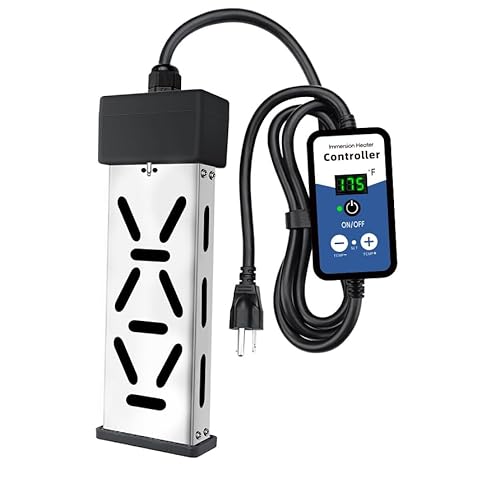
This portable immersion heater provides 1800W of fast heating for buckets, bathtubs, or small pools. It includes a smart thermostat that holds water at a chosen temperature and reheats when the temperature drops by 15°F. Safety features include auto-shutoff, dry-burn prevention, and a robust 14-gauge cord designed for long-term use. The unit is particularly versatile for temporary setups—such as camping, RVs, or vendor use—where quick on-demand heating is required and a full tank system isn’t feasible.
While not a fixed home system, the Titikula model complements backup strategies and can synchronize with larger home heaters during power outages or during grid instability. It’s ideal for emergency hot water or supplemental heating when days are overcast and solar input is insufficient. Consider storage capacity and the clear separation from main water heating to avoid cross-heating issues in household plumbing.
ROKAFU Immersion Water Heater With Safety Features

The ROKAFU immersion heater focuses on quick, targeted water heating with a 2000W element for rapid warmth in baths, buckets, or small facilities. The device emphasizes safety with anti-dry-boil protection and a stainless steel guard that reduces the risk of direct contact with the heating element. A plug-in design permits simple setup on any grounded 120V outlet, and the unit includes a real-time status indicator to monitor operation. This heater is especially suitable as a supplemental or portable hot-water source in rental properties, workshops, or garages where immediate heat is frequently needed.
Users should note that immersion heaters heat only the water they are submerged in, so multiple units or larger storage systems may be needed for full-house hot water. The lack of built-in thermostatic control means users should operate carefully to avoid overheating. As a backup option, it pairs well with larger solar or tank systems to bridge gaps during low solar availability or outages.
ThermoMate 18-Gallon Tank Water Heater

The ThermoMate 18-gallon tank-style heater is designed as a compact point-of-use option with a 120V, 1500W system. It features an adjustable thermostat and an INCOLOY-800 heating element, which offers improved corrosion resistance and efficiency over copper at higher temperatures. The low-profile design makes it suitable for tight spaces such as under sinks or in RVs, making it a practical booster or standalone small-capacity unit for kitchens, bathrooms, or spa areas. This model provides stable hot water without the bulk of larger tanks, though it won’t scale to household-level simultaneous demand in bigger homes.
Key advantages include easy installation, reliable performance, and a tempered balance between capacity and space. It’s a suitable choice for apartments, cottages, or as a booster in conjunction with larger solar or storage systems. Users should assess whether 18 gallons meets daily needs and whether the 125–150°F operating range aligns with local water temperature standards and safety guidelines for hot water handling.
Buying Guide: Key Considerations For Solar-With-Electric-Backup Systems
- Capacity versus demand: Larger families typically need bigger tanks (20+ gallons). If space is limited, a point-of-use unit or tankless option may be preferable.
- Solar contribution: Evaluate your roof area, sun exposure, and climate. Hybrid solar-electric models benefit from steady daylight but still rely on grid power during overcast days.
- Backup heating: Check the backup wattage and generation method. Higher backup power supports faster recovery after peak usage but may require upgraded electrical service.
- Thermostat and control: Digital displays, remote control, and programmable timers help optimize usage and comfort while conserving energy.
- Safety features: Look for anti-dry-boil, automatic shut-off, and robust guards for immersion heaters. UL-listed or equivalent certifications add reliability.
- Installation considerations: Tank type (tank vs. tankless), electrical requirements, panel compatibility, and space constraints are critical during planning.
- Maintenance: Regular inspection of wiring, heating elements, and insulation reduces waste heat and extends the system’s life.
- Cost versus savings: While prices vary, consider long-term energy savings from solar input and reduction in peak-demand electricity use when evaluating value.
- Site suitability: For immersion heaters, ensure proper submersion and environmental safety; for tank systems, ensure safe mounting and access for service.
In sum, the best solar water heater with an electric backup balances daily hot-water needs, sun availability, and backup reliability. The listed models provide a range of capacities, from compact to larger-family sizes, and include both tank and immersion options to fit diverse homes and budgets. When selecting, align capacity with demand, ensure compatible solar input and electrical service, and prioritize safety features and ease of use.