Best Soundproofing Solutions for Glass Doors and Doorways
The most practical way to reduce noise around a glass door is to seal gaps and add a removable sound-absorbing layer; these products do not replace acoustic glass or make a door completely soundproof. BoxerTools is best for broad door coverage, HOMBYS for a magnetic doorway curtain, and UpinFun for narrow gaps around doors or windows. The options below address different noise paths, from the space beneath a door to sound reflections in a room.
| Product | Best For | Approach |
|---|---|---|
| BoxerTools Door Blanket | Covering a door | Wrap-around acoustic blanket |
| HOMBYS Magnetic Curtain | Doorways up to listed dimensions | Removable sound-absorbing curtain |
| VEVOR Sound Dampening Blanket | Temporary coverage and echo reduction | Grommeted hanging blanket |
| UpinFun Weather Stripping | Sealing narrow gaps | Adhesive brush seal |
| Everlasting Comfort Draft Stopper | Gaps beneath a door | Foam door-bottom barrier |
BoxerTools Door Sound Dampening Blanket

Best for: People who want broad coverage over a standard door rather than a small patch over a gap. The listed blanket measures 80 by 35 inches, uses diamond stitching, and has hook-and-loop straps for tool-free hanging. Its wrap-around design includes a bottom seal intended to reduce sound gaps.
This option was selected because it combines a hanging acoustic treatment with coverage at the door’s lower edge. It may be useful for reducing voices, outside noise, or echo, though results depend on the fit and the sound source.
Limitation: Check the panel dimensions against the door before buying. The product information does not establish that it is designed specifically for glass doors, and the covering may obstruct access to the door or its glazing.
HOMBYS Magnetic Soundproof Door Curtain

Best for: Doorways where a removable curtain is preferable to a permanently installed panel. HOMBYS lists an actual curtain size of 38 by 83 inches and a maximum door size of 34 by 80 inches. The Oxford fabric and polyester-fiber filling are intended to absorb sound and help block cold air.
Choose this if you want a doorway covering that can also provide thermal separation. It is presented as sound-absorbing, making it more appropriate for softening noise than for fully isolating a room.
Limitation: The product explicitly says it is not 100% soundproof. Measure the door itself, not just the frame, and avoid assuming it will fit a glass door without checking how its attachment works for that installation.
VEVOR Grommeted Sound Dampening Blanket

Best for: Temporary hanging over a door or window, or reducing indoor echoes in a recording or media space. The 80-by-48-inch blanket has a polyester woven surface, recycled-cotton filling, and grommets. Its three-layer construction is described as absorbing echoes and reducing sound reflections. It also blocks light.
VEVOR is a flexible choice when you want a hanging barrier that can serve more than one purpose, such as dimming a room as well as softening reflections. The stitched construction is designed for hanging use.
Limitation: The manufacturer notes that sound insulation is limited and describes the blanket mainly as a protective barrier. Keep it dry; prolonged dampness may cause odor or material damage.
UpinFun Self-Adhesive Brush Weather Stripping

Best for: Sealing narrow door or window gaps where sound may leak around the frame. This product provides 33 feet of brush weather stripping, listed as 0.35 inches wide and 0.2 inches thick. Its adhesive backing is intended to simplify installation, while the brush material also helps limit drafts, dust, and moisture.
Choose this over a blanket when the main problem appears to be air and noise passing through a small edge gap. It can be a useful complement to a curtain or door-bottom seal because it addresses a different leakage point.
Limitation: It is a gap-sealing product, not a glass panel or soundproofing window treatment. Check the gap dimensions and surface before installation; the listed measurements may not suit every door track or frame.
Everlasting Comfort Under Door Draft Stopper
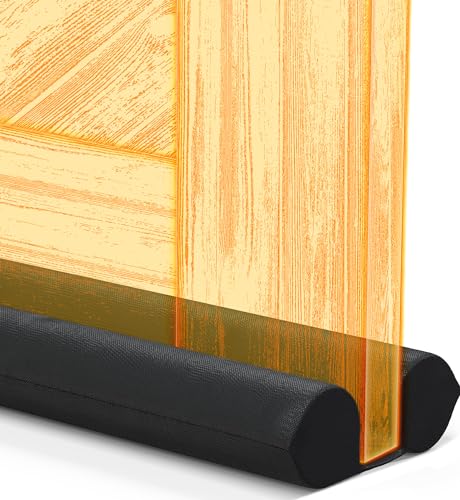
Best for: Blocking noise, light, and drafts coming through the gap beneath a door. The product is intended for doors 30 to 36 inches wide and uses thick sound-absorbing foam inside a cover. Installation involves cutting foam strips, inserting them into the cover, and sliding the stopper under the door.
This is a practical choice for renters or anyone who wants a no-drill option focused on the bottom edge. It may pair well with weather stripping if noise also comes through side or top gaps.
Limitation: Measure both the door width and floor gap first. A bottom stopper will not address sound coming through the glass, around the frame, or through other openings.
Buying Guide: How To Reduce Noise Around A Glass Door
Is the noise coming through a gap or through the glass?
Start by locating the path. If you can feel airflow or see light around the edges, weather stripping or a door-bottom stopper may help seal that opening. If the entire doorway transmits sound, a removable blanket or curtain may add a sound-absorbing layer. These products do not change the acoustic performance of the glass itself.
Should you choose a blanket or a seal?
A blanket or curtain covers a larger area and may reduce reflections or soften noise. A brush strip or foam stopper targets a particular gap. For multiple leakage points, combining a gap seal with a curtain may address more than one path, but neither guarantees soundproofing.
What should you measure before ordering?
Measure the door panel, frame opening, and bottom clearance separately. Compare those measurements with the product’s stated dimensions and consider whether the door must open freely. For glass doors, also check whether the mounting approach is suitable for the frame and whether the covering will block needed visibility or access.
Frequently Asked Questions
Can a curtain make a glass door soundproof?
No. A curtain may absorb some sound and reduce reflections, but it does not make a glass door fully soundproof or replace acoustic glazing.
What is the first step for reducing noise around a door?
Identify gaps around the top, sides, and bottom. Seal the openings that fit the product, then consider a curtain or blanket if additional coverage is needed.
Which option is best for noise beneath a door?
The Everlasting Comfort stopper is specifically designed for the bottom gap. Measure the door width and clearance to confirm fit.
Can these products reduce drafts as well as noise?
Several are described as helping with drafts: the curtains, weather stripping, and under-door stopper. Their noise-reduction role and fit vary by product.
Are the listed blankets specifically made for glass doors?
The product details describe door, window, or doorway use but do not establish glass-door-specific compatibility. Confirm mounting and clearance requirements before choosing one.