Best Sump Pumps by Gallons Per Minute for Home Water Removal
For high listed flow at a stated lift, the AQUASTRONG 1 HP pump is rated at 75 gallons per minute (GPM) at 5 feet, while the FOTING 1 HP model is rated at 76 GPM at 5 feet. The Acquaer is a lower-flow automatic option, and the Zoeller M98 combines automatic float operation with a listed capacity of 72 GPM. Compare flow alongside lift height, switch operation, and the type of water you need to move.
| Product | Listed flow | Best suited for |
|---|---|---|
| AQUASTRONG 1 HP | 75 GPM at 5 ft | Fast drainage with solids handling |
| FOTING 1 HP | 76 GPM at 5 ft | High listed flow and portable cleanup |
| Zoeller M98 | Up to 72 GPM | Automatic sump operation |
| Acquaer 1/3 HP | 36 GPM | Automatic water removal |
| Superior Pump 91330 | 40 GPM | Utility pumping with a hose adapter |
AQUASTRONG 1 HP High-Flow Sump Pump

Best for: Buyers who need high listed flow for water removal and want a pump that can handle small solids. AQUASTRONG lists a maximum flow of 4,500 gallons per hour, or 75 GPM, at 5 feet. The product information also specifies a maximum vertical lift of 30 feet and solids handling up to 1/5 inch.
The bottom-suction design is listed as removing water down to 1/5 inch from the surface. Discharge fittings include a 1-1/4-inch NPT outlet, an elbow adapter, and snap-coupling adapters. Choose this if those connection options suit your setup. Its 75 GPM figure is specified at 5 feet, so do not assume the same flow at greater lift heights.
FOTING 1 HP Clean And Dirty Water Pump
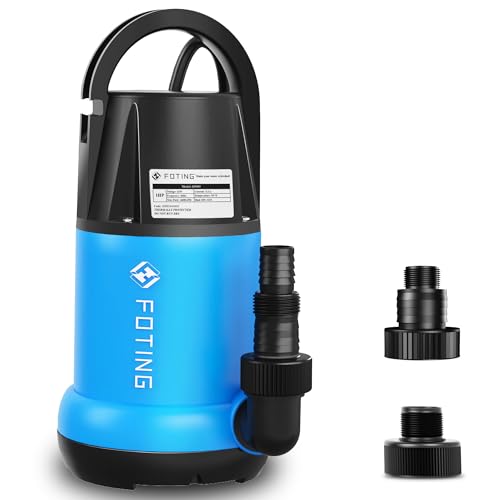
Best for: Buyers prioritizing high stated capacity for draining pools, ponds, hot tubs, or flooded window wells. FOTING lists 4,600 GPH, equivalent to about 76 GPM, at 5 feet. It specifies up to 31 feet of vertical lift, water removal to 1/5 inch, and solids handling up to 1/5 inch.
The pump has a removable bottom for cleaning, a 10-foot power cord, and a rounded handle. These details make it a practical choice for portable cleanup where the listed discharge connections fit the hose or plumbing. As with other pumps, maximum GPM is not a guarantee of that flow at every lift height; the 76 GPM rating is specifically stated at 5 feet.
Zoeller M98 Automatic Sump Pump

Best for: Homeowners looking for automatic sump operation rather than a portable pump that must be switched on manually. Zoeller lists removal of up to 4,320 GPH, which equals 72 GPM. The pump uses a built-in snap-action float switch, and its 9-foot cord has an LED plug to show power.
The product details also identify an oil-filled motor, cast-iron housing, and vortex impeller. These features distinguish it from the two 1 HP utility-style pumps above, but the listed information does not give a flow rate at a specific lift height. Compare the pump’s performance data and installation requirements with your sump conditions before choosing it.
Acquaer 1/3 HP Automatic Water Pump

Best for: Buyers who value automatic sensing and a stated 36 GPM capacity for general water removal. Acquaer lists a maximum of 2,160 GPH. Its electronic sensor turns the pump on when water reaches 1-1/2 inches and off when the level falls below 1/4 inch.
A strainer base filters debris and can be removed for cleaning without tools or screws. The product information also says a temperature-control core protects the motor when water is low. Choose this if its automatic activation levels fit the application. Its listed flow is lower than the 1 HP models, and the supplied details do not state that 36 GPM is measured at a particular lift height.
Superior Pump 91330 Utility Pump

Best for: Buyers seeking a 1/3 HP utility pump with a stated 40 GPM maximum and common hose-adapter options. It moves up to 2,400 GPH and is listed to lift water up to 25 feet. Its thermoplastic construction, 10-foot cord, 1-1/4-inch NPT discharge, and included 3/4-inch garden hose adapter are specified features.
This model may suit utility pumping where the outlet and hose arrangement match the job. The 40 GPM figure is a maximum rating, not a promise of that output at 25 feet of lift. Avoid comparing it directly with ratings stated at a specific five-foot lift without checking performance at the same operating conditions.
Buying Guide: How To Compare Sump Pump GPM
How many gallons per minute do you need?
Estimate how quickly water enters the sump and how quickly you need to remove it. A higher GPM rating can move more water under the conditions used for that rating, but capacity alone does not determine suitability. Check the pump’s performance at the lift height and discharge setup you expect to use.
Does lift height change the flow rate?
Yes. Vertical lift, also called head, affects pumping performance. A pump’s maximum GPM and maximum lift are separate specifications; maximum flow is generally not available at maximum lift. Prefer a performance chart showing flow at different head heights when the product provides one.
Should you choose an automatic or manual pump?
An automatic float or sensor can start and stop a pump as water levels change. The Zoeller M98 uses a float switch, while the Acquaer lists electronic sensing with specific activation and shutoff levels. AQUASTRONG and FOTING describe plug-in operation. Match the control method to whether you need unattended sump service or portable, supervised drainage.
What water and connections should you check?
Check whether the pump is intended for clean or dirty water and whether its solids-handling capacity suits the debris present. Confirm discharge size, adapters, hose diameter, cord reach, and the required vertical lift. A mismatch can reduce useful flow or prevent a suitable installation.
Frequently Asked Questions
What does GPM mean on a sump pump?
GPM means gallons per minute. It describes the volume of water a pump can move per minute under specified operating conditions.
How do I convert GPH to GPM?
Divide gallons per hour by 60. For example, 4,500 GPH equals 75 GPM.
Is a higher GPM sump pump always better?
No. The pump must also match the lift height, water conditions, discharge setup, and control needs. A high maximum-flow rating may not represent performance at your installation’s lift.
Why is flow at five feet useful?
A flow figure stated at five feet gives a reference point for comparing pumps under a defined lift condition. It is more informative than a maximum GPM figure with no stated head, though other installation details still matter.