Best Touch Screen Drafting Tables for Modern Artists
Discover top drafting tables that blend solid construction with adjustable, tilt-ready work surfaces ideal for drawing, drafting, design, and occasional touch screen tasks. The following selections emphasize sturdy frames, adjustable angles, convenient storage, and reliable stability—essentials for creative work at home or in a studio. Each item is evaluated for compatibility with modern drafting workflows, including digital sketching needs and traditional media alike.
| Product | Brand | Angle Range | Key Feature |
|---|---|---|---|
| Yaheetech Glass Drafting Desk | Yaheetech | 0–60° | Adjustable glass desktop with feet options and storage trays |
| Yaheetech Drafting Table With Stool | Yaheetech | 0–40° | Stool included; robust frame with dual storage areas |
| DJAR Adjustable Wooden Drawing Table | DJAR | Up to 25° tilt, 34–38.9″ height | Solid pine wood, versatile 330° rotation |
| ZENY Drafting Table | ZENY | 0–60° | Double tabletop with slide-out surface, sturdy construction |
| VECELO Drafting Table | VECELO | 0–65° | Two storage drawers, built-in pencil rack |
The following sections highlight five highly relevant options designed to support both traditional drafting tasks and modern creative workflows. Each profile includes an at-a-glance summary, accessible images, and concise feature notes to help you compare quickly.
Yaheetech Adjustable Glass Drafting Desk

This drafting desk features an adjustable glass desktop with a 0 to 60-degree tilt range, suitable for drawing, drafting, or writing. A pencil ledge helps papers stay in place when tilted, and replaceable feet offer stability or mobility as needed. The design includes four embedded stationery trays on both sides for organizing tools, plus non-woven drawers for silent access. Overall, it balances versatility and practical storage for artists and students.
Yaheetech Drafting Table With Stool

This model emphasizes substantial construction with a tempered glass tabletop and a CARB P2 MDF side countertop. The table tilts from 0 to 40 degrees, and a foam-padded PU leather stool supports extended sessions. It is built to handle up to 265 pounds total and features a 90 cm long drawing surface. The dual-height design accommodates varied postures and angles for drafting and craft work, while its compact footprint keeps it practical for home studios or classrooms.
DJAR Adjustable Wooden Drawing Table
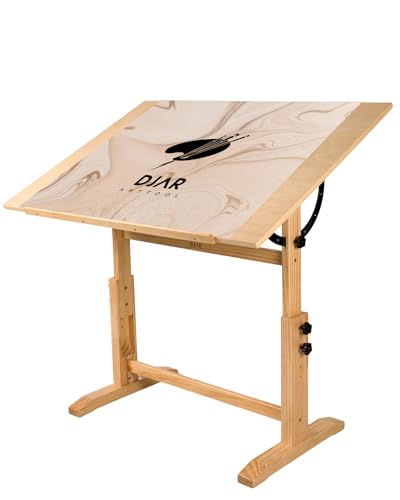
DJAR offers a vintage-style drafting table with a walnut-finished top, supported by a sturdy H-frame and solid pine legs for stability. The table measures 33″ x 30″ and provides a height range of 34″ to 38.9″ with tilt adjustments up to 25° and 330° rotation for flexible positioning. It serves well as a drafting desk, craft station, or computer desk, appealing to artists who value a classic look and versatile angles for drawing and writing.
ZENY Drafting Table With Tilt and Drawer

ZENY’s drafting table combines a sturdy wood tabletop with a secondary slide-out surface for tools or a laptop. The main table tilts from 0 to 60 degrees, and the unit includes a storage drawer and a compact assembly that suits both professionals and hobbyists. The adjustable height ranges from 28 to 35.8 inches, making it adaptable for sitting or standing work sessions. A versatile option for artists who need additional workspace and efficient organization.
VECELO Drafting Table With Storage

VECELO’s drafting table emphasizes user-friendly storage with two non-woven fabric drawers and a fabric shelf beneath the tabletop. The table tilts from 0 to 65 degrees, with a built-in pencil rack to prevent tools from rolling off. A sturdy metal frame supports a thick MDF top and a triangle-leg design for stability. This model suits artists who need accessible storage and a wide tilt range for detailed drafting, painting, or design work.
Buying Guide
Key purchase considerations when choosing a touch screen-friendly drafting table include stability, tilt range, and workspace size. Stability ensures precise lines and reliable performance when using digital tools or complying with heavy media. Tilt range matters for ergonomic comfort during long sessions and for achieving the best angle for screen capture or digital sketching.
- Surface material and thickness: Glass, wood, or MDF tops offer different tactile feedback and cleaning needs. Glass tops are smooth and easy to clean; wood tops provide a classic feel and pencil ledge support.
- Height adjustability: Look for models with a range that accommodates both sitting and standing workstyles. Wider ranges reduce the need for added stools or stands.
- Storage and organization: Built-in drawers, trays, and pencil racks help keep tools within reach, minimizing interruptions during creative sessions.
- Frame durability: A robust metal frame or reinforced wood construction reduces wobble and supports heavier media or equipment.
- Portability versus permanence: Wheels add mobility but may compromise stability if not locked. Choose feet or casters based on your workspace.
For users who balance traditional media with digital workflows, consider pairing these tables with a compatible drawing tablet stand or monitor arm. Evaluate the available space in your studio or dorm room to ensure the chosen model fits comfortably without crowding essential tools and supplies. When possible, review user feedback on durability and ease of assembly to ensure long-term satisfaction with your drafting table choice.