Best Vented Hot Water Heaters for Reliable Whole-House Comfort
Choosing a vented hot water heater means balancing performance, energy efficiency, and installation flexibility. This guide highlights top vented options that deliver dependable hot water while fitting common indoor or outdoor venting setups. Each model reviewed below is optimized for steady temperatures, safe venting, and user-friendly controls, helping households run showers, dishes, and laundry without interruption.
| Brand | Model | Type | GPM Capacity | BTU |
|---|---|---|---|---|
| Rinnai | RX199iN | Condensing Tankless | Up to 11.1 | 199,000 |
| ThermoMate | CZ422NG | Tankless | Up to 5 | 113,000 |
| APUS | Tankless Propane | Tankless | Up to 4.42 | 95,000 |
| QERPRE | Gas Tankless | Tankless | Up to 4.3 | 100,000 |
| AO Smith | ProLine XE | Non-Condensing | Up to 8 | 190,000 |
Rinnai RX199iN Condensing Tankless Water Heater

This high-capacity unit is installable indoors or outdoors using Versa Vent and supports either propane or natural gas with Smart Sense control. It delivers up to 11.1 GPM and features a compact form factor. The design emphasizes ease of use, Quick Flush for routine maintenance, and a high efficiency factor (UEF .98). Optional Controlr module enables WiFi control (not included). Outdoor installations require the RX-OVC vent cap.
Rinnai RX130iN Condensing Tankless Water Heater

Compact and versatile for indoor or outdoor installation, this model supports up to 7.1 GPM and 130,000 BTU. It shares the Versa Vent approach and Smart Sense gas control, with Quick Flush and WiFi-ready options (Controlr module sold separately). It emphasizes efficiency with a high UEF rating and a streamlined interface for status monitoring and settings.
ThermoMate CZ422NG Natural Gas Tankless Water Heater

With up to 5 GPM and 113,000 BTU, the CZ422NG is designed for whole-house use with multi-point heating. It uses advanced flow sensors and a robust protection suite, including boil-dry, freeze, flame-out, overheating, and more. The unit emphasizes energy efficiency (UEF around 0.81) and corrosion resistance, thanks to a copper heat exchanger. It supports multiple modes to tailor performance by season and usage patterns.
APUS Tankless Water Heater Propane
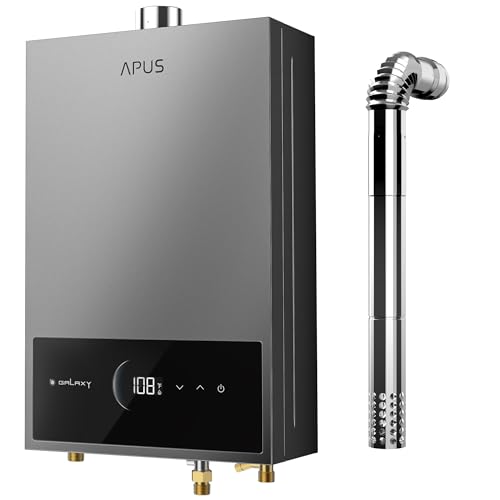
APUS delivers 95,000 BTU and 4.42 GPM with smart sensors and a precise control system that keeps water temperature within ±1°F. It supports two showers plus a sink and maintains stability even during peak demand. The unit relies on oxygen-free copper heat exchangers and segmented combustion to achieve improved energy efficiency and reliable performance across varying inlet temperatures.
QERPRE Tankless Gas Water Heater

Max 4.3 GPM and 100,000 BTU, this unit targets whole-house comfort with 2-3 outlets simultaneously. It features four-season mode, kitchen and bathtub presets, and a precise ±1°F temperature control through V3.0 self-modulating technology. A four-section burner helps maintain consistent warmth across seasonal changes and usage patterns.
Ranein Natural Gas Tankless Water Heater

Offering 100,000 BTU and up to 4.3 GPM, this indoor unit supports 2-3 outlets with automatic temperature adjustment for seasonal changes. It emphasizes convenience with features designed to prevent cold water shocks and ensure consistent delivery of hot water without delays in demand.
AO Smith ProLine XE Tankless Water Heater

This 8 GPM unit delivers up to 190,000 BTU with X3 Scale Prevention Technology to reduce mineral buildup. It emphasizes reliability with a high-flow design and a 15-year heat exchanger warranty for residential applications. The product combines robust performance with user-friendly diagnostics and stable water temperature control.
Buying Guide: Key Purchase Considerations For Vented Tankless Heaters
- Flow rate and temperature needs: Evaluate your peak simultaneous usage (showers, sinks, appliances) and select a model with a GPM rating that covers those needs without sacrificing comfort.
- Venting requirements: Confirm compatible venting configurations (universal Versa Vent or standard vent piping) and any outdoor vent caps required for outdoor installation.
- Fuel type and availability: Decide between natural gas and propane based on home fuel availability, cost, and long-term reliability. Tankless units are generally more efficient with continuous operation.
- Efficiency and operating cost: Look for high uniform energy factor (UEF) ratings and additional features like quick flush, anti-scaling technology, and advanced control interfaces to minimize energy waste.
- Control and connectivity: Some models offer WiFi control or intuitive interfaces for temperature adjustments and diagnostics. Consider whether remote monitoring is important for you.
- Durability and warranty: Copper heat exchangers and multi-year warranties on heat exchangers or the entire unit can influence long-term ownership costs and peace of mind.
- Installation considerations: Indoor vs. outdoor installation affects venting, clearance, and maintenance access. Some units require outdoor vent caps or specialized mounting guidelines.
- Maintenance features: Look for Easy Flush or Quick Flush options and built-in protections (boil-dry, over-temperature, flame-out) that help reduce service calls and extend life.
When selecting a vented tankless water heater, balance maximum hot water supply with long-term efficiency and installation practicality. Compare GPM ratings, BTU outputs, venting needs, and available controls to identify the model that best fits your home’s water usage profile and existing venting setup.