Best Waterproof Spray Foam Sealants for Ponds, Gaps, and Leaks
The best water-tight spray foam depends on where the seal will be used: choose pond-specific black foam for rocks and water features, expanding insulation foam for household gaps, or a flexible rubberized spray for small leaks. Sprayman and Stanley are the most relevant choices for visible outdoor landscaping; Gorilla is a non-foam option for coating small cracks. The products below are selected according to their stated uses and features, not hands-on testing.
| Product | Best For | Key Difference |
|---|---|---|
| Sprayman Black Waterfall Foam | Ponds and landscaping | Black, water-resistant foam for outdoor voids |
| Stanley F903 Black Spray Foam | Landscaping and other listed uses | Black foam with aquatic-use claims |
| Gorilla Waterproofing Spray | Small leaks and cracks | Flexible rubberized coating, not expanding foam |
| Loctite Tite Foam Gaps & Cracks | Household gaps up to 1 inch | Expanding insulation foam |
| Red Devil Spray Foam | Small home gaps | Can be sanded, painted, or stained after curing |
Sprayman Black Waterfall Foam Sealant

Best for pond edges, waterfalls, streams, and decorative rock installations, this two-can polyurethane foam is formulated for outdoor landscape sealing. Its black finish is intended to blend with rocks, stone, and mulch, making it a better choice than light-colored household foam for visible water-feature repairs.
The listed features describe UV resistance, weather durability, water resistance, high expansion, and adhesion to stone, concrete, wood, and metal. Those traits suit irregular cavities and rock stabilization. The product is also described as UL certified, but buyers should check the manufacturer’s directions for application and cure details before using it in a specific water feature.
Limitation: This is a high-expansion foam, so it may be less suitable for narrow, precise repairs where excess expansion would be difficult to manage.
Stanley F903 Black Spray Foam

Choose this two-can black polyurethane foam if you need a discreet seal for landscaping or another listed application, including RV and automotive use. The dark color is designed to blend with rock features and landscape materials, while the product description states that it is waterproof and resistant to UV exposure and temperature extremes.
Stanley is a better fit than general-purpose insulation foam when appearance matters outdoors. The listing also describes the formula as non-toxic and safe for aquatic use, plants, and wildlife. Follow the product label for placement and curing instructions, especially around a pond or other sensitive area.
Limitation: The supplied features do not specify a maximum gap size or detailed application instructions, so confirm that the product suits the repair dimensions before buying.
Gorilla Waterproofing Spray
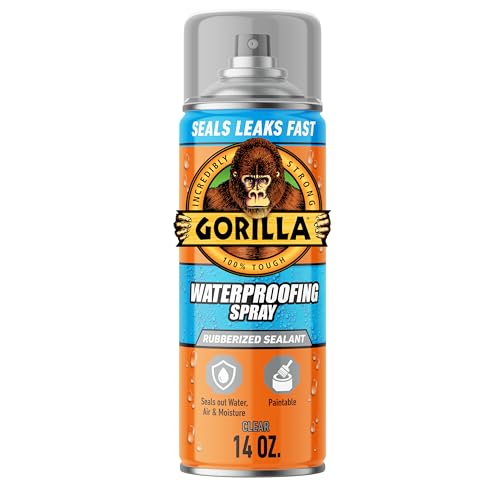
Best for small cracks and leak-prone areas that need a flexible surface coating rather than expanding foam. Gorilla’s clear, rubberized sealant is described as sealing out water, air, and moisture. Its controlled spray pattern and self-leveling coverage are intended to help coat small gaps evenly.
Choose this if you want a spray-applied waterproofing layer and do not need foam to fill a deep or irregular cavity. The dried coating is described as temperature- and UV-resistant, which may be useful for exposed repairs. This product differs from the other picks: it is a rubberized sealant, not expanding polyurethane foam.
Limitation: The listed features focus on small gaps and cracks. It is not the right choice when the repair requires a structural void-filling foam or a pond-specific rock-bonding product.
Loctite Tite Foam Gaps & Cracks

Best for sealing and insulating household gaps and cracks up to 1 inch, this one-can polyurethane foam has a high-density, uniform cell structure. The product description also states that its polymer foam withstands harsh UV rays. Those features make it a practical option for general gap filling when insulation is part of the job.
Choose this over a pond foam when the priority is filling a small building gap rather than bonding rocks or sealing a water feature. Its stated size range gives buyers a clear starting point for matching the can to the opening.
Limitation: The listed features do not identify it as waterproof or designed for continuous water exposure. Do not treat it as a pond sealant based on the gap-filling and insulation claims alone.
Red Devil Spray Foam For Small Gaps

Choose Red Devil for small holes, gaps, and cracks around the home when draft reduction is the main goal. Its listed features say it can be used inside or outside and that the cured foam can be sanded, painted, or stained. That finishability makes it a better fit for repairs that will be trimmed or covered after curing.
This is a general-purpose polyurethane foam, not a product specifically described for ponds or prolonged water exposure. It may suit ordinary gap-filling jobs, but buyers should distinguish exterior use from a stated waterproof rating.
Limitation: The supplied product details do not give a maximum gap size or claim that the foam is waterproof, so check the label for the intended application.
Buying Guide: How To Choose Water-Tight Spray Foam
Is the repair for a pond or a household gap?
For pond edges, waterfalls, and visible rockwork, start with a product specifically described for landscape or aquatic use. Black foam can blend into dark rocks and landscaping. For household gaps, choose an insulation foam whose stated size range matches the opening. Do not assume that ordinary expanding foam is suitable for continuous water exposure.
Do you need foam or a waterproof coating?
Expanding foam fills cavities and irregular voids. A rubberized spray coating, such as Gorilla Waterproofing Spray, is designed to cover small cracks with a flexible layer. These products serve different purposes: use the type that matches the shape and function of the repair.
What should you check before applying it?
- Read the product label for application, curing, and cleanup instructions.
- Match the foam’s stated gap capacity to the opening; Loctite Gaps & Cracks lists gaps up to 1 inch.
- For visible outdoor work, consider color, UV resistance, and weather exposure.
- For ponds or sensitive landscaping, verify suitability for the exact application and follow the manufacturer’s guidance.
- Check whether the cured material can be trimmed or finished if appearance matters.
Frequently Asked Questions
Is spray foam automatically waterproof?
No. Expanding foam can fill gaps, but waterproof performance depends on the specific product. Choose a product whose stated features support the intended water exposure.
Which product is best for a pond waterfall?
Sprayman Black Waterfall Foam is specifically described for waterfalls, ponds, streams, and landscape rockwork. Stanley F903 is another black foam option with listed aquatic-use claims.
Can I use household insulation foam to seal a pond?
Do not assume it is suitable. The listed Loctite and Red Devil features emphasize gap filling or insulation rather than pond use. Select a product specifically intended for water features.
Is Gorilla Waterproofing Spray expanding foam?
No. It is a flexible rubberized coating for small gaps and cracks, not a void-filling polyurethane foam.
How do I choose foam for a narrow crack?
Compare the gap size with the product’s stated capacity and consider whether expansion could create excess material. For small surface cracks, a flexible coating may be more appropriate than expanding foam.