Best Western Red Cedar Deck Boards for Repairs and Outdoor Projects
The bingaai 7-foot Western red cedar boards are the closest match here for deck repairs: they are listed as clear-grade decking boards with a stated 0.95-inch actual thickness. The other listed products are primarily wall paneling or small-format lumber, not conventional deck boards, so they are better suited to walls or small woodworking projects. Compare the intended use, dimensions, and coverage before choosing.
| Product | Best suited for | Key detail |
|---|---|---|
| bingaai 7-foot boards | Deck repairs | Four boards; stated 0.95-inch thickness |
| bingaai tongue-and-groove cedar | Walls and ceilings | ½-inch boards; 3-foot length |
| baoyeewood wall panels, 21 sq. ft. | Interior wall coverage | Mixed lengths; 21-square-foot coverage |
| baoyeewood wall panels, 10.5 sq. ft. | Smaller wall projects | Mixed lengths; 10.5-square-foot coverage |
| Woodchucks red cedar lumber | Small woodworking | Six pieces, each 16 inches long |
bingaai 7-Foot Western Red Cedar Deck Boards
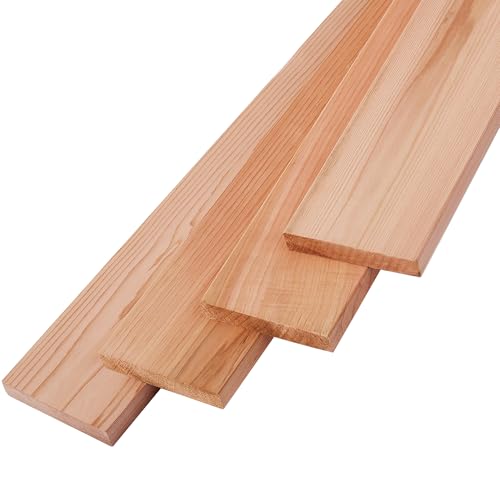
Best for: Replacing damaged boards or making a small cedar decking repair. This is the only listed product specifically described as Western red cedar decking. The four-pack is stated to cover 12.8 square feet, and the seller describes the boards as clear grade, virtually knot-free, and surfaced on all four sides.
The listed actual thickness is 0.95 inch, described as similar to professional 5/4 deck-board specifications. That dimension may help buyers compare it with existing boards, but confirm the full width, thickness, and profile against your deck before ordering.
Limitation: Each board is 7 feet long, so it may not suit repairs requiring longer uninterrupted runs. The product listing also presents the boards for projects beyond decking, so verify the quantity and dimensions needed for your particular layout.
bingaai ½-Inch Cedar Tongue-and-Groove Panels
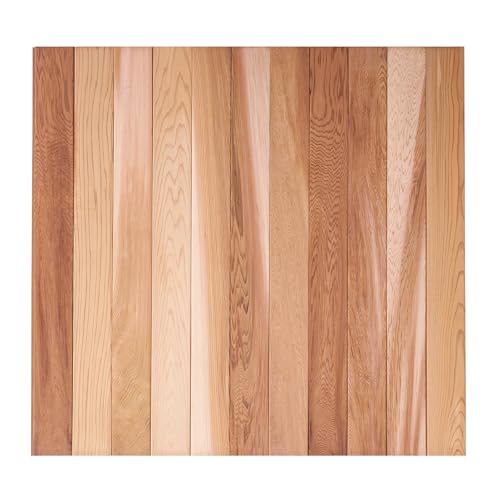
Best for: Cedar walls, ceilings, sauna interiors, and accent panels—not exposed deck surfaces. The listing specifies Western red cedar, ½-inch thickness, 3-foot board length, and 9.7 square feet of coverage. Tongue-and-groove edges are intended to join boards flush for a continuous panel installation.
It may be a better choice than deck boards when the goal is a coordinated cedar wall or ceiling finish. The listed thickness and installation details are aimed at paneling, so do not assume these pieces are designed to function as structural decking.
Limitation: The 3-foot length and wall-panel profile make this a poor substitute for standard long deck boards.
baoyeewood Cedar Wall Panels, 21 Square Feet

Best for: Buyers covering a larger wall area with cedar planks. The package is listed as covering 21 square feet and containing boards 3.5 inches wide in lengths ranging from 16 to 55 inches. The seller describes the boards as Canadian red cedar with almost no knots and says they are untreated natural wood.
Choose this over the smaller panel pack when the wall project needs more stated coverage. The variable lengths can support a varied plank layout, but they do not provide the consistent long dimensions normally wanted for deck-board runs.
Limitation: This is identified as wall paneling, not decking. The listing does not provide deck-board specifications such as a standard deck profile or long, uniform board lengths.
baoyeewood Cedar Wall Panels, 10.5 Square Feet
Best for: A smaller accent wall or limited paneling project. This pack has the same listed 3.5-inch width and 16-to-55-inch length range as the larger option, but the stated coverage is 10.5 square feet. The seller describes the wood as Canadian red cedar sourced from sustainable forests, with no knots.
It is the more manageable choice when the measured wall area is modest and a larger pack could leave excess material. The listing also describes the planks as untreated natural wood.
Limitation: The product is intended for wall decoration. Its short, mixed-length pieces are not a direct match for conventional deck-board replacement.
Woodchucks Wood 16-Inch Red Cedar Boards

Best for: Small crafts and woodworking where short pieces are appropriate. The six kiln-dried boards are listed at 16 inches long, 2 inches wide, and ¾ inch thick. These dimensions are useful for compact projects but are unlike the long, wide boards commonly used to cover a deck.
This option is included as a small-format cedar lumber comparison, not as a decking recommendation. The product name says red cedar, but the supplied details do not specify Western red cedar, so buyers seeking that exact species should verify it with the seller.
Limitation: The short length and narrow width make these boards unsuitable for typical deck-board replacement.
Buying Guide: How to Choose Cedar Boards for a Deck
Is the board actually intended for decking?
Start with the stated application. Deck boards need dimensions and a profile that suit the deck’s framing and installation method. Wall panels, tongue-and-groove planks, and small craft boards are not automatically safe or suitable substitutes. Of these options, only the bingaai 7-foot product is specifically described as decking.
How should you compare dimensions and coverage?
Measure the existing board width, thickness, and length, then compare those figures with the replacement. Check whether a stated dimension is actual or nominal; the bingaai listing specifically gives 0.95 inch as its actual thickness. Use coverage figures to estimate material needs, but account for cuts and the layout of the repair.
Does clear grade matter for your project?
A clear, nearly knot-free appearance may be a priority when matching a visible deck surface or creating a clean-looking repair. Other projects may put greater weight on matching the existing boards’ color, grain, dimensions, and finish. Product descriptions alone do not establish an exact match to boards already installed.
What should you confirm before buying?
- Verify the wood species, actual dimensions, board length, and package quantity.
- Check whether the board is sold for decking or for wall and craft use.
- Confirm that the planned layout and deck framing suit the selected board.
- For repairs, compare the new board’s thickness and width with the existing deck.
- For products described only as “red cedar,” confirm whether they are Western red cedar if that species is required.
Frequently Asked Questions
Which listed product is specifically described as Western red cedar decking?
The bingaai 7-foot, four-pack is the only product in this selection specifically described as Western red cedar decking boards.
Can cedar wall panels be used as deck boards?
The listed wall panels are sold for wall or ceiling applications, not as deck boards. Do not treat them as decking without confirming their suitability and specifications with the seller.
What does the bingaai deck-board pack cover?
The product listing states that its four boards cover 12.8 square feet.
Are all products listed as Western red cedar?
No. Some are described as red cedar or Canadian red cedar without consistently specifying Western red cedar. Check the exact species when it matters to your project.